# Why Is GTA 6 Taking 13 Years? Development History, RAGE 9 Engine & Rockstar's Crunch Changes Explained
### Quick Answer
> Why is GTA 6 taking 13 years? The unprecedented gap stems from massive scope expansion, an entirely rewritten RAGE 9 physics engine, corporate restructuring to eliminate toxic crunch, and the ongoing support cycle of GTA Online across three console generations.
| Development Milestone | Release Window / Timeline | Core Technical Focus |
| :--- | :--- | :--- |
| **GTA V Launch** | September 2013 | Eighth-generation baseline (PS3 / Xbox 360) |
| **Red Dead Redemption 2** | October 2018 | Procedural animation systems, advanced AI routines |
| **RAGE 9 Engine Overhaul** | 2019 – Present | Global illumination, real-time fluid physics, vehicle soft-body damage |
| **Leonida Map Finalization** | 2021 – 2024 | Expansive open-world density, interior spaces, dynamic weather |
1. **Engine Modernization:** Rockstar migrated its proprietary Rockstar Advanced Game Engine (RAGE) from version 8 to version 9, implementing complex physics calculations that demand massive computational overhead.
2. **Post-Crunch Corporate Culture:** Following widespread industry backlash regarding excessive overtime during *Red Dead Redemption 2*, Rockstar instituted strict studio-wide policies capping weekly hours and shifting from remote work back to physical offices.
3. **Scope and Fidelity Expansion:** The recreation of Vice City and the surrounding Leonida state requires unprecedented asset density, turning every pedestrian and interior space into an interactive simulation rather than a static backdrop.
4. **Hardware Evolution:** Designing for modern architectures—such as the PS5, Xbox Series X/S, and high-end PC hardware utilizing advanced frame generation—requires deep optimization that standard multi-platform development cycles cannot rush.
---
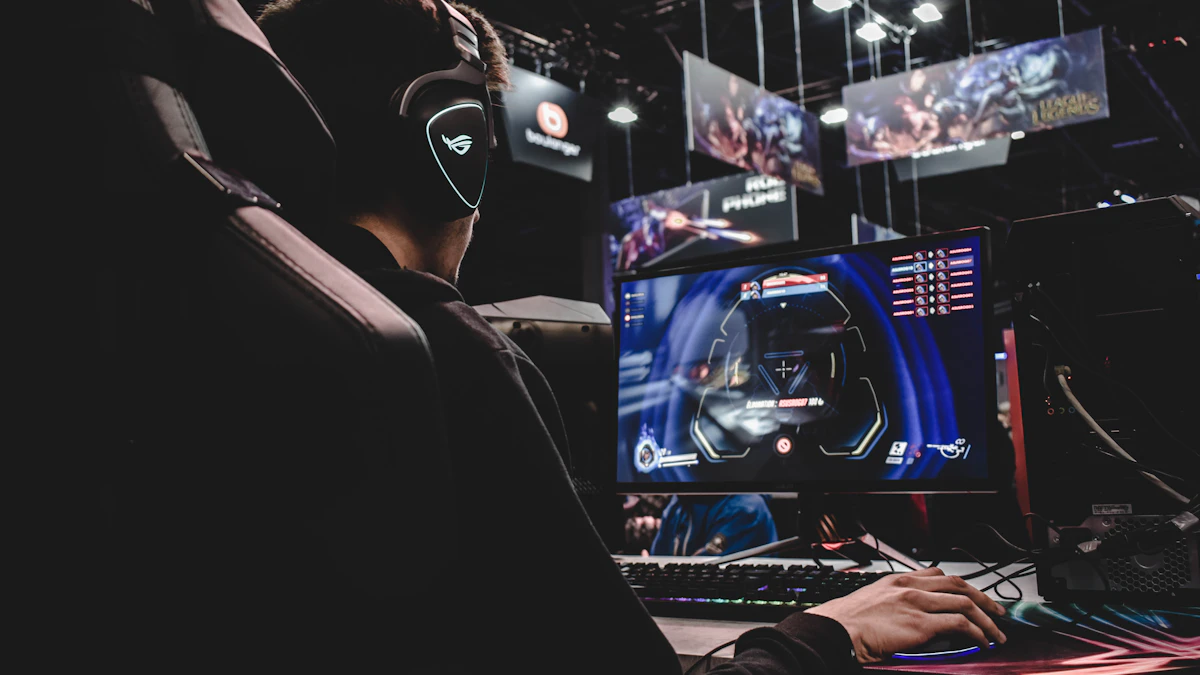
Modern hardware constraints and next-generation optimization demands play a massive role in the lengthy timeline between releases.
## The 13-Year Gap: Understanding Rockstar's Release Strategy
When *Grand Theft Auto V* launched in September 2013 for the PlayStation 3 and Xbox 360, the gaming landscape looked entirely different. Microtransactions were still finding their footing, digital storefronts were secondary to physical discs bought at GameStop or UK GAME retailers, and 1Gbps fiber broadband was a luxury rather than a standard requirement for 250GB pre-loads. Fast forward through three console generations, and players are still asking why the follow-up is taking over a decade to materialize.
The answer is not a simple case of development hell. Instead, it reflects a fundamental shift in how triple-A blockbusters are budgeted, engineered, and managed. With retail prices projected around $69.99 / £69.99 for standard editions and up to $79.99 / £74.99 for premium bundles at retailers like Best Buy, Target, Walmart, and PlayStation Direct US, consumer expectations demand perfection on day one. A misstep on this scale threatens the valuation of Take-Two Interactive.
### The Financial Engine: Why GTA V Refused to Die
One major reason for the elongated timeline is the commercial juggernaut of *GTA Online*. Rather than moving development teams immediately onto a sequel following the 2013 launch, Rockstar dedicated substantial studio resources to continuous content updates, heist expansions, and subsequent ports for the PlayStation 4, Xbox One, PC, PlayStation 5, and Xbox Series X/S.
This financial cushion removed the existential pressure to rush a sequel. For those analyzing historical market trends, the economic roadmap established by older titles mirrors how modern live-service ecosystems sustain massive development pipelines behind closed doors.
> **[PRO-GAMER TACTICAL HACK]:** When analyzing hardware constraints for massive open-world titles, always monitor your platform's thermal throttling limits. RAGE 9 pushes CPU thread scheduling to its absolute maximum, meaning inadequate cooling in baseline consoles or PC rigs will lead to frame pacing issues during high-speed highway chases through dense urban sectors.
---

Under-the-hood engine overhauls require high-end hardware capabilities to process complex physics and lighting models natively.
## Deconstructing the RAGE 9 Engine: Physics, Water, and AI
The beating heart of any Rockstar title is its proprietary engine. While *GTA V* and *Red Dead Redemption 2* utilized iterations of the RAGE 8 engine, *Grand Theft Auto VI* introduces RAGE 9—a ground-up modernization designed to handle next-generation rendering passes, complex geometry, and advanced simulation systems.
### Vehicle Soft-Body Physics and Handling
In previous entries, vehicle deformation was largely pre-determined by rigid collision meshes with minor dynamic warping. RAGE 9 introduces granular, physics-driven soft-body deformation. Chassis rails bend realistically upon impact, suspension geometries react independently to individual wheel loads, and low-RPM turbo lag directly affects drivetrain behavior. This level of simulation requires immense CPU calculation cycles for every active vehicle within the physics grid, transforming vehicle handling and necessitating advanced testing frameworks similar to those found in professional
GTA 6 Vehicle Tuning & Dyno Guide deep dives.
### Fluid Dynamics and Environmental Simulation
Water physics have seen an astronomical upgrade. Traditional open-world games treat water as a flat surface with a repeating displacement map. RAGE 9 implements real-time volumetric fluid simulation. Waves react dynamically to hull shapes, coastal weather, and tidal currents across the Everglades bayou cabins and Port Vice shipping warehouses. Simulating accurate buoyancy and wake resistance for dozens of concurrent watercraft demands specialized computing pipelines that previous hardware simply could not handle.
### Pedestrian AI and Localized Sub-Factions
NPC behavior in *GTA VI* steps away from simple scripted loops. Pedestrians feature individual daily routines, reactive emotional states, and localized sub-faction allegiances. Whether you encounter members of the Thrillbilly Mud Club in the rural backcountry or Vice Beach syndicates along Ocean Drive, character models utilize sophisticated procedural animation blending. This ensures that physical interactions, weapon sway, and hitboxes respond organically to environmental variables rather than relying on recycled animation trees.
> **[ROOKIE MISTAKE TO AVOID]:** Do not assume that console performance modes will maintain an unyielding 60 FPS without utilizing dynamic resolution scaling. Pushing RAGE 9's ray-traced global illumination through complex urban environments will test the limits of current-generation APUs, making performance dips inevitable during chaotic 6-star wanted level shootouts.
---

The neon-drenched streets of Vice City feature unprecedented asset density and interactive interior spaces.
## The Shift Away From Crunch Culture
Beyond technical hurdles, the internal corporate culture at Rockstar Games underwent a massive transformation between 2018 and the present day. During the final years of development for *Red Dead Redemption 2*, reports surfaced detailing grueling 100-hour work weeks and systemic "crunch" culture that damaged employee retention and public relations.
In response to employee unionization efforts, public scrutiny, and internal leadership restructuring, Take-Two Interactive and Rockstar implemented sweeping operational reforms:
- **Mandatory Overtime Caps:** Weekly working hours were strictly limited, shifting the studio away from emergency crunch phases.
- **Phased Production Schedules:** Management accepted extended timelines rather than forcing developers to sacrifice personal well-being to meet arbitrary holiday release windows.
- **Return-to-Office Policies:** While hybrid work models caused initial friction, streamlining inter-departmental communication helped standardize asset pipelines across international studio branches in Edinburgh, Toronto, New York, and London.
These labor reforms inherently lengthened development schedules. When studios prioritize sustainable working conditions over perpetual overtime, project timelines expand. However, this shift ultimately safeguards the long-term health of the creative talent responsible for building the game's intricate mechanics, interactive interior spaces—such as Vice Dale pawn shops and Everglades bayou cabins—and sprawling narrative arcs.
---

Leonida's expansive open world combines dense urban centers with sprawling rural wetlands and coastal ecosystems.
## The Scale of Leonida: Mapping the Unprecedented
The geographical scope of Leonida dwarfs previous map designs. By blending dense urban environments with sprawling rural expanses, Rockstar created a logistical challenge that required years of map iteration and asset distribution.
### Architectural Density and Interactive Interiors
Unlike earlier titles where the vast majority of buildings served as static backdrops, *GTA VI* increases the ratio of accessible interior spaces. Players can explore multi-story hotel lobbies along Ocean Drive, industrial warehouses in Port Vice, and secluded swamp shacks in the Everglades. Each location features unique lighting setups, destructible cover objects, and distinct loot distribution nodes, mirroring tactical considerations found in specialized strategy breakdowns like the
Leonida State Penitentiary & Prison Breakout Guide.
### Network Infrastructure and Modern Platforms
With target hardware specifications tailored around high-speed NVMe solid-state drives, streaming massive amounts of map data without stuttering requires advanced asset compression algorithms. Developers must account for varying hardware capabilities, ensuring smooth execution whether running on a baseline console or leveraging high-end PC performance frameworks. For those planning their hardware upgrades, understanding resource allocation is essential when evaluating system requirements and memory bottlenecks, as detailed in resources exploring
PC System Requirements & Memory Bottlenecks Explained.
---
## Frequently Asked Questions
### Why is GTA 6 taking 13 years to release?
The 13-year gap between *GTA V* and *GTA VI* is the result of prolonged support for *GTA Online*, a complete rewrite of the RAGE 9 physics engine, corporate restructuring to eliminate toxic crunch work cultures, and an exponential increase in open-world scope and graphical fidelity.
### Will GTA 6 run at 60 FPS on current-generation consoles?
Performance targets vary by hardware tier. While performance modes targeting 60 FPS are expected through dynamic resolution scaling and upscaling technologies, ray tracing features and dense crowd simulations place a heavy load on console CPUs, making stable frame rates a primary focus for post-launch optimization patches.
### How big is the map in GTA 6 compared to GTA 5?
The fictional state of Leonida is significantly larger than San Andreas. It features a denser concentration of interactive interior spaces, highly detailed rural biomes, and a massive coastal footprint modeled after modern Florida.
### Will old GTA Online characters carry over to the new game?
Rockstar has structured *GTA VI* as a standalone narrative and multiplayer experience, meaning standard progression resets. However, legacy promotional bonuses and loyalty rewards for long-time *GTA Online* veterans are expected upon launch.
***