### Quick Answer
> GTA 6 32 GB RAM system requirements will likely become a reality for PC players targeting ultra settings, driven by the RAGE 9 engine's massive asset streaming demands across Leonida, dense pedestrian density, and real-time ray tracing calculations requiring high memory pools.
| Hardware Tier | Recommended RAM | Target Resolution | Storage Requirement |
| :--- | :--- | :--- | :--- |
| **Minimum Spec** | 16 GB DDR4 | 1080p / 30 FPS | 250 GB NVMe SSD |
| **Recommended Spec**| 32 GB DDR5 | 1440p / 60 FPS | 250 GB Gen4 NVMe SSD |
| **Ultra / Enthusiast** | 64 GB DDR5 | 4K / Ray Tracing | 250 GB Gen5 NVMe SSD |
1. **Verify Bus Speeds:** Ensure your system memory operates on dual-channel architecture to eliminate bottlenecks during high-speed vehicle chases through Vice City.
2. **Monitor VRAM Allocation:** Balance your texture quality settings so that high-resolution assets do not spill over from your graphics card into system RAM.
3. **Upgrade to NVMe Storage:** Pair your RAM kit with a high-speed solid-state drive to assist the DirectStorage API with lightning-fast asset decompression.
4. **Tune Page File Settings:** Allocate a custom virtual memory page file on your primary drive to prevent out-of-memory crashes during prolonged gameplay sessions.
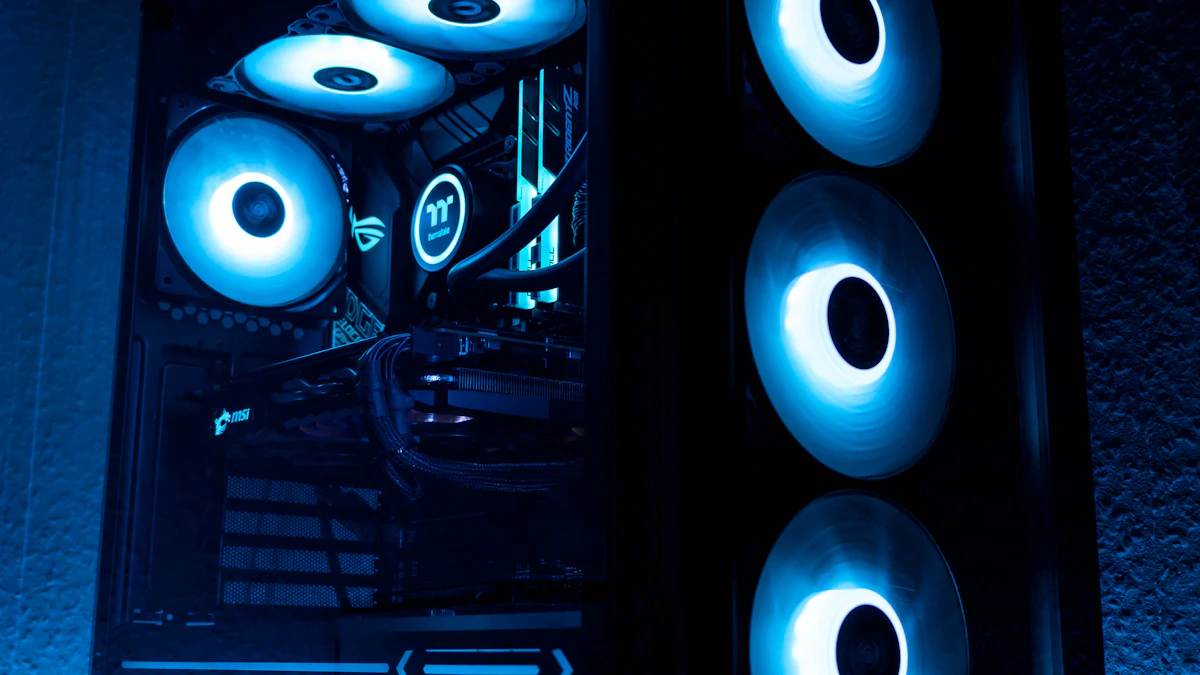
Modern gaming rigs require balanced memory and high-end motherboards to process open-world streaming without stuttering.
## Deconstructing the RAGE 9 Engine and Memory Architecture
Rockstar Games builds worlds that push hardware to absolute collapse, and Grand Theft Auto VI is no exception. The proprietary Rockstar Advanced Game Engine (RAGE 9) introduces staggering leaps in physics simulation, global illumination, and volumetric cloud rendering. When you look at the architectural demands of rendering the sprawling state of Leonida, system memory usage scales exponentially compared to previous generation titles.
PC players investing in hardware upgrades must understand how memory bottlenecks affect framerate stability. On consoles like the PlayStation 5 and Xbox Series X, unified memory architectures allow the system to share pools dynamically between the CPU and GPU. On desktop PCs, however, system RAM and graphics card VRAM operate across separate PCIe lanes. If your VRAM buffer fills up because you pushed texture settings beyond your GPU's limit, the game engine relies on system RAM to offload assets. If your system runs on a meager 16GB kit, micro-stutters and hitching will ruin high-speed highway pursuits.
Furthermore, physical simulation in GTA 6 handles vehicle suspension dynamics, tire deformation, and pedestrian AI calculations via dedicated CPU threads. These threads constantly read and write to system memory. For a deep dive into the computational power required to run this software, check out our analysis on whether
GTA 6 cost more than the Burj Khalifa. Every single pedestrian in Vice Beach possesses independent behavioral routines, meaning the CPU demands rapid-fire memory access to track hundreds of active entities simultaneously.
## Texture Streaming and DirectStorage Implementation
Texture streaming remains the single biggest consumer of system resources in modern open-world titles. Gone are the days of static loading screens separating districts. When you cruise down Ocean Drive in a customized sports car at 150 miles per hour, the game engine streams high-resolution photogrammetry textures, bespoke storefront interiors, and complex lighting shaders into memory in fractions of a second.
This is where the DirectStorage API becomes vital for PC architecture. By bypassing traditional CPU decompression bottlenecks, compressed game assets move directly from your NVMe drive into your GPU and system RAM. However, decompression consumes substantial memory overhead. If you run background applications like Discord, browser tabs, or recording software while playing, a 16GB memory pool vanishes instantly.
For players utilizing mid-range graphics cards with 8GB or 12GB of VRAM, the game engine will aggressively swap assets between the GPU frame buffer and system RAM. If your system RAM is starved or running on slower DDR4 frequencies, frame pacing suffers catastrophic drops. Players aiming for buttery-smooth performance often look toward hardware solutions similar to those outlined in our
GTA 6 PC specs and 32GB RAM breakdown.

Running high-refresh-rate monitors at 1440p or 4K requires massive amounts of system memory to prevent frame drops.
## Regional Retail Ecosystems and Hardware Availability
Purchasing hardware upgrades to meet these staggering system requirements involves navigating complex retail channels across the United States, United Kingdom, and Europe. Whether you source components from Best Buy, Micro Center, and Walmart in the US, or physical and digital storefronts like GAME and Amazon UK, DDR5 RAM pricing fluctuates based on global supply chains.
PC builders in the UK face VAT-inclusive pricing that often makes high-end 32GB and 64GB memory kits a significant investment. Retailers frequently bundle high-speed RAM with NVMe SSDs to accommodate the massive install sizes anticipated for Rockstar's latest masterpiece. Gamers should also verify whether their motherboards support DDR4 or require a complete platform upgrade to DDR5 to achieve the memory bandwidth necessary for stable frame pacing.
> **[PRO-GAMER TACTICAL HACK]:** If you are running a 16GB RAM setup and experiencing sudden stuttering while entering densely populated areas like Vice Dale, disable hardware-accelerated browser scheduling and clear your Windows page file cache before launching the game. This frees up roughly 2GB to 3GB of active memory pool for the RAGE 9 engine to utilize.
## Leonida Map Density and Localized Sub-Factions
The sheer scale of Leonida dwarfs previous map designs, encompassing sprawling swamps, neon-lit urban centers, and rural outposts controlled by localized sub-factions. From the Thrillbilly Mud Club holding turf in the northern marshlands to the San Chianis Cartel smuggling contraband through port facilities, each region loads distinct asset libraries into memory.
When you transition rapidly from the humid Everglades backwoods into the high-rise concrete jungle of Vice City, the game engine must flush old assets and pull new textures instantly. If your memory bandwidth is throttled, you will notice texture pop-in, late-loading collision meshes, and blurry geometry. This asset management load is precisely why future-proofing your rig with robust memory capacity prevents hardware bottlenecks.

The neon-drenched streets of Vice City demand high computational power and massive memory allocation for real-time ray tracing.
## Mechanical Nuances: Vehicle Physics, Hitboxes, and AI
Beneath the visual spectacle lies a web of mechanical simulations that strain computer hardware. Vehicle tuning, dyno testing, and real-time aerodynamics calculate drag coefficients and tire grip profiles 60 times per second. Every dent, scratch, and chassis deformation alters the vehicle's hitboxes and weight distribution dynamically.
Furthermore, pedestrian AI features advanced line-of-sight pathfinding. If you commit a crime, CCTV facial recognition networks and local law enforcement dispatch units update their pursuit vectors using persistent memory tracking. If the game engine runs out of physical memory, background entity calculations degrade, leading to predictable or frozen NPC behavior. Ensuring your hardware meets recommended specifications keeps the simulation running at peak fidelity.
> **[ROOKIE MISTAKE TO AVOID]:** Do not mix and match different RAM kit brands or clock speeds to reach a 32GB total capacity. Mixing memory kits forces your motherboard to run all sticks at the lowest common denominator speed and loose timings, destroying memory bandwidth and introducing game-crashing memory leaks.
## Frequently Asked Questions
### Will 16 GB of RAM be enough to run GTA 6 on PC at launch?
While 16 GB will likely serve as the bare minimum requirement for 1080p low-to-medium settings, expect severe stuttering and texture pop-in during high-speed transit through dense urban districts due to memory swapping.
### Why does an open-world game like GTA 6 require so much RAM?
The RAGE 9 engine streams massive amounts of high-resolution textures, physics calculations, pedestrian AI routines, and global illumination data concurrently without traditional loading screens.
### Should I upgrade to DDR5 RAM specifically for GTA 6?
Yes, if you are building a new rig or upgrading an older system, DDR5 offers substantially higher memory bandwidth and data transfer rates that directly benefit massive open-world streaming engines.
### How does VRAM on my graphics card affect system RAM usage?
If your graphics card runs out of VRAM while handling ultra-high-resolution texture packs, the engine overflows excess assets into your system RAM, causing severe performance drops if your system memory is too slow or limited.
### Will background applications impact GTA 6 performance if I have 32 GB of RAM?
With 32 GB of system RAM, you have enough headroom to run lightweight background tasks like chat apps or music players, though closing heavy resource hogs like video editing suites or web browsers with dozens of tabs remains best practice.
***