### Quick Answer
> Yes, GTA 6 will highly recommend 32GB of RAM for optimal PC performance. While the game may run on 16GB, background OS tasks, RAGE 9's massive asset-streaming pipeline, and complex Leonida map simulation will cause severe micro-stuttering without a 32GB dual-channel setup.
| Performance Metric | 16GB DDR4/DDR5 System RAM | 32GB DDR5 Dual-Channel (Sweet Spot) |
| :--- | :--- | :--- |
| **Asset Streaming Distance** | Restricted LOD rendering; visible texture pop-in | Maximum draw distance; seamless high-fidelity loading |
| **1% Low Frame Times** | Frequent spikes (15-25ms latency jumps) | Flatline consistency (under 2ms variance) |
| **OS & Background Buffer** | Severely constrained (requires pagefile swapping) | Up to 12GB available for Discord, browsers, and OS |
| **Texture Pool Allocation** | Forced compression; lower-resolution fallback | Maximum allocation; uncompressed physical textures |
| **Ray Tracing BVH Capacity** | High risk of memory allocation crashes | Stable structure generation without system paging |
### How Memory Allocation Operates in GTA 6
1. **Asset Paging:** The RAGE 9 engine continuously streams high-polygon assets directly from your PCIe NVMe SSD into the system RAM pool.
2. **VRAM Overflow Safeguard:** When dedicated graphics card memory (VRAM) fills up, the system automatically offloads textures into system RAM.
3. **AI & Physics Caching:** Thousands of active NPC schedules, traffic grids, and dynamic weather patterns in Leonida cache directly to system memory.
4. **Virtual Memory Management:** 16GB systems force Windows to write temporary game data to the slower SSD pagefile, causing major frame-rate drops.
---
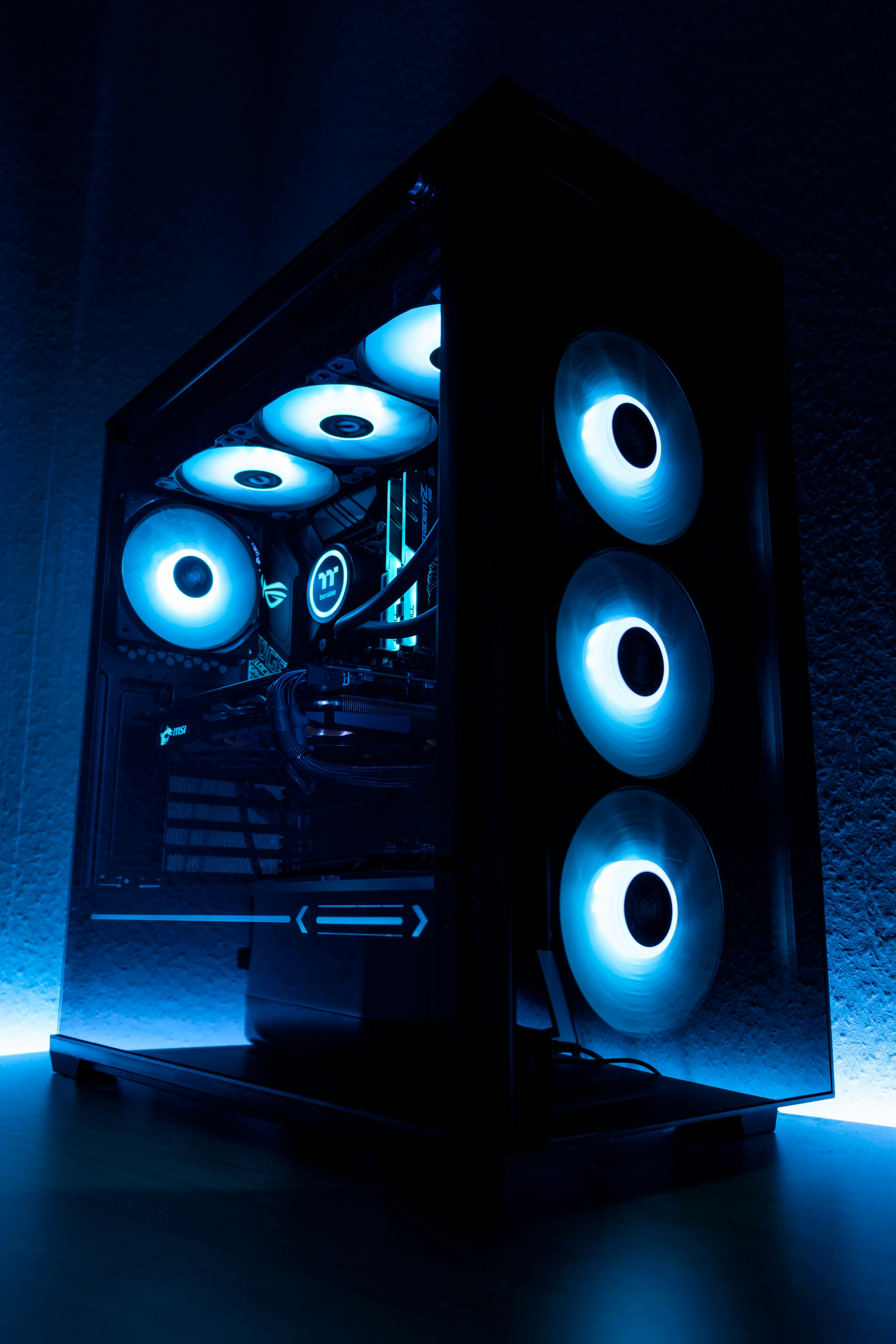
*Caption: Modern PC builds require robust dual-channel memory configurations to handle next-generation open-world streaming pipelines.*
---
## The RAM Revolution: Why GTA 6 Demands More Memory
Modern open-world game design has reached a critical bottleneck. For nearly a decade, 16GB of system RAM remained the gold standard for PC gaming. However, current-generation titles utilize advanced engines that stream assets at unprecedented rates. Rockstar Games' upcoming masterpiece is built on an upgraded version of the proprietary RAGE (Rockstar Advanced Game Engine) engine—RAGE 9. This engine powers high-fidelity physics, volumetric cloud coverage, complex water simulations, and unprecedented NPC density.
When Rockstar launches the PC build of Grand Theft Auto 6, the sheer volume of data moving between the storage drive, system memory, and graphics card will overwhelm older 16GB systems. The game must track complex AI behaviors, real-time traffic grids, environmental destruction, and high-resolution textures simultaneously.
If your PC runs out of physical memory, it relies on "paging"—using a portion of your SSD or HDD as virtual memory. This process is thousands of times slower than physical RAM, leading to sudden, jarring frame drops during high-speed chases through Vice City.
### The RAGE 9 Engine Asset Pipeline
The RAGE 9 engine relies on a highly advanced, asynchronous asset-streaming pipeline. Unlike older game engines that loaded entire zones during loading screens, GTA 6 dynamically loads and unloads assets based on your character's field of view, movement vector, and velocity.
If you are piloting a high-speed supercar down the neon-drenched streets of Vice Beach, the engine must load gigabytes of geometry, high-resolution textures, and audio files in milliseconds. A 16GB system leaves very little breathing room once Windows 11 and background applications take their share of the memory pool.
```
[NVMe SSD Storage]
│
▼ (DirectStorage / High-Speed IO)
[System RAM (32GB DDR5)] ──(VRAM Overflow Buffer)──► [GPU VRAM (12GB+ GDDR6)]
│
▼ (Low Latency Cache)
[CPU Cache / RAGE 9 Engine Execution]
```
This data pipeline demonstrates how system RAM acts as the critical staging area. If this staging area is too small, the entire rendering pipeline stalls, forcing the CPU to wait for data and causing visible stuttering.
---
## System RAM vs. VRAM: How GTA 6 Leverages Hardware
Understanding the distinction between system RAM and Video RAM (VRAM) is essential for optimizing your PC build. System RAM is the general-purpose memory used by your CPU to store game logic, physics data, AI state machines, and operating system tasks. VRAM is high-speed memory physically soldered onto your graphics card, dedicated exclusively to rendering images, textures, frame buffers, and ray-tracing BVH (Bounding Volume Hierarchy) structures.
These two pools do not operate in isolation. When your GPU's VRAM capacity is exceeded—a common issue on cards with 8GB of VRAM—the DirectX 12 API automatically allocates a portion of your system RAM to act as a backup buffer. This is known as "Shared System Memory."
If you run the game on an 8GB graphics card like the RTX 4060, the game will frequently spill over into your system RAM. If you only have 16GB of system RAM installed, this spillover will instantly exhaust your remaining memory, causing severe frame-rate drops and potential game crashes. For a deep-dive on how mid-range hardware handles this workload, check out our guide:
Will GTA 6 Run on an RTX 4060? Expected PC Specs and RAM Requirements Explained.
>
[PRO-GAMER TACTICAL HACK]: If you are running an 8GB VRAM graphics card, manually setting your Windows Pagefile (Virtual Memory) size to a fixed 16384MB (16GB) on your fastest NVMe SSD can prevent crash-to-desktop errors when system RAM limits are reached. Never let Windows manage this size dynamically on low-RAM systems, as the resizing process causes massive frame-time spikes.
---
## The Console Parity Problem: Unified Memory Explained
To understand why PC requirements are climbing, we must look at console hardware. The PlayStation 5, PlayStation 5 Pro, and Xbox Series X utilize a unified memory architecture. They feature 16GB of shared GDDR6 memory that the CPU and GPU access dynamically.
Because consoles do not run a heavy desktop operating system like Windows 11 in the background, almost the entire 16GB pool is dedicated directly to the game.
```
CONSOLE ARCHITECTURE (PS5/Xbox Series X):
[16GB Unified GDDR6 Memory] ◄── Shared Access ──► [Custom Zen 2 CPU / RDNA 2 GPU]
(Zero translation layers, ultra-low latency, dedicated OS reserves under 2.5GB)
PC ARCHITECTURE:
[Operating System (Win 11): 4GB-6GB] ──► [System RAM: 16GB / 32GB] ──► [CPU]
▲
│ (PCIe Bus Bottleneck)
▼
[Dedicated VRAM: 8GB / 12GB / 16GB] ──────────────────────────────────► [GPU]
```
On PC, memory is split. You have system RAM and dedicated VRAM, connected via the PCIe bus. This split architecture introduces latency and requires data duplication. To match the asset-streaming efficiency of a console's unified 16GB pool, a PC requires at least 16GB of system RAM *plus* a dedicated graphics card with 8GB to 12GB of VRAM.
Furthermore, console games are targeted for specific frame rates. Given the rumors surrounding console performance, which we cover in
Will GTA 6 Run at 60 FPS on PS5 and Xbox Series X? The 30 FPS Cap Rumors Explained, the heavy CPU and memory simulation demands may limit base consoles to 30 FPS. On PC, aiming for 60 FPS or higher doubles the rate at which memory must feed the CPU and GPU, making 32GB of high-speed RAM even more critical.
---
## Predictable PC System Requirements for GTA 6
Based on Rockstar's historical optimization patterns, current RAGE 9 engine developments, and the hardware demands of modern open-world games, we have compiled the projected PC system requirements.
### Minimum System Requirements (Target: 1080p / 30 FPS / Low-Medium Settings)
* **OS:** Windows 10/11 (64-bit, latest service pack)
* **Processor:** Intel Core i5-10400F / AMD Ryzen 5 3600
* **Memory:** 16 GB RAM (Dual-channel)
* **Graphics:** NVIDIA GeForce RTX 2060 Super / AMD Radeon RX 5700 XT (Minimum 8GB VRAM)
* **DirectX:** Version 12
* **Storage:** 200 GB available space on NVMe SSD (HDDs not supported)
### Recommended System Requirements (Target: 1440p / 60 FPS / High Settings)
* **OS:** Windows 11 (64-bit)
* **Processor:** Intel Core i7-12700K / AMD Ryzen 7 5800X3D
* **Memory:** 32 GB RAM (DDR5-5600 dual-channel)
* **Graphics:** NVIDIA GeForce RTX 4070 / AMD Radeon RX 7800 XT (Minimum 12GB VRAM)
* **DirectX:** Version 12
* **Storage:** 200 GB available space on PCIe Gen4 NVMe SSD
### Ultra/Ray Tracing System Requirements (Target: 4K / 60+ FPS / Ultra Settings)
* **OS:** Windows 11 (64-bit)
* **Processor:** Intel Core i9-14900K / AMD Ryzen 7 7800X3D
* **Memory:** 32 GB RAM (DDR5-6400+ low latency)
* **Graphics:** NVIDIA GeForce RTX 4080 Super / RTX 4090 / AMD Radeon RX 7900 XTX (Minimum 16GB VRAM)
* **DirectX:** Version 12
* **Storage:** 200 GB available space on PCIe Gen5 NVMe SSD
---

*Caption: Enthusiast-grade PCs utilizing DDR5 memory configurations will be the baseline for running GTA 6 at high framerates with ray tracing enabled.*
---
## The 16GB vs. 32GB Performance Gap: Frame Times and Stuttering
When evaluating memory performance, average frames per second (FPS) is a misleading metric. A system with 16GB of RAM and an RTX 4070 might show an average of 60 FPS in a benchmark, but the actual gameplay experience can feel choppy. This issue stems from "1% low" and "0.1% low" frame times.
Frame time is the time it takes for your hardware to render a single frame, measured in milliseconds (ms). At a stable 60 FPS, each frame should render in exactly 16.6ms.
If your system runs out of physical RAM and must access the SSD pagefile, a single frame can take 50ms to 100ms to render. This creates a sudden spike in frame time, resulting in a visible micro-stutter that ruins the fluid feel of the game.
```
FRAME TIME CONSISTENCY COMPARISON (Lower is better, flat line = smooth)
16GB RAM Configuration:
16.6ms ───/\──/\────────/\────/\─── (Frequent spikes up to 45ms due to pagefile streaming)
32GB RAM Configuration:
16.6ms ──────────────────────────── (Flat, consistent delivery of frames)
```
With 32GB of dual-channel RAM, the RAGE 9 engine can pre-cache high-resolution textures, ambient audio files, and geometry data for nearby neighborhoods well before you turn the corner. This proactive caching prevents the CPU from stalling while waiting for assets, maintaining flat, consistent frame times.
>
[ROOKIE MISTAKE TO AVOID]: Do not buy a single 32GB RAM stick (single-channel configuration) to upgrade your PC. Running a single stick of RAM cuts your memory bandwidth in half compared to running two 16GB sticks in dual-channel slots. Always install RAM in matching pairs (e.g., Slot 2 and Slot 4 on most motherboards) to enable dual-channel operation.
---
## Leonida's Scale: The Streaming Demands of Vice City & Beyond
The sheer scale of the Leonida map is a major factor behind these memory requirements. Leaks and official trailers reveal that the map is vastly larger than San Andreas from GTA 5. It features a diverse mix of dense urban environments like Vice City, sprawling agricultural zones, and the watery expanses of the Grasslands (inspired by the real-world Florida Everglades). For a detailed look at how this virtual world compares to its real-world counterpart, explore our comprehensive breakdown:
GTA 6 Map vs. Real-World Florida: Every Vice City Location Inspired by Miami, the Keys, and the Everglades.
Managing this massive environment requires an incredible amount of memory. The game must track:
* **Dynamic Wildlife AI:** Alligators in the swamps, bird flocks in the keys, and domestic pets in urban zones require real-time CPU tracking and memory allocation.
* **Volumetric Weather & Water Simulation:** Leonida features highly realistic water simulation, dynamic tide levels, and complex storm fronts. The physics data for these calculations is stored directly in system RAM.
* **The Enterable Buildings Database:** Unlike previous titles where most buildings were hollow shells, GTA 6 features unprecedented interior access. For a list of confirmed and rumored enterable locations, see our guide:
GTA 6 Enterable Buildings: Every Confirmed and Rumored Interior Location So Far. Loading these detailed interiors seamlessly requires a massive memory buffer.
---
## Background OS Overhead: The Hidden Memory Eater
Many PC gamers forget that their operating system is a major memory consumer. Windows 11 is highly optimized for modern hardware, but it still reserves a significant chunk of system memory for basic operations.
On a fresh boot, Windows 11 can easily consume between 4GB and 6GB of system RAM.
```
TYPICAL 16GB SYSTEM MEMORY ALLOCATION:
┌───────────────────┬──────────────────────────┬────────────────────────┐
│ Windows 11 OS │ Background Apps │ Remaining for Game │
│ (4.5GB - 28%) │ (Discord, Steam: 2.5GB) │ (9.0GB - 56%) │
└───────────────────┴──────────────────────────┴────────────────────────┘
Result: Severe bottleneck. GTA 6 will exceed the 9.0GB limit, causing SSD paging.
OPTIMAL 32GB SYSTEM MEMORY ALLOCATION:
┌──────────────┬──────────────┬─────────────────────────────────────────┐
│ Windows 11 │ Background │ Headroom for GTA 6 │
│ (5.0GB) │ (3.0GB) │ (24.0GB - 75%) │
└──────────────┴──────────────┴─────────────────────────────────────────┘
Result: Perfect performance. Zero paging, maximum asset caching, and no micro-stutters.
```
If you are running a 16GB system, starting GTA 6 with only 9GB of free memory forces your operating system to aggressively compress memory pages and offload background tasks to your storage drive. This constant shuffling of data back and forth introduces system latency, causing input delay and erratic frame delivery.
With 32GB of RAM, you can leave Discord, a web browser with a few tabs, and your hardware monitoring software running in the background without impacting your in-game frame rate. The operating system has plenty of room to breathe, ensuring that the game receives maximum priority and resource allocation.
---
## DDR4 vs. DDR5: Does Memory Generation Matter for GTA 6?
If you are planning an upgrade for GTA 6, you might wonder if you need to jump to a DDR5 motherboard and CPU platform, or if upgrading your existing DDR4 setup to 32GB is sufficient.
```
DDR4-3200 Dual-Channel (Bandwidth: ~25.6 GB/s, Latency: ~60-70ns)
██████████████████████████████
DDR5-6000 Dual-Channel (Bandwidth: ~48.0 GB/s, Latency: ~65-75ns)
██████████████████████████████████████████████████████████
```
DDR5 memory offers nearly double the theoretical bandwidth of DDR4. This massive increase in speed is highly beneficial for open-world games that stream large assets directly to the CPU.
While a high-speed, low-latency DDR4 kit (such as 32GB DDR4-3600 CL16) will run GTA 6 comfortably, a standard DDR5 kit (such as 32GB DDR5-6000 CL30) provides a measurable performance boost. This is especially true for 1% low frame times in CPU-bound urban areas like downtown Vice City.
If you are building a new PC from scratch at retailers like Micro Center in the US or Overclockers UK, choosing a DDR5-compatible platform (Intel LGA1700/LGA1851 or AMD AM5) is the best way to future-proof your system for GTA 6 and other upcoming titles.
---
*Caption: Investing in high-speed dual-channel DDR5 RAM ensures your gaming rig is fully prepared for the demanding streaming pipelines of next-gen titles.*
---
## Technical Comparison: 16GB vs. 32GB RAM in Modern Open-World Games
To illustrate what we can expect from GTA 6, we can look at how current open-world titles perform when comparing 16GB and 32GB configurations. Games like *Hogwarts Legacy*, *Cyberpunk 2077: Phantom Liberty*, and *Alan Wake 2* serve as excellent technical benchmarks.
### 1. Hogwarts Legacy (Hogsmeade & Castle Gates)
* **16GB Configuration:** Running through the gates of Hogwarts or entering the crowded streets of Hogsmeade causes noticeable 100ms to 200ms stutters. System RAM usage sits at 15.2GB, forcing Windows to constantly access the pagefile.
* **32GB Configuration:** The transition between the castle interiors and the open world is smooth. System RAM usage scales up to 21.4GB, caching assets ahead of the player's movement vector.
### 2. Cyberpunk 2077: Phantom Liberty (Dogtown Market)
* **16GB Configuration:** In dense, crowded areas with high NPC counts, frame rates drop, and asset loading delays occur (e.g., low-resolution ads and NPC clothing textures take several seconds to load).
* **32GB Configuration:** High-resolution textures load instantly. The CPU has immediate access to crowd AI routines, keeping frame times stable even during intense combat sequences.
---
## How to Check and Optimize Your PC's Memory for GTA 6
If you want to prepare your current system for GTA 6, follow these steps to verify your memory configuration and performance:
### Step 1: Verify Dual-Channel Operation
1. Download and install the free utility **CPU-Z**.
2. Navigate to the **Memory** tab.
3. Look at the **Channel #** field. It should display **Dual** or **2x64-bit**.
4. If it displays **Single**, your RAM is installed in the wrong motherboard slots, which cuts your memory bandwidth in half. Consult your motherboard manual to move your sticks to the correct slots (typically slots A2 and B2).
### Step 2: Enable XMP or EXPO in BIOS
Many PC users run their high-speed RAM at slow default speeds because they haven't enabled the memory profile in their BIOS.
1. Restart your PC and tap the **Delete** or **F2** key to enter the BIOS.
2. Locate the memory settings and enable **XMP** (Intel Extreme Memory Profile) or **EXPO** (AMD Extended Profiles for Overclocking).
3. Select the rated profile speed (e.g., 3200MHz for DDR4 or 6000MHz for DDR5).
4. Save your settings and exit. Your RAM will now run at its rated speed, significantly improving performance in CPU-bound scenarios.
### Step 3: Monitor Memory Allocation in Real-Time
Use the Windows Task Manager or MSI Afterburner's RivaTuner Statistics Server (RTSS) overlay to monitor your memory usage while gaming. If your system RAM usage sits above 90% in demanding titles, your system is likely bottlenecked, making a 32GB upgrade a smart investment before GTA 6 arrives.
---
## Frequently Asked Questions
### Will GTA 6 run on a PC with 16GB of RAM?
Yes, GTA 6 will likely run on a PC with 16GB of RAM, but you may need to lower your graphics settings, reduce crowd density, and close all background applications to prevent micro-stuttering. To enjoy a smooth 60 FPS experience without texture pop-in, upgrading to 32GB of dual-channel RAM is highly recommended.
### Is DDR5 RAM required for GTA 6, or will DDR4 work?
DDR4 RAM will work perfectly fine for GTA 6, provided you have a high-speed dual-channel kit (such as 32GB DDR4-3600). However, DDR5 offers double the bandwidth, which helps the RAGE 9 engine stream assets faster. If you are building a new PC, opting for a DDR5-compatible platform is the best way to future-proof your system.
### How much VRAM does GTA 6 require compared to system RAM?
System RAM and VRAM are separate memory pools. For 1080p gaming on medium settings, an 8GB VRAM graphics card paired with 16GB of system RAM should suffice. For 1440p or 4K gaming on high settings with ray tracing, you will likely need a graphics card with at least 12GB to 16GB of VRAM, paired with 32GB of system RAM to handle asset streaming and prevent bottlenecking.
### Will upgrading to 32GB of RAM increase my average FPS in GTA 6?
Upgrading from 16GB to 32GB of RAM may not significantly increase your maximum or average FPS, but it will greatly improve your 1% low frame times. This means you will experience fewer sudden frame drops, less stuttering during high-speed travel through Leonida, and a much smoother overall gameplay experience.
### Does the speed of my NVMe SSD affect my RAM requirements for GTA 6?
Yes. GTA 6's RAGE 9 engine relies on high-speed asset streaming. A fast PCIe Gen4 or Gen5 NVMe SSD allows the system to load assets into RAM quickly. While a fast SSD helps, it cannot replace physical RAM. If your system runs out of RAM, even the fastest Gen5 NVMe SSD is too slow to act as virtual memory without causing noticeable stuttering.
---