### Quick Answer
> Achieving a stable GTA 6 60 FPS on Xbox Series X presents a massive hardware challenge for Rockstar Games. Given the heavy RAGE 9 engine demands, complex physics, and ray-traced global illumination, console players face a strict 30 FPS cap at launch unless dynamic resolution scaling scales back pixel output significantly.
| Console Hardware | Target Resolution | Estimated Frame Rate | Ray Tracing Support | Estimated Install Size |
| :--- | :--- | :--- | :--- | :--- |
| **Xbox Series X** | 2160p (Checkered/FSR) | 30 FPS (Launch Target) | Hardware-Accelerated RT | ~220GB - 250GB |
| **Xbox Series S** | 1440p / Upscaled | 30 FPS Lock | Minimal / Disabled | ~220GB - 250GB |
| **PlayStation 5 Pro**| 2160p Native / FSR 3 | 60 FPS (Target via PSSR) | Advanced RT Lighting | ~220GB - 250GB |
| **PC (High-End)** | Variable / Uncapped | 60+ FPS (Post-Launch) | Fully Configurable | ~250GB+ SSD |
1. **Analyze Hardware Constraints:** Review the processing limits of the Xbox Series X custom AMD Zen 2 CPU and RDNA 2 GPU architecture against the sprawling open-world scale of Leonida.
2. **Evaluate Engine Demands:** Factor in Rockstar’s RAGE 9 rendering passes, real-time cloth simulation, volumetric cloud densities, and advanced pedestrian AI routines.
3. **Inspect Performance vs. Quality Modes:** Anticipate whether Rockstar Games will prioritize native 4K rendering at 30 FPS or lower internal resolutions to chase a high-frequency display output.
4. **Prepare Storage and Memory:** Clear at least 250GB of NVMe SSD storage space to accommodate high-speed asset streaming and texture streaming budgets.
---
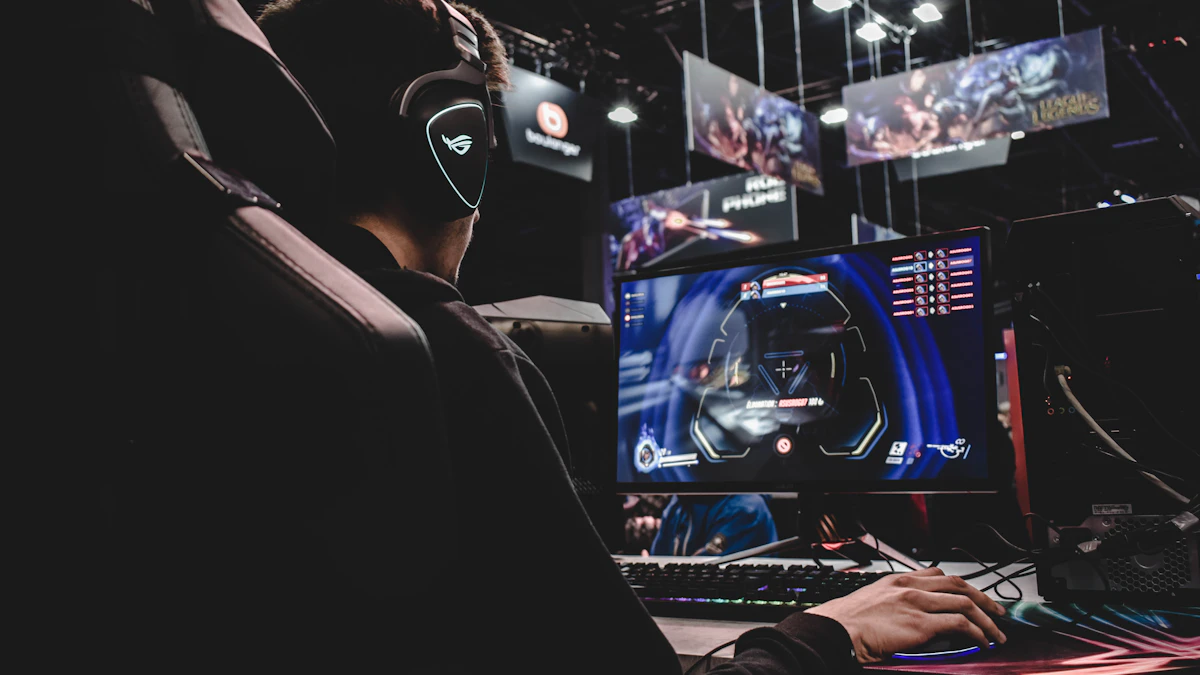
*Optimizing console hardware setups for intense open-world sandbox rendering.*
The hardware ecosystem surrounding Microsoft's current-generation flagship console faces its ultimate test with the arrival of Rockstar Games' next magnum opus. US and UK players purchasing copies from regional retailers like GameSign, Best Buy, Walmart, or UK GAME outlets are already questioning whether their hardware can handle the graphical fidelity showcased in promotional trailers. The central debate dominating forums centers entirely on frame rate capabilities, CPU bottlenecks, and whether Microsoft's powerhouse console can deliver a buttery-smooth gameplay experience.
When analyzing the technical architecture required to render the state of Leonida, raw teraflops alone do not tell the complete story. The processor running beneath the console's matte black chassis is an 8-core custom AMD Zen 2 chip running at 3.8GHz (3.6GHz with SMT). While capable, this CPU must manage thousands of non-player characters, real-time vehicle physics, dynamic weather calculations, and streaming assets from the high-speed NVMe solid-state drive simultaneously. Understanding how these systems interact clarifies why achieving stable performance metrics demands immense engineering feats from developers.
## The CPU Bottleneck: Why 60 FPS Is an Uphill Battle on Current-Gen Consoles
Open-world design philosophy has fundamentally shifted over the past decade. Older titles relied heavily on scripted events and limited crowd density. In contrast, the simulation engine powering modern sandbox experiences requires vast CPU compute cycles. Every single civilian wandering the neon-lit strips of Vice Beach or traversing the muddy expanses of the Thrillbilly Mud Club operates under independent behavioral state machines.
When moving at high speeds in a customized supercar through dense urban environments, the game engine must stream assets into memory instantly. If the CPU cannot process geometry changes, vehicle collision boxes, and pedestrian AI fast enough, stuttering occurs. This hardware constraint is precisely why many industry veterans suggest reading up on [Will GTA 6 Have a 30 FPS Lock? Console Performance Expectations and Ray Tracing Limits Explained](/news/will-gta-6-be-capped-to-30-fps-performance-limits) to grasp why modern developers frequently target a locked 30 FPS baseline for complex open-world projects.
Furthermore, ray-traced reflections and global illumination models demand immense GPU throughput. On the Xbox Series X, the RDNA 2 GPU architecture features 52 compute units. While robust, enabling real-time ray-traced shadows and lighting consumes significant shading power. If Rockstar implements full ray tracing by default, cutting resolution or sacrificing frame rate becomes mathematically necessary to maintain visual integrity. Players hoping for uncompromised performance must weigh graphical fidelity against input responsiveness.
>
[PRO-GAMER TACTICAL HACK]: To minimize frame drops during high-speed police chases through downtown Vice City, ensure your console's internal NVMe SSD has at least 20% free storage space. This allows the drive's controller to execute garbage collection and wear leveling efficiently, preventing asset streaming hiccups during rapid camera rotations.
## Leonida's Ecosystem: Pushing RAGE 9 Beyond Previous Limits
The proprietary RAGE (Rockstar Advanced Game Engine) version 9 represents a generational leap forward from what players experienced in previous titles. Water physics, in particular, showcase unprecedented realism. Ocean waves react dynamically to wind speed, boat hulls displace water volumetrically, and storm surges flood low-lying coastal districts. These physics-heavy calculations drain hardware resources across both the CPU and GPU.
Consider the local sub-factions and regional hubs scattered across the map, ranging from the neon-drenched boardwalks to isolated Everglades bayou cabins. Each zone features unique atmospheric density, wildlife populations, and traffic patterns. When driving through these areas, the engine constantly updates lighting bounces and shadow cascades. Players investigating the regional geography should review how
How Big Is the GTA 6 Map? Leonida State vs GTA 5 Los Santos Scale Explained details the immense scale of this virtual playground.
```
[Camera Input] ---> [RAGE 9 Engine Core] ---> [CPU: Physics / AI Logic]
---> [GPU: Ray Traced GI / FSR Upscaling]
---> [NVMe SSD: Asset Streaming]
```
Vehicle customization and handling models also factor heavily into performance metrics. Tuning suspensions, modifying engine blocks on dyno benches, and managing tire grip coefficients require real-time math processing. If your vehicle hits a curb at 150 mph, the suspension geometry deforms physically rather than relying on pre-baked animation rigs. These physics calculations run continuously on the main processing threads, leaving fewer cycles available for boosting frame rates past the 30 FPS threshold.
*Fine-tuning controller deadzones and input latency for high-stakes heists.*
## Comparing Xbox Series X and PlayStation 5 Hardware Margins
Console parity has historically been a priority for major multiplatform releases, but architectural differences between Microsoft and Sony hardware introduce variables. While both machines utilize semi-custom AMD silicon, the PlayStation 5 features a higher clock frequency on its GPU alongside a proprietary high-speed I/O bottleneck controller. Conversely, the Xbox Series X boasts slightly higher raw compute power with 12.15 teraflops compared to the base PS5's 10.28 teraflops.
However, the introduction of mid-generation refreshes complicates purchasing decisions for US and UK consumers browsing Amazon or Best Buy. The high-end Sony hardware variant utilizes advanced spectral upscaling technologies to bridge the gap between high resolution and high frame rates. Players weighing their hardware options can examine
Is GTA 6 Cross-Platform? PS5, Xbox Series X/S & PC Crossplay Rumors Explained to understand how matchmaking and multiplayer infrastructure will operate across these distinct hardware tiers.
>
[ROOKIE MISTAKE TO AVOID]: Never disable your console's system-level motion blur or VRR (Variable Refresh Rate) settings if your monitor or television supports HDMI 2.1. Forcing a locked 60 FPS output on a display lacking VRR when frame rates dip into the 40s results in severe screen tearing and judder, making high-speed driving virtually unmanageable.
## Resolution Scaling, FSR, and the Quest for Stability
To achieve higher frame rates without completely stripping away visual fidelity, developers rely heavily on temporal upscaling algorithms. AMD FidelityFX Super Resolution (FSR), or potentially a proprietary in-house machine learning upscaler, renders the game at a lower internal resolution—such as 1440p or 1800p—before intelligently upscaling the final image to a crisp 4K output for modern displays.
This technique reduces the pixel-pushing burden on the GPU, freeing up thermal headroom and rendering cycles. Yet, upscaling introduces subtle artifacts, such as shimmering on power lines or ghosting behind fast-moving vehicles. For purists demanding pristine image clarity, native resolution rendering at 30 FPS remains the default preference for console optimization.
```
[Native 4K Render] ---> Heavy GPU Load ---> 30 FPS Lock (Maximum Fidelity)
[Upscaled 1440p] ---> Moderate Load ---> Potential 60 FPS Target (Visual Compromise)
```
Gamers utilizing high-speed 1Gbps fiber broadband connections across US and UK regions should ensure their console firmware and game files remain fully updated to receive day-one performance patches. Rockstar Games traditionally deploys aggressive optimization updates during the first weeks following launch to address memory leaks and stabilize fluctuating frame pacing issues.

*Monitoring frame pacing and GPU utilization during intense gameplay sessions.*
## What This Means for Your Pre-Order and Launch Day Experience
Deciding whether to secure your copy through PlayStation Direct, Microsoft Store, or physical retail chains depends entirely on your tolerance for visual trade-offs. If Rockstar implements a dual-mode system—offering a Quality Mode at native 4K/30fps and a Performance Mode targeting 60fps via aggressive scaling—players can tailor the experience to their preferred display hardware.
As launch day approaches, keeping track of official developer blogs and technical breakdowns remains essential. Avoid falling for unverified social media leaks regarding frame rate guarantees. Stick to verifiable hardware benchmarks and direct developer statements to set realistic expectations for your console setup.
---
## Frequently Asked Questions
### Will GTA 6 feature a dedicated 60 FPS mode on Xbox Series X?
Rockstar Games has not officially confirmed a locked 60 FPS mode for the base Xbox Series X version. Due to heavy CPU bottlenecks and complex RAGE 9 physics simulations, the launch build will likely target a stable 30 FPS with advanced ray tracing enabled.
### Can the Xbox Series X handle native 4K at 60 frames per second in GTA 6?
No. Rendering a massive open-world sandbox with dense pedestrian AI, volumetric weather, and ray-traced global illumination at native 4K while maintaining 60 FPS exceeds the processing limits of current-gen console hardware. Upscaling technologies will be required if a 60 FPS mode is introduced.
### Will Xbox Series S owners get a 60 FPS performance option?
The Xbox Series S features a lower-tier GPU and reduced memory bandwidth compared to the Series X. Consequently, it will almost certainly be locked to 30 FPS to maintain visual consistency and handle the massive asset streaming demands of the Leonida map.
### How much storage space will GTA 6 require on my console?
Industry analysts estimate the install size will range between 220GB and 250GB. Players should ensure their internal NVMe SSDs have sufficient free space before pre-loading the title to avoid download bottlenecks on launch day.
### Do I need an HDMI 2.1 television to play GTA 6 effectively?
While any 4K or 1080p display will work, an HDMI 2.1 television supporting Variable Refresh Rate (VRR) and ALLM (Auto Low Latency Mode) significantly improves motion clarity and mitigates stuttering during frame rate fluctuations.
***