A viral rumor has been tearing through the gaming community, leaving players clutching their SSDs in absolute terror: **Grand Theft Auto VI will require a staggering 300 GB of storage space.**
For a player base already struggling to balance storage budgets between bloated live-service shooters and massive open-world RPGs, the prospect of a single game consuming nearly half of a standard PlayStation 5 or Xbox Series X SSD is a nightmare scenario. But is this figure a legitimate technical reality born from Rockstar Games' push for boundary-breaking fidelity, or is it just another exaggerated clickbait headline designed to farm engagement?
As the industry prepares for the most anticipated release in entertainment history, we have to look past the social media noise. By analyzing Rockstar’s historical engineering patterns, the capabilities of the RAGE 9 engine, modern console decompression hardware, and the sheer scale of the upcoming State of Leonida, we can project the actual **GTA 6 download size** with surgical precision.
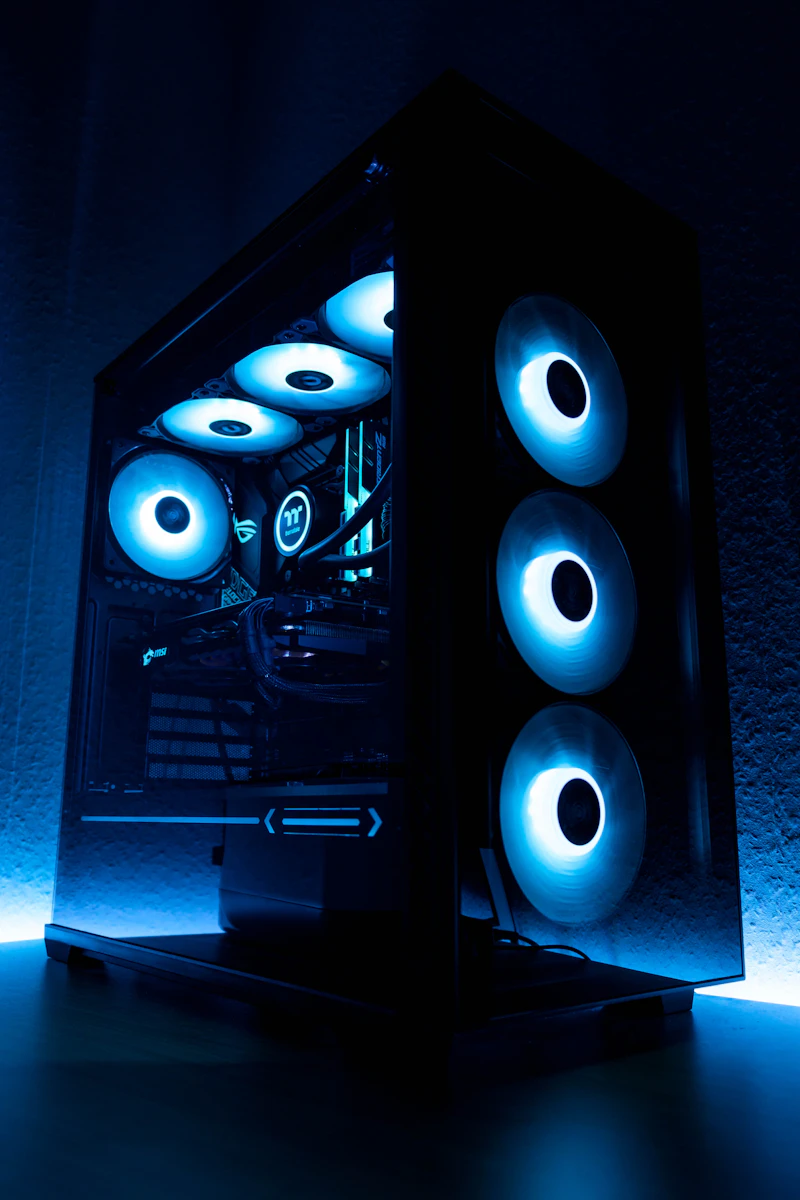
*Preparing your hardware for next-generation asset streaming requires high-speed NVMe PCIe Gen 4 storage.*
---
## The Origin of the 300 GB Rumor: Fact vs. Fiction
To understand where this massive 300 GB figure originated, we have to look back at the infamous September 2022 leaks and subsequent speculative data mines. Several community forums and social media channels pointed to alleged internal build sizes from Rockstar's development servers. These early debug builds—which contained uncompressed audio, raw debugging tools, redundant asset libraries, and non-optimized texture maps—reportedly pushed past the 250 GB mark.
In game development, early testing builds are notoriously bloated. Developers run these builds without any asset compression to avoid taxing local CPU cycles during compilation and debugging. Publishing a retail game with these raw, unoptimized files would be a logistical disaster.
Additionally, rumors intensified when analysts began discussing the unprecedented financial scale of the project. Speculation surrounding the game's development costs led many to analyze the [GTA 6 budget 2 billion rumor explained](/news/gta-6-budget-2-billion-rumor-explained), concluding that a production budget of that scale must equate to an equally massive file footprint.
However, a retail build operates under completely different constraints. While GTA 6 will undoubtedly be a massive game, the retail launch version will not ship as an uncompressed debug build. It will utilize advanced compression algorithms tailored specifically for modern high-speed solid-state drives.
---
## Why the GTA 6 Download Size Will Be Colossal
Even with industry-standard compression, Grand Theft Auto VI is guaranteed to be a massive download. Rockstar Games does not build sterile sandbox environments; they build highly detailed, living ecosystems. The technical demands of the Leonida map, combined with the capabilities of the RAGE 9 engine, point to an unprecedented asset footprint.
### 1. The sheer scale and density of the Leonida Map
The State of Leonida is not just a larger version of Southern San Andreas; it is a vastly more dense, geographically diverse landmass. The map features the neon-drenched streets of Vice City, the sprawling swampland of the Grassrivers (the Everglades), the Florida Keys, and various small towns scattered throughout.
Unlike older open-world games that relied on repeating texture tiles and low-polygon background geometry, GTA 6 uses unique high-resolution asset sets for different regions. A concrete barrier in Vice Beach will have different wear-and-tear textures, normal maps, and dirt layers than a barrier in a rural port town. This commitment to visual variety exponentially increases the game’s raw texture pool.
### 2. Enterable buildings and unique interior assets
One of the most exciting technical developments in GTA 6 is the sheer volume of interactive, seamless indoor spaces. According to analysis of the [GTA 6 enterable buildings confirmed interiors guide](/news/gta-6-enterable-buildings-confirmed-interiors-guide), a significant portion of the game's structures will feature fully rendered interiors, from pawn shops and supermarkets to high-end clubs and apartment complexes.
Each interior requires its own set of high-polygon models, unique furniture assets, localized lighting grids, and physics-enabled clutter. These assets cannot be easily instanced or shared with outdoor environments without breaking immersion, leading to massive increases in the local installation directory.
### 3. High-Fidelity Audio and Dialogue Variation
Rockstar Games is famous for recording tens of thousands of lines of dialogue to ensure that NPCs rarely repeat themselves. In GTA 6, this system is being pushed to its logical extreme. With dynamic NPC AI driving unpredictable interactions, the game must store hundreds of hours of high-quality uncompressed or minimally compressed audio files.
Add to this a massive licensed soundtrack spread across dozens of radio stations, localized surround-sound audio fields, and dynamic weather soundscapes, and the audio directory alone could easily exceed 30 to 40 GB.
### 4. RAGE 9 Engine Physics and Asset Streaming
The RAGE 9 engine introduces highly advanced physics systems, including real-time fluid dynamics (for realistic ocean waves and wakes in Vice City’s waters), complex vehicle deformation models, and highly detailed character hitboxes.
To prevent visual pop-in when flying a helicopter over the neon skyline, the engine relies on a hierarchical LOD (Level of Detail) system. This means the game must store multiple versions of the same asset—from ultra-low-resolution models used for distant horizons to raw, high-polygon models for close-up viewing.

*Rendering a highly detailed neon-lit metropolis like Vice City requires massive texture files and real-time ray-tracing calculations.*
---
## Console Storage Realities: PS5 and Xbox Series X/S
When Grand Theft Auto VI launches, it will target current-generation console hardware exclusively. This is a critical factor when estimating the **GTA 6 download size**, as consoles dictate the baseline compression technologies that Rockstar's engineers must target.
### Sony's Kraken Compression (PS5 & PS5 Pro)
The PlayStation 5 features a proprietary custom hardware decompressor based on RAD Game Tools' **Kraken** technology. Kraken is an incredibly efficient decompression algorithm that can compress assets at ratios frequently exceeding 1.5:1 or even 2:1.
This hardware-level decompression allows the PS5 to pull compressed data directly from the SSD and decompress it on the fly within the system's unified memory, completely bypassing CPU bottlenecks.
Because of Kraken, games on the PS5 are often significantly smaller than their PC counterparts. For example, *Subnautica* is roughly 15 GB on PC but only 5 GB on PS5. Rockstar will rely heavily on Kraken to keep the PS5 and PS5 Pro download sizes within a manageable range, especially as players debate performance limits in the [GTA 6 60 FPS on PS5 Pro performance controversy](/news/gta-6-ps5-pro-60-fps-performance-controversy).
### Microsoft's BCPack (Xbox Series X/S)
The Xbox Series X and Series S utilize the **Xbox Velocity Architecture**, which features a hardware decompression block powered by **BCPack** (specifically designed for texture compression) and standard LZ decompression.
While highly efficient, BCPack historical performance shows slightly lower compression ratios compared to Sony's custom Kraken silicon. As a result, the Xbox Series X version of GTA 6 may have a slightly larger storage footprint than the PS5 version.
Additionally, the Xbox Series S—with its limited usable storage capacity of approximately 364 GB on the original 512 GB model—presents a major logistical challenge. Rockstar must optimize the Series S version aggressively, likely by stripping out 4K texture packs and delivering a dedicated 1080p/1440p asset bundle to keep the installation size below 120 GB on that specific platform.
---
## PC SSD Requirements: Preparing for the Ultimate Port
While console players benefit from unified hardware decompression blocks, PC players must prepare for a massive technical hurdle. When GTA 6 eventually arrives on PC, it will require a high-speed Solid State Drive as an absolute baseline. The era of running flagship Rockstar titles on mechanical Hard Disk Drives (HDDs) is officially over.
### Why HDDs Cannot Handle GTA 6 Gameplay
Mechanical hard drives rely on spinning platters and physical read heads to locate data. The average read speed of a standard 7200 RPM SATA HDD is roughly 100 to 150 MB/s. In contrast, a PCIe Gen 4 NVMe SSD can easily exceed 7,000 MB/s.
Because GTA 6 relies on rapid asset streaming to maintain its seamless world, running the game on an HDD would result in catastrophic performance issues:
* **Severe Asset Pop-in:** Buildings, roads, and vehicles would fail to load in time, leaving your character driving through empty, low-polygon voids.
* **Aggressive Micro-Stuttering:** The game engine would constantly stall the CPU while waiting for the hard drive to deliver essential texture and animation assets.
* **Infinite Loading Screens:** Transitioning from the open world to detailed interiors would take minutes rather than seconds.
### The Role of DirectStorage on PC
To replicate the instantaneous loading speeds of modern consoles, the PC version of GTA 6 will almost certainly utilize Microsoft's **DirectStorage API**. DirectStorage bypasses the traditional storage path (which routes compressed data through the CPU for decompression before sending it to the GPU). Instead, it sends compressed assets directly from the NVMe SSD to the GPU's VRAM, where they are decompressed using modern graphic compute shaders.
To take full advantage of this technology, PC players will need a fast PCIe Gen 3 or Gen 4 NVMe SSD. For those looking to optimize their setups ahead of time and avoid common technical issues, keeping your system updated is vital, as outlined in our guide on [fixing GTA 6 PC low FPS stuttering and graphics settings](/news/gta-6-pc-lag-stuttering-fix-graphics-settings-config).
---
## Storage and Performance Comparison: GTA 5 vs. RDR2 vs. GTA 6
To understand how far Rockstar’s technical requirements have progressed, look at how storage footprints and data delivery systems have evolved over the last decade.
| Metric / Specification | Grand Theft Auto V (PC/Next-Gen) | Red Dead Redemption 2 (PC/Consoles) | Grand Theft Auto VI (Projected Specs) |
| :--- | :--- | :--- | :--- |
| **Launch File Size** | ~65 GB (PC, 2015) / ~95 GB (PS5, 2022) | ~120 GB (PC/PS4, 2018) | **~150 GB - 180 GB** (Target Launch) |
| **Storage Media Class** | HDD Compatible (SATA SSD Recommended) | HDD Compatible (SATA SSD Highly Recommended) | **NVMe SSD Mandatory** (DirectStorage Required) |
| **Baseline Read Speed** | ~100 MB/s (SATA HDD limit) | ~150 MB/s (SATA HDD limit) | **Min. 3,500 MB/s** (PCIe Gen 3 NVMe) |
| **Texture Resolutions** | 1080p to 4K (Compressed) | 1080p to 4K (High-Density Normal Maps) | **Native 4K Assets & Ray-Traced BVH Maps** |
| **Decompression Engine** | Software-based (CPU-bound LZMA) | Software-based (Oodle / CPU decompression) | **Hardware-accelerated (Kraken / BCPack / DirectStorage)** |
| **Audio Footprint** | ~15 GB (Stereo / Basic Surround) | ~30 GB (Dynamic Binaural / Atmos Support) | **~40+ GB (Object-based 3D Audio / Dynamic Dialogue)** |
---
## How to Prepare Your Storage for the GTA 6 Launch
If you want to ensure your system is ready the second the pre-load button goes live, you need to start planning your storage configuration now. Waiting until launch week to clear out your drive or purchase a new SSD will only delay your trip to Vice City.
### For PlayStation 5 and PS5 Pro Players
The standard PS5 comes with an 825 GB SSD, but only **667 GB** is actually usable for game storage after reserving space for the operating system. The newer PS5 Slim and PS5 Pro models offer 1 TB and 2 TB drives respectively, which provides a much safer buffer.
If you own an launch-model PS5, a 150 GB to 180 GB installation for GTA 6 will consume nearly **27% of your entire available storage**.
To prepare:
1. **Install a compatible M.2 NVMe SSD:** Ensure the drive is PCIe Gen 4 with a read speed of at least 5,500 MB/s. Popular choices include the *Western Digital Black SN850X* and the *Samsung 990 Pro*.
2. **Attach a Heatsink:** The PS5 requires an M.2 SSD with a heatsink to prevent thermal throttling during intensive asset-streaming sessions.
3. **Move Legacy Games to USB Cold Storage:** You can store PS4 games on a cheap external USB hard drive, freeing up your ultra-fast internal SSD exclusively for PS5-native titles like GTA 6.
### For Xbox Series X/S Players
Like the PS5, the Xbox Series X features 1 TB of storage, but only **802 GB** is usable. The Series S has a mere **364 GB** of usable space.
To prepare:
1. **Invest in a Storage Expansion Card:** Xbox utilizes proprietary storage expansion slots. You will need a Seagate or Western Digital C50 Expansion Card to play Series X/S optimized games directly from expanded storage.
2. **Avoid Standard USB External Drives for Active Play:** While you can store GTA 6 on a cheap external USB drive, you cannot play it from there. You will have to transfer the massive file back to the internal SSD or expansion card every time you want to play.
### For PC Gamers (Preparing for the Future Port)
When the PC version finally lands, it will push modern hardware to its absolute limit.
1. **Verify your motherboard's PCIe Lane Configuration:** Ensure your primary NVMe SSD is installed in a slot directly connected to your CPU's PCIe lanes (usually the topmost M.2 slot) rather than routed through the motherboard chipset to minimize latency.
2. **Upgrade to a 2TB NVMe Drive:** With modern games regularly exceeding 100 GB, a 1 TB drive is no longer sufficient for a dedicated gaming PC. Upgrading to a high-quality 2 TB Gen 4 or Gen 5 drive ensures you have plenty of overhead for the game, future updates, and system cache.

*Optimizing your PC's storage infrastructure is the single most important step to prevent micro-stutters during high-speed travel through Leonida.*
---
[PRO-GAMER HACK]: Do not fill your solid-state drive to maximum capacity. NVMe SSDs rely on a technology called SLC (Single-Level Cell) caching to maintain high write and read speeds. When an SSD is filled past 80% to 90% of its total capacity, the controller loses the ability to efficiently manage this cache. This results in a massive drop in sequential read speeds, which can trigger aggressive stuttering and asset pop-in during high-speed driving in GTA 6. Always leave at least 15% of your drive empty.
[ROOKIE MISTAKE TO AVOID]: Never buy cheap, unbranded QLC (Quad-Level Cell) SATA SSDs from online marketplaces just to get cheap storage for GTA 6. These drives often lack a DRAM cache, meaning their sustained read and write speeds can plummet to mechanical hard drive levels during long installation processes or heavy asset streaming. Always stick to reputable Gen 4 NVMe brands featuring TLC (Triple-Level Cell) flash memory and dedicated DRAM caches.
---
## Verdict: Will GTA 6 Actually Be 300 GB?
To put it plainly: **No, the retail launch download size of Grand Theft Auto VI will not be 300 GB.**
While the raw, uncompressed development builds of the game likely exceed that size on Rockstar’s internal servers, shipping a commercial product at that size is practically impossible. Neither Sony nor Microsoft would allow a single game to render their standard console storage systems completely unusable for other titles.
Instead, expect the final **GTA 6 download size** to land somewhere between **150 GB and 180 GB** at launch. This size range is incredibly massive, but it is completely aligned with the technical progression of modern open-world masterpieces.
Through the aggressive use of Sony's Kraken decompression, Microsoft's BCPack, and PC DirectStorage APIs, Rockstar will package the highly detailed, sprawling state of Leonida into a file size that fits comfortably on modern SSDs—provided you do a little digital house cleaning before launch day.
---
## Frequently Asked Questions
### Will GTA 6 run on a standard external hard drive (HDD)?
No. GTA 6 will require an internal or high-speed expansion NVMe SSD on all platforms. Mechanical external hard drives are far too slow to stream the game's high-resolution assets, detailed physics models, and complex environmental geometry in real-time. If you install it on an HDD, you will experience extreme stuttering, missing textures, and frequent crashes.
### Why are the file sizes of modern games like GTA 6 getting so large?
Modern games are incredibly large due to high-resolution textures (often up to 4K), uncompressed high-fidelity audio, and unique 3D asset models. In older games, developers reused textures and objects constantly to save space. In a next-generation title like GTA 6, almost every neighborhood, vehicle, and character model features unique, highly detailed textures, which dramatically increases the raw file size.
### How much space should I free up on my PS5 or Xbox Series X for GTA 6?
You should aim to have at least **180 GB to 200 GB of free space** on your console's internal SSD. While the actual download size will likely be closer to 150 GB - 160 GB, your console requires additional free buffer space to download, unpack, and successfully install large game files and Day-One patches.
### Will the PS5 Pro version of GTA 6 require a larger download than the base PS5?
It is highly unlikely that the PS5 Pro version will require a separate, larger download. The PS5 Pro will use the same core game build, but it will leverage its upgraded GPU and PlayStation Spectral Super Resolution (PSSR) AI-upscaling to render the existing assets at higher resolutions and frame rates. Any high-resolution texture packs will likely be integrated directly into the standard game files.
### Will the PC version of GTA 6 be larger than the console versions?
Yes, the PC version of GTA 6 will almost certainly have a larger installation footprint than the console versions. This is because PC releases typically include uncompressed 4K (or even 8K) texture packs, additional audio language files, and advanced graphic assets that console versions compress or omit to fit within strict hardware limitations.
---