Sony launched the PlayStation 5 Pro with a clear, ambitious pitch: eliminate the compromise between high-fidelity graphics and smooth frame rates. For years, console players have toggled between "Quality" mode at 30 frames per second and "Performance" mode at 60 frames per second. With the Pro's upgraded hardware, Sony promises the best of both worlds.
However, Grand Theft Auto VI is not a standard cross-generation project. Rockstar Games is building a massive, highly detailed simulation of Leonida, pushing hardware boundaries in ways most developers avoid. This technical reality raises a massive question for the gaming community: will the **GTA 6 PS5 Pro** experience actually deliver a locked 60 FPS, or will CPU limitations force mid-generation upgraders to play at 30 FPS?
To find the answer, we must dissect the hardware architecture of the PS5 Pro, analyze the computational demands of the upgraded RAGE 9 engine, and look at Rockstar's historical engineering decisions.
---
## The Hardware Reality: PS5 vs. PS5 Pro
To understand how GTA 6 gameplay will perform on Sony's premium console, we have to look at the raw specifications. The PS5 Pro brings a massive upgrade to the GPU, but the CPU upgrade is much more conservative.
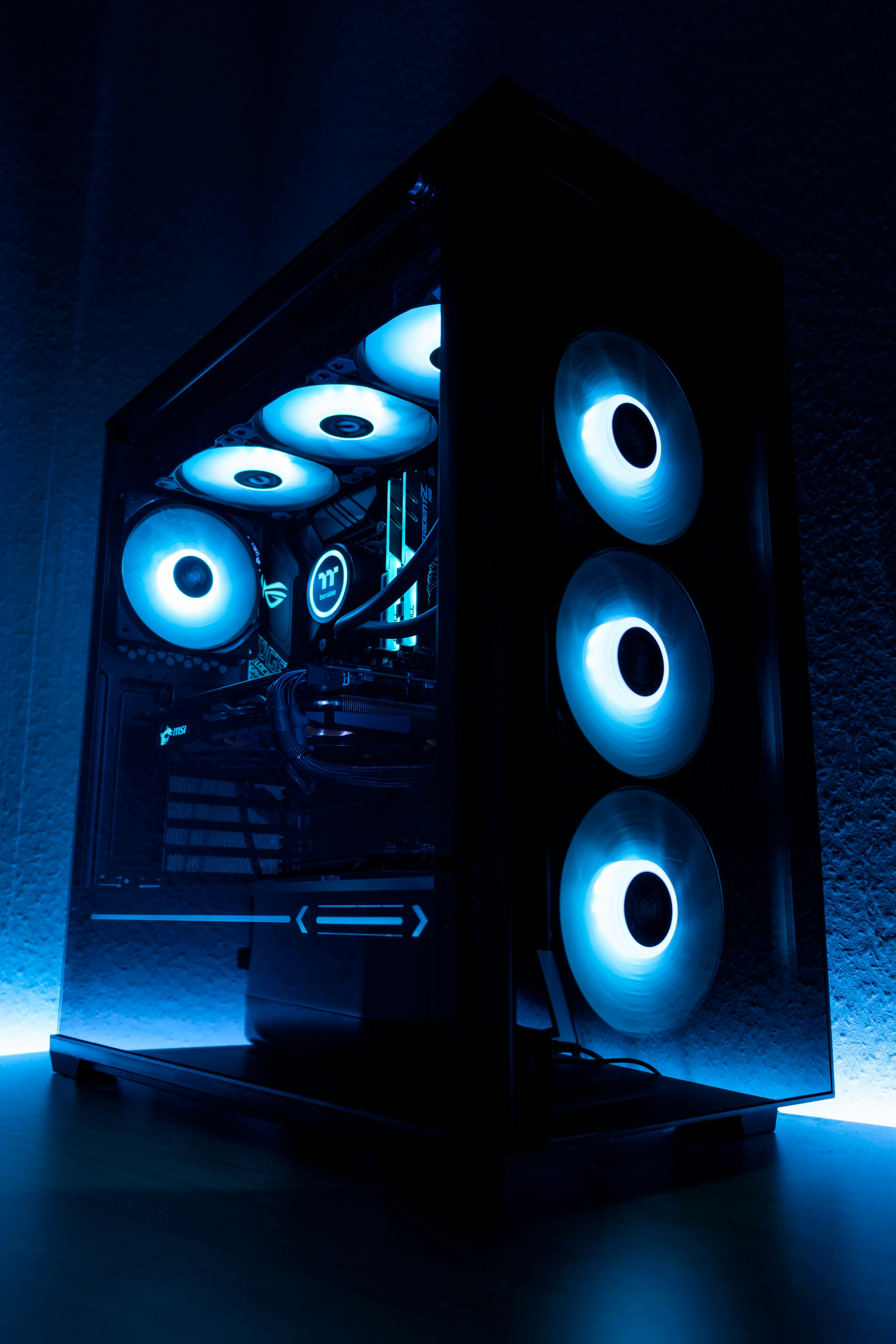
*The silicon architecture of modern consoles heavily dictates whether complex open-world simulations can hit high frame rates.*
Below is a direct comparison of the hardware capabilities between the standard PlayStation 5 and the PlayStation 5 Pro, specifically focused on how these specs impact the rendering and simulation pipelines of a massive open-world title.
### Console Specification Comparison
| Hardware Component | Standard PlayStation 5 | PlayStation 5 Pro | Direct Impact on GTA 6 Performance |
| :--- | :--- | :--- | :--- |
| **CPU Architecture** | AMD Zen 2 (8 Cores / 16 Threads) at 3.5 GHz | AMD Zen 2 (8 Cores / 16 Threads) at 3.85 GHz (High CPU Frequency Mode) | Limits the simulation complexity, NPC logic, traffic density, and physics calculations. Only a 10% clock speed increase. |
| **GPU Compute Units** | 36 CUs (RDNA 2 custom) | 60 CUs (RDNA 3 custom architecture) | Dictates rendering resolution, texture quality, particle effects, and raw pixel output. A 67% increase in compute units. |
| **GPU Raw Performance** | 10.28 TFLOPs | Approximately 16.7 TFLOPs (Dual-issue yields higher paper specs) | Allows for vastly superior ray-traced reflections, shadows, and ambient occlusion. |
| **System Memory** | 16GB GDDR6 (448 GB/s bandwidth) | 16GB GDDR6 (576 GB/s bandwidth) + 2GB DDR5 slow RAM for OS | Faster bandwidth assets streaming, reducing pop-in when speeding through the Leonida map at high speeds. |
| **Upscaling Tech** | Hardware-agnostic temporal upscalers (FSR 2) | PlayStation Spectral Super Resolution (PSSR) | AI-driven upscaling that reconstructs lower-resolution inputs into sharp 4K, saving massive GPU overhead. |
| **Ray Tracing Hardware** | Standard RDNA 2 RT Accelerators | Advanced RDNA 3 RT Engine (2x to 3x traversal speed) | Enables real-time global illumination and high-accuracy reflections across wet streets in Vice City. |
The most critical takeaway from this data is the lopsided nature of the PS5 Pro upgrade. While the GPU receives a massive boost in compute units and memory bandwidth, the CPU remains fundamentally the same Zen 2 architecture found in the base 2020 console. The 10% clock speed bump to 3.85 GHz is a minor refinement, not a generational leap.
---
## The CPU Bottleneck: Why 60 FPS is a Herculian Task
In game development, performance is governed by two primary bottlenecks: GPU-bound scenarios and CPU-bound scenarios.
A game is **GPU-bound** when the graphics processor cannot render the pixels, shaders, and post-processing effects fast enough. If a game runs at 30 FPS because it is GPU-bound, lowering the resolution from native 4K to 1080p, or using AI upscalers like PSSR, will instantly boost the frame rate toward 60 FPS.
A game is **CPU-bound** when the central processor cannot calculate the game's underlying logic fast enough. The CPU is responsible for:
* Running character AI routines, pathfinding, and decision-making trees.
* Calculating complex physics, vehicle handling, and collision detection.
* Managing the audio engine, spatial sound propagation, and scripting events.
* Preparing draw calls (the instructions sent to the GPU telling it what to draw).
If a game is CPU-bound at 30 FPS, no amount of GPU power can push it to 60 FPS. Even if you run the game at a tiny 720p resolution on an incredibly powerful graphics card, the frame rate will remain stuck at 30 FPS because the CPU cannot process the simulation steps any faster.
This is the exact challenge facing the GTA 6 PS5 Pro optimization process.
```
[Base PS5 CPU: 3.5 GHz] --------> Processes 30 frames of AI, physics, and draw calls per second.
[PS5 Pro CPU: 3.85 GHz] -------> Only provides a 10% processing speed increase (approx. 33 FPS limit if fully CPU-bound).
```
Because Rockstar Games builds highly interactive, simulation-heavy worlds, their games are almost always limited by the CPU on home consoles.
---
## RAGE 9 Simulation Load: AI, Physics, and the Living World
The Leonida map is not just a static backdrop; it is designed to be a living, breathing ecosystem. Leaks and official trailers suggest that Rockstar is introducing unprecedented levels of simulation detail that will heavily tax the Zen 2 CPU.
### Advanced Pedestrian and Traffic AI
Rockstar is replacing simple pathfinding nodes with highly complex, reactive AI systems. In Leonida, civilians will have individual schedules, reactive emotional states, and unique memory systems. This means NPCs will remember player actions, react realistically to weather patterns, and interact with each other in complex ways.
Furthermore, the [GTA 6 Police AI: How the New Wanted System, Witness Reports, and CCTV Will Work in Leonida](/news/gta-6-police-ai-wanted-system-witnesses-cctv) reveals that law enforcement will utilize advanced tactical coordination, search grids, and real-time situational awareness. Calculating these behavioral trees for hundreds of active entities in a crowded Vice City intersection requires massive CPU processing cycles.

*The dense urban environments of Vice City will feature highly complex traffic flow, pedestrian AI, and real-time lighting.*
### Cutting-Edge Physics and Ragdoll Systems
Rockstar has spent years refining its proprietary physics systems. The community expects a major evolution of the Euphoria physics engine. As discussed in our analysis of [GTA 6 Gore and Ragdoll Physics: Will Rockstar Bring RDR2’s Brutal Realism to Leonida?](/news/gta-6-ragdoll-physics-gore-rdr2-realism-leaks), the game will feature real-time joint calculation, skeletal damage modeling, and dynamic weight distribution during collisions.
When you crash a sports car into a crowd of pedestrians, the CPU must simultaneously calculate:
1. The deformation physics of the car body.
2. The unique ragdoll reactions of multiple NPCs based on velocity and impact angles.
3. The fluid dynamics of blood splatter and environmental debris.
4. The acoustic propagation of screams, tire screeches, and metal scraping against asphalt.
This level of physical simulation cannot be offloaded to the GPU. It must run on the CPU, frame by frame.
[ROOKIE MISTAKE TO AVOID]: Do not buy a PS5 Pro under the assumption that every single game will automatically run at 60 FPS. If a game's engine is fundamentally limited by the console's CPU, the PS5 Pro cannot magically double the frame rate, regardless of its raw GPU horsepower.
---
## How PSSR and Ray Tracing Transform the PS5 Pro Experience
While a locked 60 FPS might be a stretch due to CPU limitations, the GTA 6 PS5 Pro experience will still be vastly superior to the base console. The primary differentiator will be image quality, lighting accuracy, and visual stability.
### PlayStation Spectral Super Resolution (PSSR)
On the base PS5, Rockstar will likely have to use aggressive dynamic resolution scaling combined with AMD's FSR 2 or FSR 3 to maintain a stable 30 FPS. This can result in a soft, blurry image with noticeable ghosting artifacts around fast-moving objects, such as sports cars speeding through neon-lit streets.
The PS5 Pro bypasses this issue entirely with PSSR. This hardware-accelerated, AI-driven upscaling solution works similarly to Nvidia's DLSS. PSSR analyzes past frames to intelligently reconstruct a high-resolution, razor-sharp 4K image from a lower internal rendering resolution (such as 1080p or 1440p). This allows the GPU to focus its power on rendering high-quality assets, while the AI hardware handles the heavy lifting of making the final output look pristine on a 4K display.
### Uncompromised Ray Tracing
Ray-traced reflections and global illumination are incredibly demanding. On the base PS5, players will likely have to choose between basic ray-traced reflections at a lower resolution or screen-space reflections that disappear when an object leaves the camera's field of view.
The PS5 Pro's upgraded GPU features advanced ray tracing hardware that can calculate light bounces up to three times faster than the base console. In the marshy swamps of the Leonida map, or on the wet, reflective asphalt of Vice City at night, the PS5 Pro will render true-to-life reflections, accurate light refraction through water, and soft, realistic shadows that ground characters and vehicles in the environment.
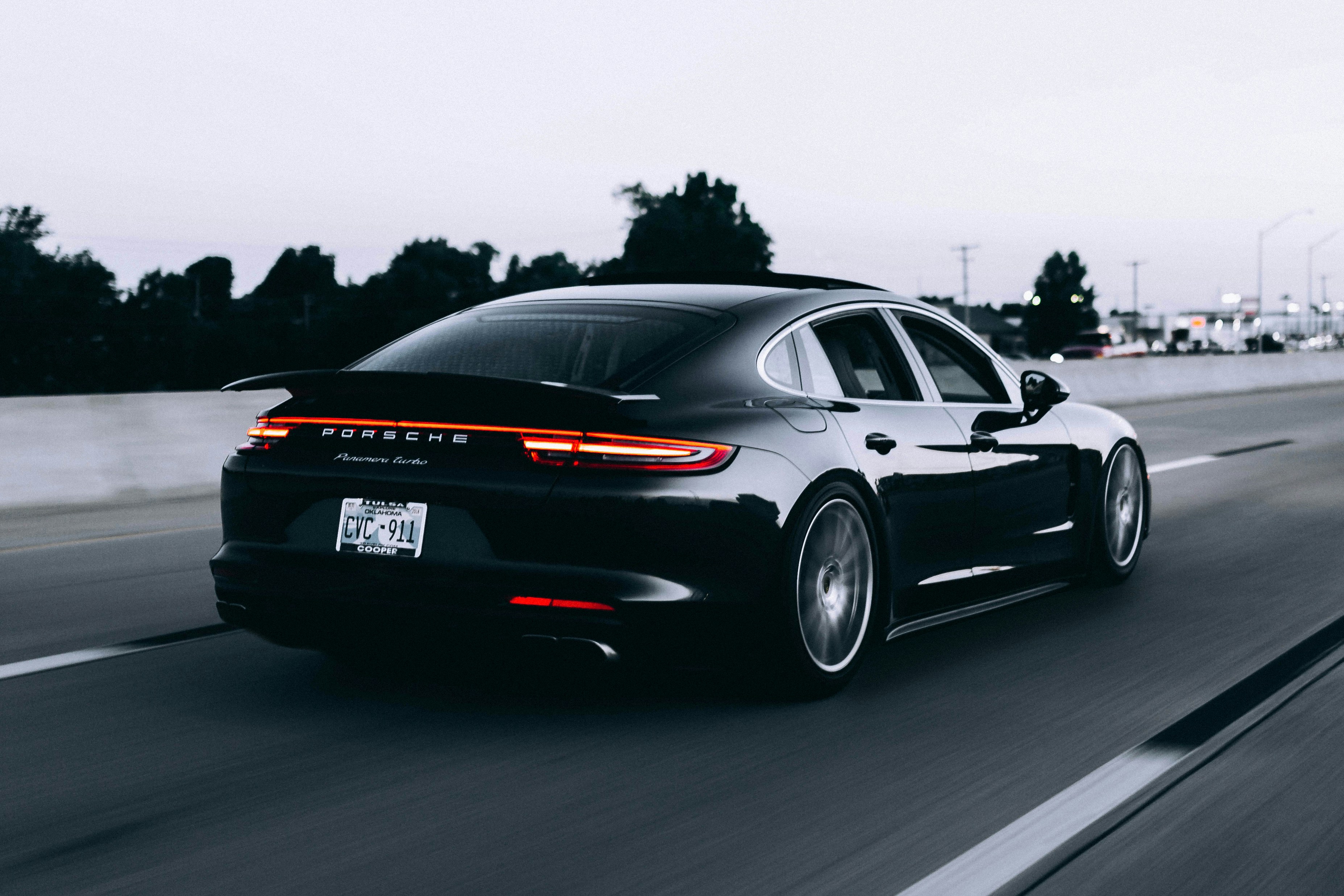
*Advanced ray-traced reflections on car paint and wet streets will be a major visual feature on the PS5 Pro.*
---
## The Golden Mean: Will We Get a 40 FPS Mode?
If 60 FPS is mathematically improbable due to CPU bottlenecks, and 30 FPS feels too sluggish for high-speed action, what is the solution? The savior for PS5 Pro players will likely be a dedicated **40 FPS / 120Hz Quality Mode**.
To understand why 40 FPS is such a massive upgrade, we have to look at frame persistence times (the duration each frame remains on screen):
* **30 FPS:** 33.3 milliseconds per frame.
* **40 FPS:** 25.0 milliseconds per frame.
* **60 FPS:** 16.7 milliseconds per frame.
Mathematically, 40 FPS is exactly halfway between 30 FPS and 60 FPS in terms of rendering time. However, in terms of controller responsiveness and visual smoothness, 40 FPS feels significantly closer to 60 FPS than it does to 30 FPS. It reduces input latency by a massive 8.3 milliseconds compared to standard 30 FPS modes.
```
Frame Time Comparison (Lower is smoother):
[30 FPS] ██████████████████████████████ 33.3ms
[40 FPS] ██████████████████████ 25.0ms (The Sweet Spot)
[60 FPS] ███████████████ 16.7ms
```
To run a game at 40 FPS, you need a display that supports a 120Hz refresh rate. Because 120 is evenly divisible by 40, the console can display a new frame every three screen refreshes, resulting in perfectly even frame pacing with zero screen tearing.
Given the 10% CPU clock increase on the PS5 Pro, pushing the engine from a locked 30 FPS to a highly stable 40 FPS is well within the realm of technical possibility. This allows Rockstar to keep their dense crowds, advanced physics, and complex simulation systems intact while offering a much smoother gameplay experience.
---
## Rockstar's Historical Optimization Strategy
To predict the future, we must examine the past. Rockstar Games has a long history of prioritizing visual fidelity, atmospheric density, and technological breakthroughs over high frame rates at launch.
* **Grand Theft Auto IV (2008):** Launched on PS3 and Xbox 360 with a highly unstable frame rate that frequently dipped into the low 20s. Rockstar chose to push advanced physics (Euphoria) and dynamic lighting rather than stripping the game down for performance.
* **Grand Theft Auto V (2013):** Released at the tail end of the PS3 and Xbox 360 lifecycle. It was a technical marvel, but it ran at a strict 30 FPS (often dropping below 25 FPS in chaotic situations). It took a full remaster on PS4 and Xbox One to stabilize the frame rate, and a subsequent PS5/Xbox Series X release to finally offer a native 60 FPS mode.
* **Red Dead Redemption 2 (2018):** Launched on PS4 and Xbox One as one of the most visually stunning games ever made. Even on the mid-gen upgrades (PS4 Pro and Xbox One X), Rockstar opted for a locked 30 FPS to preserve the game's incredible draw distances, advanced cloud simulation, and deep animal AI ecosystem.
This historical pattern suggests that Rockstar views 30 FPS as the baseline standard for console gaming. They design their engines to maximize the visual and interactive density of the world within that 33.3ms frame budget.
The development timeline of this sequel has been incredibly long. As discussed in [Why Is GTA 6 Taking 13 Years to Make? RAGE Engine Upgrades, Rockstar Culture Shifts & Development Timeline Explained](/news/why-is-gta-6-taking-13-years-development-timeline-explained), Rockstar has spent over a decade re-engineering their engine pipeline. They are highly unlikely to compromise on their vision of a highly populated, hyper-realistic Leonida just to hit 60 FPS on a mid-gen console refresh.
---
## The Role of Frame Generation: Can AMD's Tech Save 60 FPS?
There is one potential wildcard in the performance debate: **Frame Generation**. Both AMD (with FSR 3 Fluid Motion Frames) and Sony (potentially through future iterations of PSSR) have developed technology that inserts AI-generated frames between traditionally rendered frames.
If GTA 6 runs at an internal, CPU-bound 30 FPS, frame generation software could theoretically generate a "fake" intermediate frame between every real frame, outputting a 60 FPS signal to the television.
However, frame generation is not a magic cure-all. It comes with two massive drawbacks:
1. **Input Latency:** Frame generation does not reduce input lag; in fact, it often increases it slightly because the system must delay the display of the current frame to calculate the interpolated frame. Playing a fast-paced shooter or driving at high speeds with 30 FPS input latency mapped to a 60 FPS visual output can feel incredibly sluggish and unresponsive.
2. **Visual Artifacts:** Generating frames from a low base rate of 30 FPS often results in severe visual glitches, such as screen tearing, ghosting around fast-moving cars, and shimmering around fine details like power lines and foliage. Frame generation works best when upscaling from a stable base of at least 60 FPS to 120 FPS, not from 30 FPS to 60 FPS.
While Rockstar could implement frame generation as an optional setting, it is highly unlikely to be the default performance profile due to these visual and gameplay compromises.
[PRO-GAMER HACK]: If you are planning to play GTA 6 on a PS5 Pro, invest in a gaming monitor or television that supports Variable Refresh Rate (VRR) and has a native 120Hz panel. This ensures that even if the game targets an unlocked 40–50 FPS, your display will synchronize perfectly with the console's output, eliminating judder and screen tearing.
---
## Final Verdict: What Performance Should You Expect?
Based on the architectural limitations of the PS5 Pro, the computational demands of the RAGE 9 engine, and Rockstar's historical design philosophy, we can map out the highly realistic performance targets for GTA 6 across both PlayStation consoles.
### Predicted Performance Profiles
* **Standard PlayStation 5 (Quality Mode):** Native 1440p reconstructed to 4K via FSR 2, running at a locked 30 FPS with high crowd density, basic ray-traced reflections, and standard shadow maps.
* **Standard PlayStation 5 (Performance Mode):** Dynamic 1080p to 1440p resolution running at an unlocked 45-60 FPS, with significantly reduced pedestrian density, simplified physics, and disabled ray tracing. (Note: This mode may not even be available at launch if the CPU bottleneck is too severe).
* **PlayStation 5 Pro (PSSR Quality Mode):** Sharp, AI-reconstructed 4K resolution running at a locked 30 FPS or 40 FPS (on 120Hz displays). Features maximum civilian density, advanced [GTA 6 Car Customization](/news/gta-6-car-customization-tuning-midnight-club-leonida) asset streaming, full ray-traced global illumination, and incredibly high-fidelity reflections.
* **PlayStation 5 Pro (PSSR Performance Mode):** Reconstructed 4K resolution targeting 60 FPS, achieved by slightly lowering CPU-heavy simulation elements (such as traffic density and pedestrian variety) while maintaining high-end visual assets and basic ray tracing.
Ultimately, the PS5 Pro will be the definitive console platform to experience the sequel. It will offer unprecedented visual clarity, stable frame pacing, and ray-traced beauty that the base console simply cannot match. However, expecting a flawless, native 60 FPS experience without any compromises to the game's simulation depth is a misunderstanding of modern console hardware limitations.
---
## Frequently Asked Questions
### Will GTA 6 run at 60 FPS on the base PS5?
It is highly unlikely that GTA 6 will achieve a stable 60 FPS on the base PS5 without massive compromises to visual fidelity, crowd density, and physics calculations. The base console's Zen 2 CPU is simply too weak to handle both the complex simulation of Leonida and a high frame rate container simultaneously. If a 60 FPS performance mode exists, expect a significantly emptier world and a much lower rendering resolution.
### Why is the CPU so important for GTA 6 performance?
The CPU acts as the brain of the game. It calculates everything that makes the world feel alive: civilian AI behaviors, traffic flow, police response systems, environmental physics, and vehicle handling. While the GPU draws the beautiful pixels, it cannot do its job until the CPU tells it what to draw. In a dense, highly interactive game like GTA 6, the CPU is the primary limiting factor for performance.
### Will the PS5 Pro version have exclusive gameplay features?
No. Rockstar Games will maintain gameplay parity across all console platforms. The PS5 Pro version will not feature exclusive missions, larger maps, or different gameplay mechanics. The upgrades will be purely visual and performance-based, such as sharper resolutions via PSSR,