# Is GTA 6 Capped at 30 FPS on PS5? Ray Tracing Limits, PS5 Pro 60 FPS Mode & Performance Targets Explained
### Quick Answer
> Grand Theft Auto 6 will run at a locked 30 FPS on baseline PS5 hardware due to massive Zen 2 CPU bottlenecks, heavy ray-traced global illumination, complex crowd AI, and dense physics processing across the Leonida map. A 60 FPS mode requires PS5 Pro PSSR hardware.
| Console Platform | Target Resolution | Target Frame Rate | Ray Tracing Support | Primary Hardware Bottleneck |
| :--- | :--- | :--- | :--- | :--- |
| **PlayStation 5 (Base)** | Dynamic 1440p - 4K | 30 FPS (Locked) | RTGI & RT Reflections | CPU Clock Speed & BVH Calculation |
| **PlayStation 5 Pro** | Dynamic 1440p - 4K (PSSR) | 40 FPS / 60 FPS (Target) | Advanced RT Hardware Acceleration | System Memory Bandwidth / CPU Bounds |
| **Xbox Series X** | Dynamic 1440p - 4K | 30 FPS (Locked) | RTGI & RT Reflections | CPU Execution Pipelines |
| **Xbox Series S** | Dynamic 1080p | 30 FPS (Locked) | Limited RT Shadow Maps | Unified RAM Bandwidth (8GB + 2GB) |
### 4-Step Technical Pipeline: How Rockstar Processes Leonida
1. **CPU Simulation Phase:** The Zen 2 processor calculates world states, weather vectors, crowd behavioral matrices, vehicle AI paths, and sub-faction territorial interactions.
2. **BVH & Ray Tracing Dispatch:** Structural spatial data updates bounding volume hierarchies for realtime Ray-Traced Global Illumination (RTGI) calculations.
3. **GPU Rasterization & Upscaling:** AMD RDNA 2 GPU computes geometry, shading, sub-surface scattering, and passes raw frames to temporal upscalers or PSSR.
4. **Display Presentation:** Frame pacing constraints lock output to 33.3ms intervals to eliminate frame-time spikes on standard 60Hz and 120Hz display panels.
---
## The Zen 2 CPU Wall: Why Graphics Cards Aren't the Main Bottleneck
Console performance debates typically center on graphics processors, TFLOPS, and rasterization power. When analyzing whether the **GTA 6 30 FPS PS5** target is accurate, visual renderer capabilities form only half the equation. Rockstar Games builds engine architectures that push system processors harder than almost any other developer in the industry.
```
[System CPU: Zen 2 @ 3.5GHz]
│
├──► 1. Advanced Pedestrian AI & Spatial Pathfinding
├──► 2. Sub-Faction Territorial Logic (Cartels, Mud Clubs)
├──► 3. Volumetric Atmospheric Vector Processing
└──► 4. Complex Vehicle Deformation & Suspension Physics
│
▼
[System GPU: RDNA 2 @ 10.28 TFLOPS] ◄── Must wait for CPU frame completion!
│
└──► Frame Time Exceeds 16.6ms Threshold ──► Forced 30 FPS Lock (33.3ms)
```
The standard PlayStation 5 runs on a custom 8-core, 16-thread AMD Zen 2 CPU clocked at a dynamic frequency up to 3.5 GHz. While this processor represented a monumental upgrade over the jaguar-based CPU inside the PlayStation 4, modern game engine development has rapidly eaten away at that overhead. The proprietary RAGE 9 engine requires massive processing power to handle the background simulation demands of Vice City and the surrounding state of Leonida.
>
[PRO-GAMER TACTICAL HACK]: Prepare your gaming setup for 30 FPS display optimization long before launch day. If your display supports HDMI 2.1 and Variable Refresh Rate (VRR), ensure your TV settings enable Low Latency Mode and motion blur adjustments. Running a locked 30 FPS title with steady frame pacing on an OLED panel can feel noticeably crisper if your display's response time compensation is tuned properly.
Every frame generated in GTA 6 requires the CPU to complete several tasks before the GPU can render visual assets:
* **Pedestrian Dynamic Behavior:** Thousands of individual NPC entities navigating ocean boardwalks, shopping centers, and highways simultaneously using un-scripted collision evasion.
* **Sub-Faction Territorial AI:** Complex dynamic encounters involving groups like the Thrillbilly Mud Club in rural Vice Dale or the San Chianis Cartel in Port Vice executing real-time combat maneuvers.
* **Dynamic Physics Calculations:** Real-time fluid simulation for coastal tides, foliage displacement from helicopter rotor wash, dynamic vehicle weight balance shifts during high-speed cornering, and detailed luggage trunk loot capacity systems.
* **CCTV and Law Enforcement Matrices:** Real-time facial recognition checks, crime-scene visual cone tracking, and regional police dispatch algorithms.
When these background systems execute simultaneously across dense urban environments like Vice Beach, the CPU time required to calculate a single frame frequently exceeds 16.6 milliseconds—the maximum time budget allowed for a 60 FPS presentation. If frame calculation takes 22 milliseconds, the engine misses the 60 FPS refresh window entirely, dropping down to a 33.3ms target: a 30 FPS frame rate.
To keep up with asset loading speeds across this dense landscape, players need high-speed storage solutions. You can read our exhaustive breakdown on
Will GTA 6 Be 300 GB? Expected Download Size, SSD Storage Requirements & Map Density Explained to understand how NVMe bandwidth impacts real-time rendering.
---
## RAGE 9 Engine Physics: Ray Tracing & Visual Density
Rockstar Games has consistently pushed technological standards with every release. The RAGE 9 engine upgrade introduces hardware-accelerated Ray-Traced Global Illumination (RTGI), ambient occlusion, and realtime reflections across ocean surfaces, puddle formations, vehicle paint setups, and building glass facades.

*The dynamic neon-lit streets of Vice City rely heavily on hardware-accelerated Ray-Traced Global Illumination (RTGI), creating intensive real-time lighting calculations that heavily strain baseline console hardware.*
In legacy titles like GTA 5, street lighting, sunlight bounce, and window reflections relied on pre-baked lightmaps and planar reflection probes. These techniques allowed high frame rates but created visual breaks when objects or environmental conditions changed dynamically. In GTA 6, dynamic cloud formations, thunderstorm lighting passes, and changing neon signs across Ocean Drive cast hyper-realistic bounce light that changes frame-by-frame.
### Interactive Interior Environments
Render targets are further strained by interior detail rendering. RAGE 9 supports seamless transitions into thousands of interactive interior spaces. Players can run directly from an outdoor street corner straight into Ocean Drive hotel lobbies, Port Vice shipping warehouses, Vice Dale pawn shops, or Everglades bayou cabins without encountering loading screens.
For a comprehensive list of interior spaces and structural access mechanics mapped out by leaks and official footage, check out our guide on
GTA 6 Enterable Buildings: Every Confirmed & Rumored Interior Location in Leonida.
Rendering exterior street traffic while simultaneously calculating physics states, lighting reflections, and NPC interactions inside adjacent shop interiors forces the system memory bandwidth (GDDR6) to transfer gigabytes of dynamic data per second. On baseline PS5 hardware, lowering resolution parameters via dynamic resolution scaling (DRS) can free up GPU power, but DRS cannot relieve a system that is bound by CPU limits. As a result, locking the title to a stable 30 FPS becomes a technical necessity rather than a design preference.
>
[ROOKIE MISTAKE TO AVOID]: Do not assume buying an expensive high-refresh-rate 240Hz monitor will magically transform a hard 30 FPS console title into a 60 FPS experience. If a game is hard-coded to a 30 FPS target due to CPU rendering bounds, your display will simply duplicate frames. Look for native TV VRR ranges (typically 48Hz - 120Hz) to smooth out minor frame-pacing hiccups instead.
---
## Technical Specifications & Retail Hardware Expectations
Navigating hardware requirements across regions like the United States ($69.99 / $79.99 games MSRP) and the United Kingdom (£69.99 / £74.99 editions) requires evaluating platform performance metrics directly. Western retailers such as GameStop, Best Buy, Target, Walmart, PS Direct, UK GAME, and Amazon US/UK are marketing hardware bundles around next-generation gaming targets.
| Hardware Feature | PlayStation 5 Standard | PlayStation 5 Pro | Xbox Series X | Xbox Series S |
| :--- | :--- | :--- | :--- | :--- |
| **Retail Price (US/UK)** | $499.99 / £479.99 | $699.99 / £699.99 | $499.99 / £479.99 | $299.99 / £249.99 |
| **CPU Architecture** | 8-Core Zen 2 @ 3.5GHz | 8-Core Zen 2 @ 3.85GHz | 8-Core Zen 2 @ 3.8GHz | 8-Core Zen 2 @ 3.6GHz |
| **GPU Compute Units** | 36 CUs (RDNA 2) | 60 CUs (RDNA 3 Based) | 52 CUs (RDNA 2) | 20 CUs (RDNA 2) |
| **GPU Clock Speed** | 2.23 GHz | Variable High Clock | 1.825 GHz | 1.565 GHz |
| **Theoretical TFLOPS** | 10.28 TFLOPS | ~16.7 TFLOPS (FP32) | 12.15 TFLOPS | 4.0 TFLOPS |
| **Memory Bandwidth** | 448 GB/s (16GB GDDR6) | 576 GB/s (16GB GDDR6) | 560 GB/s (10GB/6GB) | 224 GB/s (8GB/2GB) |
| **Upscaling Engine** | FSR / Temporal Upscaler | PSSR AI Hardware Upscaler | FSR / Temporal Upscaler | FSR / Temporal Upscaler |
| **Estimated GTA 6 Target** | **1440p / 30 FPS** | **Dynamic 4K / 40-60 FPS** | **1440p / 30 FPS** | **1080p / 30 FPS** |
---
## Can the PS5 Pro Achieve 60 FPS in GTA 6?
The release of the PlayStation 5 Pro introduces upgraded graphics performance, offering up to 45% faster rendering speeds, enhanced hardware-accelerated ray tracing units, and PlayStation Spectral Super Resolution (PSSR)—a proprietary machine-learning upscaling technology similar to Nvidia DLSS or AMD FSR.

*Advanced upscaling hardware like Sony's PSSR uses specialized machine-learning hardware blocks to reconstruction lower base render resolutions into crisp 4K output, relieving graphics workload.*
While these upgrades improve the console's graphical capabilities, achieving a locked 60 FPS output depends on whether the game is bound by GPU or CPU constraints:
### Scenario A: The Game is Systematically CPU Bound
If calculating city simulation metrics, NPC logic paths, structural physics setups, and sub-faction parameters strains all 8 cores of the Zen 2 CPU on a baseline PS5, the PS5 Pro's minor 10% CPU clock increase (stepping up to 3.85 GHz in High CPU Frequency Mode) will **not** be enough to double frame performance from 30 FPS to 60 FPS.
In this scenario, the PS5 Pro will run GTA 6 at a **locked 30 FPS or a tuned 40 FPS Mode (120Hz display target)**, but with higher native image quality, sharper PSSR upscaling to full 4K, and richer RTGI ambient lighting.
### Scenario B: The Game is GPU/Bandwidth Bound
If Rockstar engineers can offloading heavy processing tasks—such as BVH structure building, ray-traced reflections, particle physics sorting, and sound propagation calculations—onto specialized hardware units inside the PS5 Pro's GPU, the CPU freed from these burdens might successfully hit a 60 FPS threshold.
If a 60 FPS Performance Mode is included on the PS5 Pro, expect it to utilize heavy PSSR upscaling from an internal render resolution around 1080p-1296p, while turning down ray-traced reflections across vehicles and ocean bodies.
---
## Mechanical Nuances: Vehicle Dynamics, Firearm Mechanics & Input Lag
Framerate directly dictates tactile gameplay response times. Operating vehicles or engaging in firefights at 30 FPS introduces a baseline input delay of approximately 33.3 milliseconds per frame, compared to 16.6 milliseconds at 60 FPS.
```
Input Latency Comparison (Frame Processing Window)
┌────────────────────────────────────────────────────────┐
│ 30 FPS Target: 33.3ms Latency Window per Frame │
├───────────────────────────────┬────────────────────────┤
│ CPU Simulation (15ms) │ GPU Render (18.3ms) │
└───────────────────────────────┴────────────────────────┘
┌────────────────────────────────────────────────────────┐
│ 60 FPS Target: 16.6ms Latency Window per Frame │
├───────────────┬────────────────────────────────────────┘
│ CPU (8ms) │ GPU (8.6ms) ◄── Demands 2x faster system throughput!
└───────────────┴────────────────┘
```
### Vehicle Dynamics and Driving Physics
Vehicle mechanics in GTA 6 are designed to feel more grounded and realistic than the floaty driving models of previous games:
* **Low-RPM Turbo Lag and Gear Ratios:** Accelerating around sharp corners on Vice Beach Boulevard requires managing dynamic torque curves. Dropping frame rates during high-speed chases could make precision drift maneuvers or evasive PIT maneuvers harder to execute cleanly.
* **Tire Friction & Terrain Deformation:** Driving off-road through Everglades mud banks or marshlands causes dynamic tire sinking. The game engine continuously calculates surface friction coefficients across all four tire contact points in real time.
### Weapon Mechanics & Combat Physics
Firearms combat in GTA 6 introduces heavy weapon sway, dual-wield weight balance trade-offs, dynamic hitboxes, and weapon concealment limits:
```
┌────────────────────────────────────────┐
│ Lucia / Jason Concealment Matrix │
└───────────────────┬────────────────────┘
│
┌──────────────────────────┴──────────────────────────┐
▼ ▼
┌─────────────────────┐ ┌─────────────────────┐
│ High-Vis Firearm │ │ Compact Pistol │
│ (Assault Rifle) │ │ (Sub-compact 9mm) │
├─────────────────────┤ ├─────────────────────┤
│ • Holster: Sling │ │ • Holster: Waistband│
│ • Ped Detection: High│ │ • Ped Detection: Low│
│ • Aim Sway: Low │ │ • Aim Sway: Med │
│ • Movement Penalty: │ │ • Movement Penalty: │
│ 15% Speed Reduction│ │ 0% Speed Reduction│
└─────────────────────┘ └─────────────────────┘
```
When Lucia or Jason pulls a heavy rifle from a sling strap, the character model accounts for weapon inertia and movement penalties. To learn more about Lucia's story arc, abilities, and background mechanics, read our complete analysis on
Who Is Lucia in GTA 6? Female Protagonist Storyline, Voice Actor & Leaks Explained.
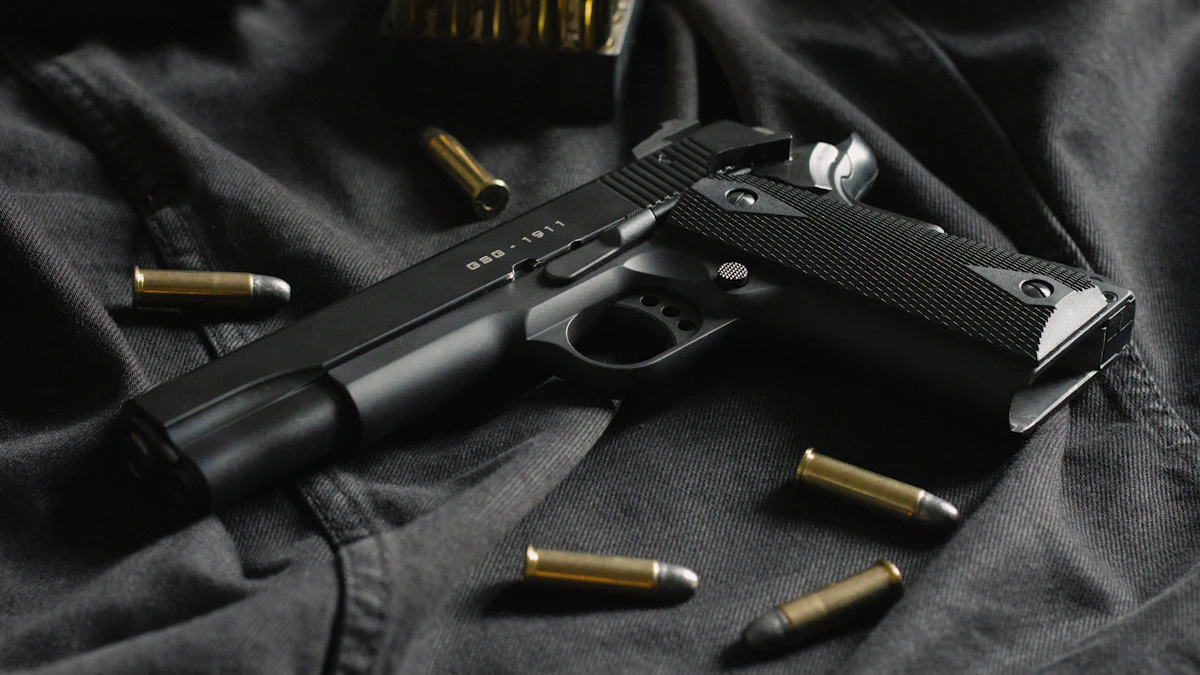
*Dynamic holster mechanics and physicalized weapon storage systems place high calculation demands on character physics and animation blending engines.*
At 30 FPS, compensating for crosshair sway requires smoother analog stick adjustments. Players accustomed to fast-paced competitive shooters running at 60 FPS or 120 FPS will need to adapt to the weightier, deliberate aim dynamics present in Rockstar's modern control systems.
---
## Exploring the Leonida Map: Scale, Density, and Real-World Comparisons
The total landmass of Leonida represents the largest, most visually detailed continuous map Rockstar Games has ever constructed. Understanding why frame performance targets are locked at 30 FPS requires looking at the sheer geographical diversity across the state.

*The geographical landscape ranges from modern high-rise districts in downtown Vice City to tropical beach strips, expansive swamp ecosystems, and small rural communities.*
The map stretches far beyond downtown Vice City, covering distinct biome zones:
* **Greater Vice City Metro:** Densely packed skyscrapers, neon-lit hotels, multi-lane highways, dynamic pedestrian sidewalks, and commercial shipping yards.
* **Grassrivers (The Everglades):** Vast aquatic swamp ecosystems rendered with complex water displacement, dynamic foliage density, wildlife behavioral AI (alligators, panthers, bird flocks), and shifting weather phenomena.
* **Kelly County & Rural Outlying Towns:** Mud tracks, industrial yards, trailer parks, and sub-faction hideouts belonging to regional organized crime syndicates.
* **The Leonard Keys:** Long highway bridges spanning expansive water surfaces, requiring long-distance asset streaming as vehicles cross between islands at high speeds.
For a detailed geographical breakdown comparing Vice City to its real-world counterpart, read our feature on
What City Will GTA 6 Be Based Off Of? Exploring Vice City, Leonida State, and Real-World Miami.
Streaming these varied ecosystems seamlessly at high speeds places continuous demands on system RAM and storage interfaces. Driving a supercar across Key Largo bridges into central Vice City at top speed strains the engine's asset streaming pipeline. A 30 FPS limit provides a stable frame budget, preventing asset popping, visual stuttering, or dynamic low-resolution mesh drops during high-speed navigation.
---
## Xbox Series X and Series S Performance Targets
While the PlayStation ecosystem remains a primary hardware reference point, performance on Microsoft's console family presents unique development challenges:
```
[System RAM Bandwidth Bottleneck - Xbox Series S]
┌────────────────────────────────────────────────────────┐
│ Fast Pool: 8GB @ 224 GB/s ──► Core Engine & Render Data│
├────────────────────────────────────────────────────────┤
│ Slow Pool: 2GB @ 56 GB/s ──► OS & Basic Audio Pipeline │
└────────────────────────────────────────────────────────┘
▲
└── Limited RAM bandwidth prevents high-res texture streaming & RTGI!
```
### Xbox Series X
Hardware specifications on the Xbox Series X closely mirror the standard PlayStation 5. Featuring a slightly higher GPU raw compute output (12.15 TFLOPS across 52 CUs) alongside an 8-core Zen 2 CPU clocked at 3.8GHz, the Xbox Series X faces identical system bounds. GTA 6 will run at a target **1440p to 4K dynamic resolution at 30 FPS** on Xbox Series X, using temporal upscaling techniques matching the base PS5.
### Xbox Series S
The Xbox Series S represents the tightest performance bottleneck for multi-platform next-gen titles. With 4.0 TFLOPS of compute power, a lower memory bandwidth footprint (8GB fast GDDR6 RAM paired with 2GB slower RAM), and reduced memory allocation, running GTA 6 requires significant graphical scale-backs:
* **Resolution Target:** Dynamic 900p scaling up to a 1080p target display output.
* **Ray Tracing Adjustments:** Hardware-accelerated Ray-Traced Global Illumination will likely be disabled or replaced with pre-baked screen-space reflections (SSR) and standard shadow maps.
* **Crowd Density:** NPC pedestrian traffic and highway vehicle counts will be reduced in urban sectors like Vice Beach to keep CPU overhead within system limits.
* **Frame Rate Target:** A locked, stable **30 FPS**. A 60 FPS output is not technically feasible on Series S hardware.
---
## Summary of Platform Performance Metrics
To help summarize console frame rates, expected rendering setups, and hardware limits, here is an overview of performance targets across all current platform configurations:
```
GTA 6 Performance Matrix Across Consoles
┌──────────────────┬───────────┬──────────────────────┬────────────────┐
│ Platform │ Target FPS│ Render Resolution │ Ray Tracing │
├──────────────────┼───────────┼──────────────────────┼────────────────┤
│ PlayStation 5 │ 30 FPS │ Dynamic 1440p - 4K │ RTGI Enabled │
│ PS5 Pro (Base) │ 30 FPS │ Crisp 4K (PSSR) │ Advanced RTGI │
│ PS5 Pro (Perf) │ 40-60 FPS │ Dynamic 1080p - 1440p│ Reduced RT │
│ Xbox Series X │ 30 FPS │ Dynamic 1440p - 4K │ RTGI Enabled │
│ Xbox Series S │ 30 FPS │ Dynamic 900p - 1080p │ Disabled / SSR │
└──────────────────┴───────────┴──────────────────────┴────────────────┘
```
---
## Frequently Asked Questions
### Why is GTA 6 locked at 30 FPS on PS5?
GTA 6 runs at 30 FPS on baseline PS5 hardware due to CPU processing constraints. The console's AMD Zen 2 processor must handle dense crowd AI, complex physics calculations, sub-faction behaviors, and structural background logic for the state of Leonida. These heavy CPU tasks make pushing frame output beyond 30 FPS during dense gameplay segments impractical.
### Will the PS5 Pro run GTA 6 at 60 FPS?
The PS5 Pro offers enhanced GPU performance and hardware-assisted PSSR upscaling, but achieving a locked 60 FPS depends on whether the game is bound by CPU or GPU performance limits. If the overall frame time is limited by the system processor, the PS5 Pro may instead target a highly stable 30 FPS mode with elevated native image clarity, or a dedicated 40 FPS mode designed for 120Hz display setups.
### Can graphics settings be adjusted on PS5 to reach 60 FPS?
Console releases traditionally lack granular graphic setting sliders like those found in PC gaming. While Rockstar Games may offer a basic "Performance Mode" that lowers internal render resolutions and disables ray-traced reflections, doing so will not increase frame rates if system performance remains limited by core CPU bottleneck parameters.
### Is GTA 6 coming to PC at launch?
Rockstar Games has officially announced GTA 6 for PlayStation 5 and Xbox Series X/S platforms for its initial release window. Historically, Rockstar releases PC versions roughly 12 to 18 months following initial console launches, allowing additional development time to adapt engine rendering pipelines for custom multi-threaded PC processors and high-end graphics cards.
### Will Xbox Series S support Ray Tracing in GTA 6?
The Xbox Series S lacks the GPU memory bandwidth and system RAM required to support complex, hardware-accelerated Ray-Traced Global Illumination (RTGI). To maintain a stable 30 FPS frame rate on Series S, ray tracing features will be disabled or replaced with traditional screen-space reflections and static light