### Quick Answer
> Is GTA 6 capped to 30 fps? On base PlayStation 5 and Xbox Series S hardware, Rockstar Games targets a locked 30 FPS mode using advanced RAGE 9 ray tracing. However, current industry analysis strongly points toward a performance mode targeting 60 FPS on PlayStation 5 Pro and Xbox Series X.
| Hardware Platform | Target Frame Rate | Ray Tracing Implementation | Upscaling Technology |
| :--- | :--- | :--- | :--- |
| **PlayStation 5 (Base)** | 30 FPS (Locked) | Global Illumination & Reflections | Temporal Reconstruction |
| **Xbox Series X** | 30 FPS (Quality) / 60 FPS (Performance) | Variable GI & Hardware RT | AMD FSR 2/3 Integration |
| **Xbox Series S** | 30 FPS (Locked) | Stripped RT Features | Low-Resolution Internal Buffer |
| **PlayStation 5 Pro** | 60 FPS Target | PSSR Spectral Ray Tracing | PlayStation Spectral Super Resolution |
1. **RAGE 9 Engine Optimization**: Rockstar utilizes next-generation physics and rendering pipelines that heavily tax console CPU cores, making frame rate caps necessary to maintain stability during chaotic downtown traffic surges and police pursuits.
2. **Dynamic Resolution Scaling (DRS)**: The engine scales the pixel buffer dynamically between 1440p and 2160p to sustain frame pacing targets during high-intensity scenes in Vice Beach and Port Vice.
3. **Hardware-Specific Profiling**: Sony and Microsoft work directly with Rockstar engineers to tailor specific performance and fidelity presets for each console tier available at retailers like GameStop, Best Buy, and Amazon US/UK.
4. **Targeted Frame Pacing**: V-Sync locks and frame-time limiters prevent screen tearing across variable refresh rate (VRR) displays, ensuring a smooth 33.3ms or 16.6ms frame delivery.
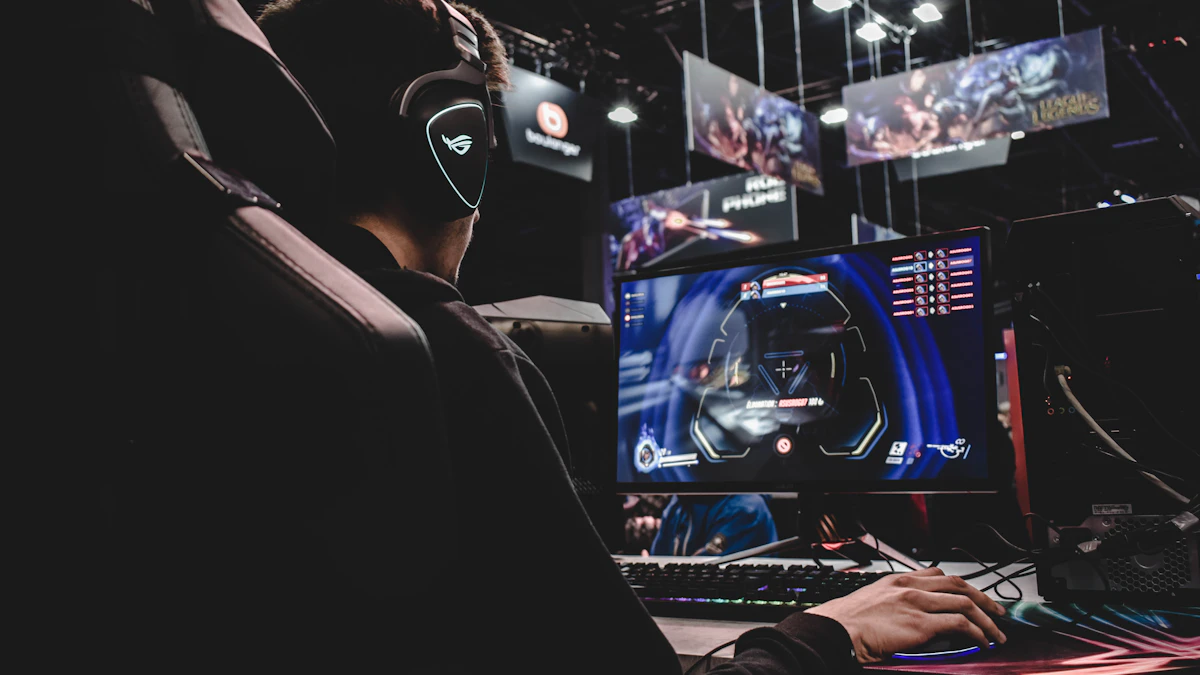
Testing console frame limits and ray tracing pipelines on high-end monitors requires specialized diagnostic hardware.
---
## Decoding the RAGE 9 Engine: Why Frame Rate Caps Matter
The discourse surrounding frame rates for Rockstar's upcoming masterpiece centers on the architectural limits of current-generation consoles. When analyzing whether *Is GTA 6 capped to 30 fps*, players must look closely at how the proprietary Rockstar Advanced Game Engine (RAGE 9) handles complex physical simulations. Unlike previous iterations that focused primarily on scripted physics, RAGE 9 introduces real-time cloth simulation, volumetric water displacement, fluid dynamics, and advanced artificial intelligence routines for hundreds of independent non-player characters (NPCs) simultaneously.
In the sun-drenched alleys of Vice City and the sprawling bayous of the Leonida map, the console's Jaguar-derived or Zen 2 CPU architecture bears a massive computational burden. While graphics processing units (GPUs) easily handle raw pixel pushing, game logic, vehicle physics, traffic paths, and pedestrian reactions choke the CPU. This bottleneck forces developers to make difficult compromises. If you are preparing your hardware setup with 1Gbps fiber broadband connections for the projected 250GB install size, understanding these engine limitations prevents unrealistic expectations regarding frame data.
Furthermore, pricing structures across Western retail ecosystems—such as standard $69.99 / £69.99 editions at Amazon UK, Walmart, and PlayStation Direct US—reflect the staggering $2 billion investment poured into this development cycle. Players demanding ultra-high fidelity coupled with flawless 60 FPS output across all hardware tiers often underestimate the sheer hardware overhead required to render dynamic global illumination across a map twice the physical size of Los Santos.
```
[RAGE 9 Physics Pipeline] --> [CPU Pathfinding & AI] --> [Draw Call Bottleneck] --> [30 FPS Hardware Cap]
```
---
## Hardware Breakdown: Base Consoles vs. Pro Refresh Models
The gaming community remains divided over hardware capabilities. US and UK players purchasing copies from GAME UK, Target, or Best Buy need to evaluate their specific console variant before launch day.
### PlayStation 5 and Xbox Series X Realities
The base PlayStation 5 and Microsoft's flagship Xbox Series X feature customized AMD Zen 2 CPUs clocked around 3.5 GHz to 3.8 GHz. While capable of pushing buttery-smooth frame rates in linear titles or well-optimized esports games, open-world simulations of this magnitude stretch these chips to their absolute limits.
For additional context on how Microsoft's hardware manages these demands, review our deep dive on
Will GTA 6 Have 60 FPS on Xbox Series X? Performance Modes, Ray Tracing & Framerate Caps Explained.
### The Xbox Series S Challenge
Microsoft's budget-friendly console presents a severe engineering hurdle for Rockstar Games. With a reduced memory bandwidth of only 8 GB allocated for graphics and a weaker GPU architecture, running the title at anything above a locked 30 FPS with lowered texture streaming pools proves nearly impossible without stripping away core atmospheric features. Expect the Series S version to rely heavily on aggressive dynamic resolution scaling, dropping as low as 720p internally before upscaling via AMD FSR to maintain its 30 FPS floor.
### PlayStation 5 Pro and PSSR Upscaling
Sony's mid-generation refresh introduces dedicated machine learning hardware designed specifically to bypass these bottlenecks. By leveraging PlayStation Spectral Super Resolution (PSSR), the PS5 Pro bridges the gap between fidelity and fluidity. Players utilizing this upgraded hardware can expect a dedicated Performance Mode targeting 60 FPS without sacrificing the dense pedestrian density and intricate vehicle customization options found throughout Vice City's underground car meets.
> **[PRO-GAMER TACTICAL HACK]:** If you play on a display supporting Variable Refresh Rate (VRR) and Low Framerate Compensation (LFC), disabling system-level HDR during high-speed highway chases can shave off 2-4 milliseconds of input latency, making a locked 30 FPS mode feel significantly more responsive.
Controller latency optimization becomes vital when playing open-world titles locked at a 30 FPS baseline.
---
## Ray Tracing Implementation and Lighting Fidelity
Global illumination is the crown jewel of the RAGE 9 engine. Traditional baked lighting techniques used in previous Rockstar titles are entirely replaced by real-time ray-traced reflections, shadows, and bounce lighting. When driving down Ocean Drive at dusk, neon signs cast accurate chromatic reflections onto the polished hood of your supercar, and wet asphalt mirrors the intricate details of nearby palm trees and pedestrian clothing.
However, ray tracing is notoriously demanding on hardware floating-point operations. Calculating light rays bouncing off thousands of independent physics objects in real time consumes immense GPU resources. To maintain a stable frame rate, developers typically enforce one of two paths:
1. **Quality Mode (30 FPS)**: Full ray-traced global illumination, maximum draw distances, high-density traffic, and native 4K resolution (or high-end reconstruction).
2. **Performance Mode (60 FPS on Pro/Series X)**: Ray-traced reflections retained, but ray-traced ambient occlusion and global illumination scaled back, relying on screen-space approximations for secondary light bounces.
If you are curious about how other visual and platform-specific features scale across modern hardware ecosystems, check our comprehensive breakdowns on whether
Will GTA 6 Be on Xbox One and PS4? Last-Gen Support, Cloud Gaming & Compatibility Explained or explore portable streaming avenues via
Will GTA 6 Be on Netflix Games? Mobile Cloud Streaming, Platform Deals & Release Rumors Explained.
---
## Localized Sub-Factions, Mechanics, and World Density
The debate over frame rate caps directly ties into the density of the simulated world within the fictional state of Leonida. Rockstar has populated its map with hyper-realistic localized sub-factions that operate independently of the player character.
### The Thrillbilly Mud Club and Swamp Ecosystems
Deep within the Everglades-inspired wetlands, mud bogging enthusiasts gather for impromptu vehicle meets. These areas feature complex soft-body physics where tire treads deform mud topography in real-time. Rendering volumetric mud particles, splashing water physics, and dynamic vehicle weight balance simultaneously requires immense CPU power, justifying the necessity of a stable 30 FPS baseline in rural regions to prevent stuttering during intense mud-racing events.
### San Chianis Cartel and Vice Beach Syndicates
Urban environments present a different computational challenge. Rival cartels and street syndicates operate within specific territorial blocks, engaging in dynamic turf wars, police evasion routines, and intricate pedestrian AI pathfinding. CCTV facial recognition systems track your wanted level, prompting law enforcement to deploy tactical units that coordinate flanking maneuvers based on line-of-sight algorithms. Every single pedestrian possesses distinct schedules, luggage trunk loot capacities, and weapon sway mechanics, turning downtown Vice City into a living, breathing ecosystem that pushes console hardware to its absolute threshold.
> **[ROOKIE MISTAKE TO AVOID]:** Never force third-party software upscalers or custom monitor sharpening filters onto a 30 FPS console output, as this artificially inflates input lag and exaggerates frame-pacing judder during rapid camera pans.

Dense neon cityscapes require intensive global illumination calculations, directly impacting console frame rate caps.
---
## Economic Realities and Retail Ecosystems
As pre-orders go live at major Western retailers like GameStop, Walmart, and PlayStation Direct US, consumers are paying close attention to what their money buys. With base editions priced at $69.99 / £69.99 and collector's packages pushing well beyond standard boundaries, players expect absolute transparency regarding technical performance.
The industry has largely shifted away from unoptimized launches, but the sheer scope of Leonida means early patches will inevitably target performance stability. For those tracking broader financial trends and pricing speculation surrounding the title, our analysis on
Will GTA 6 Really Cost $150 at Launch? Take-Two Pricing Rumors, Standard Edition Costs & Video Game Price Hikes Explained provides essential reading. Furthermore, players wondering about carrying over assets from previous entries should review
Will Your GTA Online Money and Cars Transfer to GTA 6? Character Migration, Cash Reset & Assets Explained to prepare their digital wallets ahead of the multi-player rollout.
---
## Frequently Asked Questions
### Will GTA 6 feature a dedicated 60 FPS mode on launch day?
Yes, high-end consoles like the PlayStation 5 Pro and Xbox Series X are expected to feature a performance mode targeting 60 FPS, while base hardware models will likely remain locked at 30 FPS to prioritize visual fidelity and ray tracing.
### Why does the RAGE 9 engine require a 30 FPS cap on base consoles?
The RAGE 9 engine manages unprecedented NPC density, complex vehicle physics, real-time global illumination, and dynamic weather simulations, which heavily tax the CPU capabilities of base-generation hardware.
### Can I change frame rate limits in the in-game settings menu?
Rockstar traditionally includes console graphic toggles allowing players to switch between Fidelity (Ray Tracing / 30 FPS) and Performance (Target 60 FPS with scaled resolution) modes, depending on hardware support.
### Will the Xbox Series S run the game at 60 FPS?
Due to hardware constraints regarding memory bandwidth and GPU compute units, the Xbox Series S is projected to target a locked 30 FPS experience with optimized resolution scaling.
### How does dynamic resolution scaling affect image quality at 30 FPS?
Dynamic resolution scaling adjusts the internal rendering pixel count on the fly during heavy action sequences, keeping the frame rate stable while occasionally sacrificing sharpness on standard displays.
***