### Quick Answer
> GTA 6 targets a locked 30 FPS at 1440p dynamically upscaled to 4K on PlayStation 5 and Xbox Series X. Dense physics simulations, hardware-accelerated ray-traced global illumination, and shared Zen 2 CPU bottlenecks prevent a reliable 60 FPS performance mode on base current-generation consoles.
| Hardware Platform | Target Frame Rate | Internal Render Resolution | Output Target | Ray Tracing Features Enabled | Performance Mode Available |
| :--- | :--- | :--- | :--- | :--- | :--- |
| **PlayStation 5** | 30 FPS (Locked) | 1296p – 1440p (Dynamic) | 4K (FSR Dynamic Reconstruction) | RT Global Illumination & Reflections | Unlikely at Launch |
| **Xbox Series X** | 30 FPS (Locked) | 1440p (Dynamic) | 4K (FSR Dynamic Reconstruction) | RT Global Illumination & Reflections | Unlikely at Launch |
| **PlayStation 5 Pro** | 60 FPS (PSSR Upscaled) | 1440p – 1600p (Dynamic) | 4K (PSSR AI Upscaling) | Full RT GI, Reflections, Ambient Occlusion | Dedicated 60 FPS Mode |
| **Xbox Series S** | 30 FPS (Targeted) | 900p – 1080p | 1080p / 1440p Dynamic | Software Fallback / Cut-down RT GI | No (30 FPS Strict) |
### How Rockstar's RAGE 9 Engine Manages Frame Times
1. **CPU Simulation Pipeline:** The custom AMD Zen 2 core allocates heavy execution budgets to civilian crowd densities, localized crime events, pathfinding meshes, and complex vehicle handling scripts across the Leonida map.
2. **Dynamic Bounding Volume Hierarchy (BVH):** Real-time ray tracing builds and updates BVH structures per-frame across every geometry asset, draining GPU compute resources before shading begins.
3. **Temporal Reconstruction Integration:** AMD FSR or internal Rockstar temporal passes reconstruct sub-4K frame buffers up to 3840x2160 displays to stabilize frame delivery.
4. **Variable Refresh Rate (VRR) Buffering:** Displays supporting 120Hz panels unlock 40 FPS fidelity modes, narrowing frame times from 33.3ms down to 25.0ms for smoother visual output.
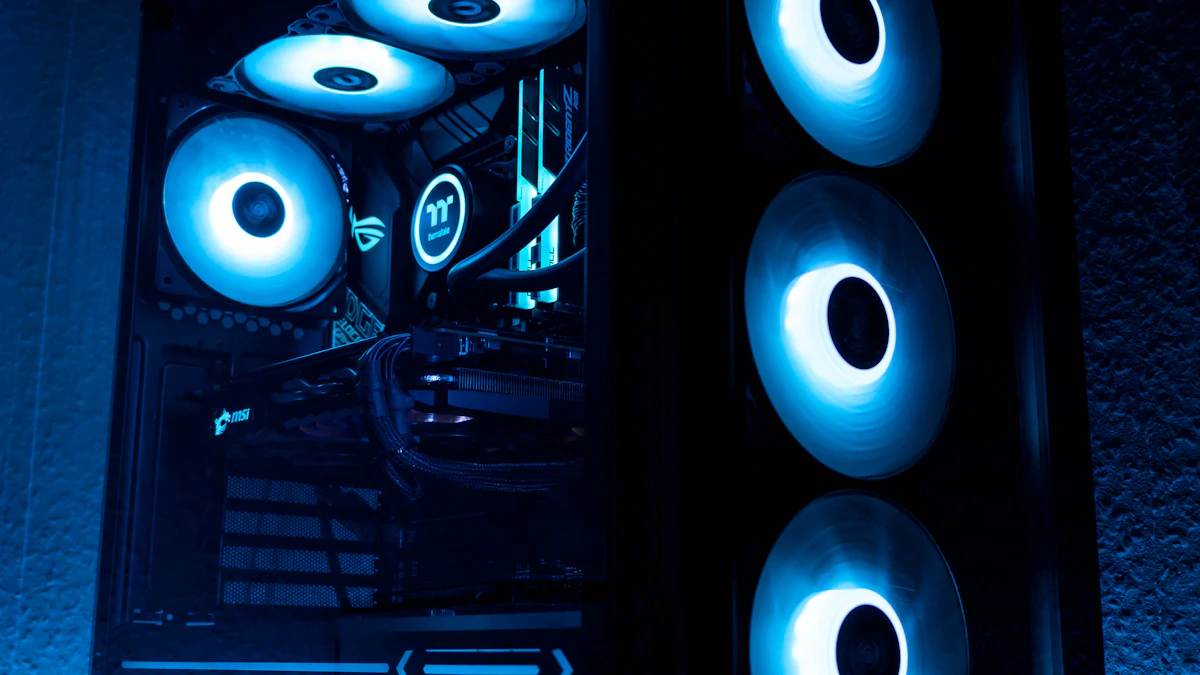
*The AMD Zen 2 CPU architecture inside current-gen consoles presents the primary bottleneck for 60 FPS gameplay in massive open worlds.*
---
## The Hardware Reality: Why 30 FPS Dominates Base Consoles
Players across the United States and the United Kingdom preparing to pay $69.99 / £69.99 for Grand Theft Auto VI must confront technical reality: base current-generation hardware cannot bypass physical limitations. The PlayStation 5 and Xbox Series X rely on an AMD Zen 2 CPU architecture designed in 2019. While GPU rendering resolutions scale downward dynamically to salvage frame rates, CPU workloads do not scale linearly.
When evaluating whether GTA 6 is capped to 30 fps, performance analysts point to the game's computational engine: the RAGE 9 (Rockstar Advanced Game Engine). GTA 6 does not simply render static geometry; it runs complex behavioral ecosystems. Each pedestrian on Ocean Beach processes field-of-view checks, social interactions, law enforcement alerts, and dynamic ragdoll states. Every vehicle driving down Vice Dale handles tire-surface friction coefficients, low-RPM turbo lag, suspension compression, and AI traffic pathfinding.
If a CPU takes 28 milliseconds to compute simulation threads, physics ticks, and draw calls for a single scene, the GPU cannot display the finished frame any faster. A locked 60 FPS target demands a complete frame cycle every 16.6 milliseconds. If the CPU requires 25ms simply to manage world logic, hitting 60 FPS is mathematically impossible, regardless of whether internal resolution drops to 720p. For deeper context on Rockstar's hardware deployment timelines and multi-platform rollout, read [Why Is GTA 6 PC Delayed? Rockstar's Console-First Strategy & Estimated PC Release Window Explained](/news/newswhy-is-gta-6-pc-delayed-rockstar-strategy-release-window).
---
## Ray Tracing and RAGE 9 Rendering Demands
Rockstar Games transitioned its technical pipeline away from legacy rasterized screen-space reflections (SSR) and pre-baked ambient lighting cubes. Leaked developer test builds and official trailer analysis reveal hardware-accelerated Ray-Traced Global Illumination (RTGI) and Ray-Traced Reflections (RTR) integrated into the core lighting model.
```
+-----------------------------------------------------------+
| RAGE 9 HYBRID LIGHTING PIPELINE |
+-----------------------------------------------------------+
| |
| [Static Geometry & Sun Directional Vector] |
| │ |
| ▼ |
| [Hardware BVH Acceleration Structure (GPU Hardware)] |
| │ |
| ┌────────────────┴────────────────┐ |
| ▼ ▼ |
| [Ray-Traced GI Passes] [Ray-Traced Reflections] |
| - Real-time bounce light - Ocean Drive hotel glass |
| - Interior occlusion maps - Wet asphalt puddles |
| - Dynamic bayou foliage - Vehicle chrome trim |
| │ │ |
| └────────────────┬────────────────┘ |
| ▼ |
| [Temporal Accumulation & AI Denoising Filter] |
| │ |
| ▼ |
| [Final Render Output: 30 FPS Frame Buffer (33.3ms)] |
+-----------------------------------------------------------+
```
Neon signs on Ocean Drive bounce natural colored light off wet concrete, car hoods reflect storefronts outside the player’s primary field of view, and murky swamp water in the Everglades catches indirect light filtered through thick mangrove canopies.
Tracing light rays across deep viewing distances requires massive memory bandwidth and dedicated RT compute cores. On the PS5 (36 RDNA 2 Compute Units clocked up to 2.23 GHz) and the Xbox Series X (52 RDNA 2 Compute Units at 1.825 GHz), dedicating hardware silicon to ray tracing strips compute capacity away from raw rasterization. Pushing both hardware RTGI and 60 FPS simultaneous output exceeds the thermal and architectural capabilities of these consoles.
Rockstar faced a deliberate design choice:
1. Strip out hardware ray tracing, simplify crowd density, slash vehicle traffic by 60%, and reduce viewing distances to hit 60 FPS.
2. Lock the rendering pipeline to 30 FPS, enforce hardware ray tracing, maximize simulation fidelity, and deliver an interactive world that surpasses past generations.
Rockstar historically chooses visual density and structural world detail over high frame rates on launch hardware. GTA 4 ran at 20–30 FPS on PS3 and Xbox 360; GTA 5 targeted 30 FPS on PS3 and Xbox 360, frequently dropping below 24 FPS in dense Los Santos intersections. Rockstar's signature design philosophy demands pushing launch platforms to their absolute limits.

*Dynamic neon lighting and reflective city surfaces place exceptional computational demands on console hardware.*
---
## Granular World Density Across Leonida
The technical load of GTA 6 stems directly from the world design across Vice City and the surrounding state of Leonida. This is not static level architecture; it represents a dynamic, reactive ecosystem running on multiple parallel layers:
* **Interactive Interior Spaces:** Seamlessly entered without loading screens, locations such as Ocean Drive hotel lobbies, Port Vice shipping warehouses, Vice Dale pawn shops, and Everglades bayou cabins feature micro-destructible props, physical clutter, and localized ray-traced bounce light.
* **Complex Sub-Faction Dynamic Spawns:** Factions like the Thrillbilly Mud Club operating in remote bogs, the San Chianis Cartel controlling tactical drug corridors, and Vice Beach Syndicates patrolling high-end residential pockets maintain behavioral routines independent of player presence.
* **Evolving Law Enforcement Systems:** Law enforcement AI employs localized CCTV facial recognition tracking, vehicle GPS frequency monitoring, tactical SWAT PIT maneuvers, and perimeter containment strategies that run persistent physics algorithms during active pursuits.
* **Storage and Asset Tracking Physics:** Vehicle trunks track weapon caches, duffle bags, and loot capacity via localized mass physics, changing how vehicles handle based on cargo weight distributions.
Each of these systems consumes computational clock cycles on the Zen 2 CPU cores. When hundreds of background threads execute concurrently, the CPU cannot deliver draw calls quickly enough to refresh frames at 60Hz. To grasp the true spatial scale taxing this engine, examine our detailed geographic comparison: [How Big Is the Leonida Map in GTA 6? Comparing Vice City and Everglades Scale to GTA 5](/news/gta-6-map-size-leonida-vice-city-vs-gta-5).
> [PRO-GAMER TACTICAL HACK]:
> Invest in a television or gaming monitor with genuine HDMI 2.1 support and a native 120Hz panel prior to launch. If Rockstar implements a 40 FPS / 120Hz Quality Mode (as seen in *Spider-Man 2*, *Ratchet & Clank: Rift Apart*, and *Horizon Forbidden West*), input latency drops from 33.3ms down to 25.0ms. This provides a roughly 50% improvement in perceived motion smoothness while retaining full ray tracing and maximum visual fidelity.
---
## PlayStation 5 Pro: Is 60 FPS Viable via PSSR?
Sony's PlayStation 5 Pro introduces upgraded internal specifications aimed directly at resolving this performance wall. With 60 Compute Units featuring upgraded RDNA-based ray tracing accelerators (up to 3x throughput per cycle) and 16.7 Teraflops of raster compute, the GPU barrier disappears.
The core breakthrough on PS5 Pro is **PSSR (PlayStation Spectral Super Resolution)**. This proprietary hardware-driven Machine Learning upscaler operates like NVIDIA DLSS. Instead of brute-forcing native 4K or relying on soft FSR artifacts, PSSR inputs a clean 1080p–1440p internal frame buffer and reconstructs pristine 4K imagery using temporal neural network passes.
```
+-----------------------------------------------------------+
| PS5 BASE vs PS5 PRO ARCHITECTURE |
+-----------------------------------------------------------+
| Spec Feature | Base PlayStation 5 | PS5 Pro |
+-------------------+--------------------+------------------+
| GPU Architecture | RDNA 2 (Custom) | Hybrid RDNA 3/4 |
| GPU Compute Units | 36 CUs | 60 CUs |
| Ray Tracing Tech | 1st-Gen RDNA | Advanced 3x RT |
| Upscaling Engine | Software (FSR 2/3) | Hardware (PSSR) |
| Memory Bandwidth | 448 GB/s | 576 GB/s (+28%) |
| CPU Clock Speed | 3.5 GHz (Zen 2) | 3.85 GHz (+10%) |
+-----------------------------------------------------------+
```
The limiting factor on PS5 Pro remains the CPU. Sony boosted the Zen 2 processor frequency by only 10% (running up to 3.85 GHz via the High CPU Frequency Mode). A 10% clock increase cannot magically convert a CPU-bound 32 FPS bottleneck into a locked 60 FPS state.
Rockstar's engineers must write custom asynchronous execution routines to shift dynamic crowd simulation loops and physics compute passes directly into the Pro's spare GPU compute units via direct compute shaders. If Rockstar executes this offloading successfully, the PS5 Pro will deliver a 60 FPS Performance Mode. If the CPU logic cannot be decoupled from base simulation loops, the PS5 Pro will run a rock-solid, enhanced 30 FPS or 40 FPS mode with higher internal resolutions, maxed ray-traced shadows, complete dynamic reflections, and enhanced draw distances.
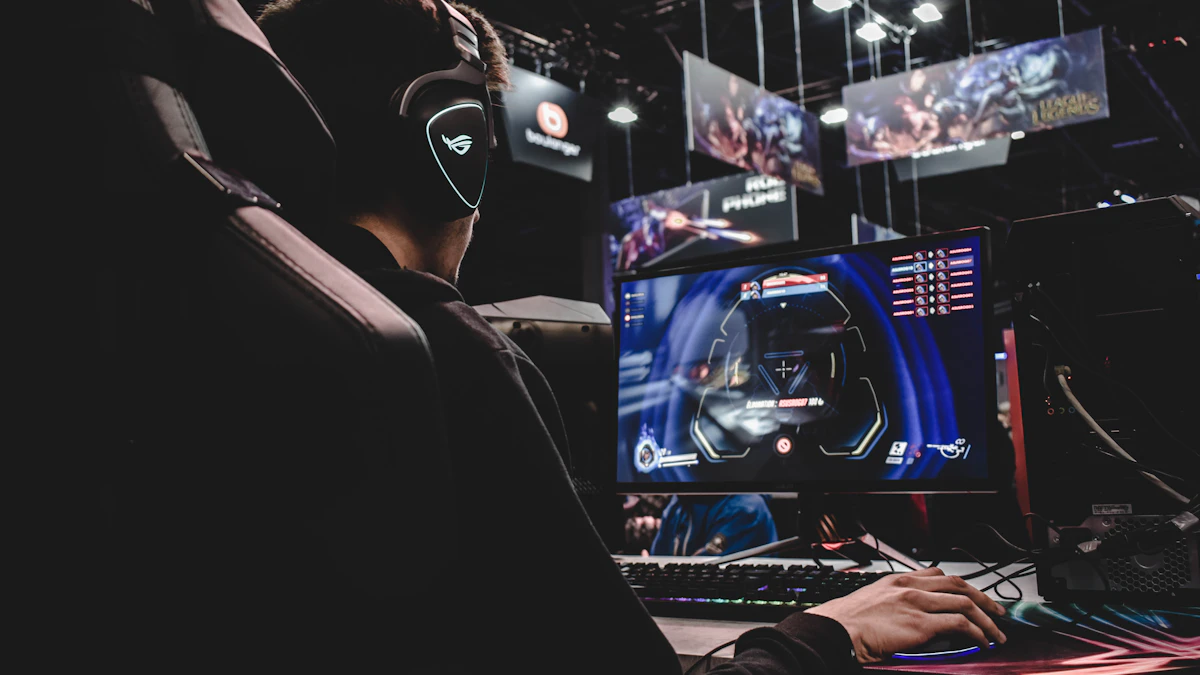
*Advanced displays supporting high-bandwidth HDMI 2.1 allow consoles to take advantage of 40Hz performance profiles.*
---
## The Xbox Series S Challenge
The $299 / £249 Xbox Series S represents the lowest common denominator for current-generation game development. While its CPU maintains clock speeds close to the Xbox Series X (3.6 GHz vs 3.8 GHz), its memory and graphics hardware face sharp cutbacks:
* **GPU Compute:** 20 Compute Units running RDNA 2 at 1.565 GHz (producing roughly 4 Teraflops).
* **System Memory:** 10GB GDDR6 shared RAM (8GB at 224 GB/s, 2GB at 56 GB/s slow bus) compared to 16GB at 560 GB/s on Series X.
* **Storage Footprint:** Slower overall memory swap speeds during heavy world streaming.
Running GTA 6 on the Xbox Series S requires major concessions. Hardware ray-traced global illumination will likely be stripped down or replaced with screen-space approximations and simplified pre-computed light maps. Internal render resolutions will rely on aggressive dynamic resolution scaling, dropping to 900p or lower during high-speed vehicle chases down Washington Beach, reconstructed up to 1080p or 1440p displays via FSR.
A 60 FPS mode on Xbox Series S is out of the question. Achieving a stable 30 FPS will require aggressive optimization from Rockstar, including reductions in civilian density, lowered vehicle counts on freeways, and trimmed volumetric cloud passes over the Leonida coast. For deeper insights into storage management and memory bandwidth demands on current platforms, review the breakdown in our guide on the [GTA 6 Download Size Leak: Will It Really Require 300 GB of Free Storage on PS5 and Xbox Series X?](/news/gta-6-file-size-leak-300gb-ps5-xbox).
> [ROOKIE MISTAKE TO AVOID]:
> Do not expect internal monitor motion interpolation ("Smooth Motion" or "MEMC") to turn a 30 FPS console output into a responsive 60 FPS experience. Enabling TV-based frame smoothing adds immense display latency (often exceeding 80ms to 100ms of input lag), making high-speed driving through Vice City traffic feel sluggish and unplayable. Rely on native console performance and low-latency Game Modes exclusively.
---
## Display Tech: Understanding Frame Pacing vs Raw Frame Rate
A locked 30 FPS frame rate does not automatically mean a choppy, unplayable experience. The critical technical metric that dictates whether 30 FPS feels smooth or jerky is **frame pacing**.
```
PROPER FRAME PACING (30 FPS LOCKED - 33.3ms EVERY FRAME):
Frame 1: 33.3ms | Frame 2: 33.3ms | Frame 3: 33.3ms | Frame 4: 33.3ms -> [SMOOTH]
ERRATIC FRAME PACING (UNSTABLE 30 FPS - CYCLING MISMATCHES):
Frame 1: 16.6ms | Frame 2: 50.0ms | Frame 3: 33.3ms | Frame 4: 50.0ms -> [STUTTER]
```
At 30 FPS, each individual frame must remain on display for exactly 33.3 milliseconds across standard 60Hz panels. If the rendering engine delivers Frame 1 at 16.6ms, Frame 2 at 50ms, and Frame 3 at 33.3ms, the display encounters micro-stuttering. The human eye perceives this frame variance as hitching, even if the diagnostic overlay displays an average reading of "30 FPS."
Rockstar Games has spent decades perfecting frame-pacing pipelines. In titles like *Red Dead Redemption 2*, frame delivery remained exceptionally consistent on standard PS4 and Xbox One consoles, maintaining 33.3ms frame times even amidst intense gunfights in Saint Denis. GTA 6 will use advanced velocity-based per-object motion blur, camera-plane camera smoothing, and fine-tuned controller analog deadzones designed specifically to disguise 33.3ms frame intervals.
---
## 40 FPS / 120Hz Fidelity Mode: The Ideal Compromise
Modern display hardware changes how developers approach frame caps. Players operating on modern LG OLEDs, Samsung Neo QLEDs, or high-refresh PC monitors equipped with HDMI 2.1 have access to a 120Hz refresh rate. In a 120Hz container, a 40 FPS mode becomes viable because 120 is evenly divisible by 40 (rendering one new frame every 3 display refreshes).
* **60Hz Container @ 30 FPS:** Frame displays for 33.3ms.
* **120Hz Container @ 40 FPS:** Frame displays for 25.0ms.
* **60Hz Container @ 60 FPS:** Frame displays for 16.6ms.
A jump from 33.3ms to 25.0ms represents a massive reduction in frame persistence and controller latency. It delivers nearly half the input response benefit of a full 60 FPS mode while requiring only a 33% increase in rendering compute from the hardware, rather than the 100% compute spike demanded by 60 FPS. If Rockstar targets visual parity across all consoles, implementing a 40 FPS / 120Hz VRR mode provides the cleanest path to high-end console performance without gutting Leonida's simulation systems.
---
## Realistic Expectations for Launch Day
When GTA 6 lands on retail shelves across the US (GameStop, Best Buy, Walmart, Target) and the UK (GAME, Currys, Argos, Amazon UK), console players should anticipate the following configurations:
1. **PlayStation 5 and Xbox Series X:** A single, heavily optimized Quality Mode running at a locked 30 FPS. Render resolution will dynamically scale between 1296p and 1440p, upscaled using temporal filters to clean 4K. Ray-traced global illumination, contact shadows, and dynamic environmental reflections will remain permanently active.
2. **Xbox Series S:** A locked 30 FPS mode running at native dynamic resolutions spanning 900p to 1080p, utilizing software lighting fallbacks with cut-down or disabled hardware ray tracing.
3. **PlayStation 5 Pro:** Two selectable profiles at launch:
- **Quality Pro Mode:** 30 FPS or 40 FPS / 120Hz, native dynamic 1800p reconstructed via PSSR to 4K, maximum ray-traced settings enabled.
- **Performance Pro Mode:** 60 FPS, dynamic 1296p to 1440p reconstructed via PSSR to 4K, utilizing modified asynchronous compute shaders to reduce Zen 2 CPU bottlenecks.
Rockstar Games crafts generational benchmark titles. While high-refresh PC enthusiasts will ultimately achieve unlocked 120+ FPS configurations once the title eventually arrives on PC platforms, the initial launch on PS5 and Series X will prioritize visual density, physics fidelity, and environmental depth over raw frame frequency.
---
## Frequently Asked Questions
### Is GTA 6 capped at 30 FPS on PS5?
Yes, GTA 6 targets a locked 30 FPS on standard PlayStation 5 hardware. The computational demands of the RAGE 9 engine's ray-traced global illumination, dense civilian AI routines, and Zen 2 CPU architecture prevent a native 60 FPS mode on launch hardware.
### Will the PS5 Pro run GTA 6 at 60 FPS?
The PS5 Pro offers the best technical chance of achieving 60 FPS on consoles. By using PlayStation Spectral Super Resolution (PSSR) machine-learning upscaling and upgraded RDNA ray-tracing hardware, the GPU can process the workload. However, success depends on whether Rockstar can offload CPU simulation threads to prevent bottlenecks on the shared Zen 2 processor.
### Can Xbox Series X run GTA 6 at 60 FPS?
The Xbox Series X is expected to run GTA 6 at a locked 30 FPS. While it possesses 52 compute units and superior memory bandwidth compared to base PS5, it shares an identical AMD Zen 2 CPU framework, making an unstable 60 FPS performance mode impractical without severe compromises to game systems.
### Will GTA 6 feature a 40 FPS mode on consoles?
A 40 FPS Fidelity Mode is highly likely for displays supporting HDMI 2.1 and native 120Hz refresh rates. This mode delivers a frame time of 25.0ms (compared to 33.3ms at 30 FPS), offering noticeably smoother movement and faster controller input response while retaining full ray-tracing graphics.
### Why can't Rockstar just lower the graphics to reach 60 FPS?
Lowering graphical resolution only lightens the GPU's workload. GTA 6's performance constraints stem primarily from the CPU, which calculates complex physics, dynamic crowd behavior, pathfinding meshes, and vehicle simulation across Leonida. Dropping resolution from 4K to 1080p does not reduce CPU overhead.
---