### Quick Answer
> GTA 6 completely overhauls law enforcement mechanics by replacing telepathic police spawns with line-of-sight sensory perception, delayed dispatch response timers, memory retention systems, and dynamic tactical containment patterns. Squads remember player clothing, vehicle license plates, and getaway routes while coordinating flank maneuvers via realistic radio dispatches across Leonida.
| Law Enforcement Mechanic | GTA 5 (Legacy System) | GTA 6 (Leonida State PD Overhaul) |
| :--- | :--- | :--- |
| **Spawn Logic** | Instant radar spawning near player vision cone | Physical dispatch travel time from real police stations/patrols |
| **Player Identification** | Instant omniscient tracking through solid walls | Visual recognition based on face, clothes, vehicle, and plates |
| **Tactical Coordination** | Aggressive straight-line rushing & suicidal ramming | Dynamic flanking, boxing maneuvers, spike strips, & tactical cover |
| **Evasion Mechanics** | Lose wanted star by waiting in a gray minimap circle | Breaking line-of-sight, switching vehicles, masking plates, altering outfit |
| **Witness Reporting** | Immediate telepathic alert to police units | NPCs call 911 via phone; players can intimidate or eliminate witnesses |
| **Sub-Faction AI** | Identical combat behavior across all units | Region-specific tactics (VCPD, Highway Patrol, Coast Guard, SWAT) |
### How Leonida Law Enforcement Operates in Gameplay
1. **Crime Detection & Witness Delay:** When Jason or Lucia commits a crime, nearby NPCs do not instantly alert law enforcement; they physically react, pull out smartphones, and dial 911, giving players a critical window to flee, threaten witnesses, or smash phones.
2. **Dispatch & Vectoring:** Dispatch centers process citizen calls and broadcast descriptions across localized frequencies. Police units spawn at real physical stations or active patrol routes, navigating toward the last reported GPS coordinate using actual road networks.
3. **Visual Identification & Memory:** Squad cars search the area using ray-traced sight cones. Units identify your character based on clothing, active vehicle model, visible blood, or registered license plates. Simply breaking line-of-sight is insufficient if your vehicle matches the broadcast description.
4. **Escalating Tactical Containment:** As wanted levels rise, officers transition from verbal commands and perimeter holdouts to high-speed PIT maneuvers, coordinated tire spikes, tactical SWAT door-breaches, heavy armored SWAT vans, and air-to-ground sniper spotters.
---
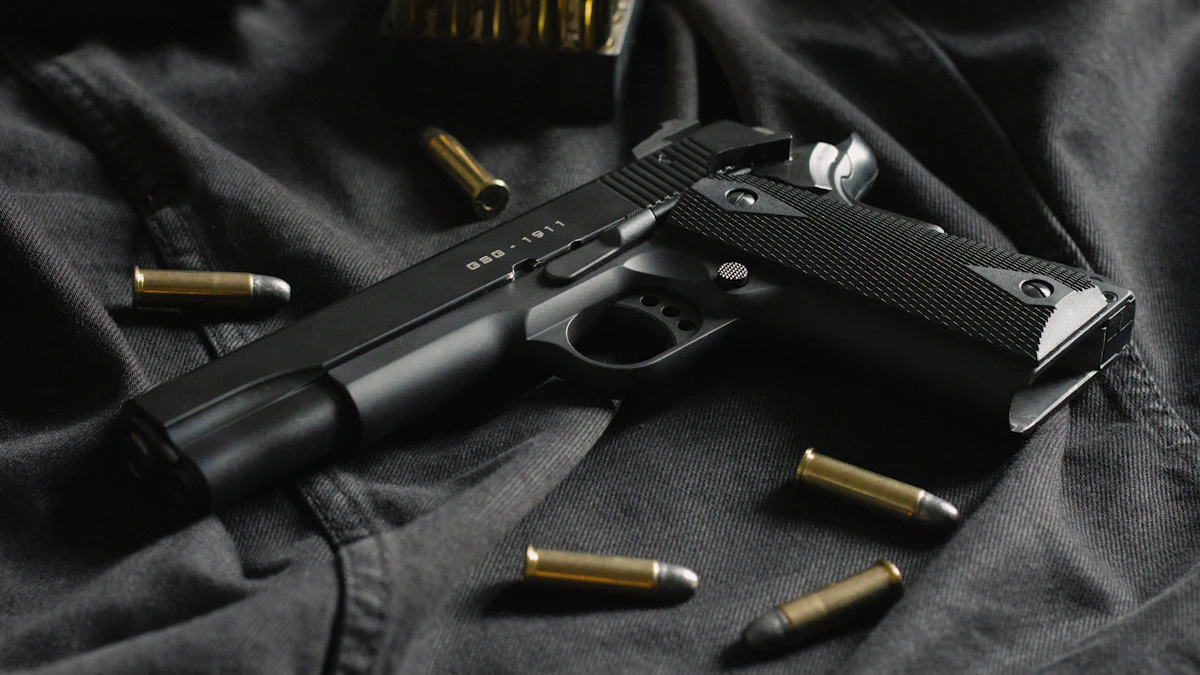
*Leonida law enforcement agencies utilize regional tactical gear, body armor ballistics, and weapon sway physics during combat encounters.*
---
## The RAGE 9 Tactical AI Overhaul: From Telepathic Cops to Line-of-Sight Physics
For over a decade, grand theft auto combat encounters suffered from an immersion-breaking issue: omniscient police officers. In Los Santos, firing a suppressed weapon on an isolated mountain peak frequently resulted in an instant squad car spawning behind a rock. Rockstar Games has completely rebuilt this architecture within the updated RAGE engine environment.
The core of this system stems from a patented navigation and virtual node technology filed by parent company Take-Two Interactive. Titled *"System and Method for Virtual Navigation in a Gaming Environment,"* the technology replaces simple node-based pathfinding with autonomous multi-agent spatial decision-making. Instead of running scripts that force squad cars directly toward your exact player vector, Leonida PD officers process environmental context, local traffic flow, line-of-sight angles, and acoustic vectors before deciding on an approach path.
```
+-----------------------------------------------------------------------------------+
| GTA 6 LAW ENFORCEMENT RESPONSE CYCLE |
+-----------------------------------------------------------------------------------+
| [ Player Action ] |
| │ |
| ▼ |
| [ Citizen Visual/Acoustic Detection ] ──► (Player interrupts 911 call? ──► ESCAPE) |
| │ |
| ▼ |
| [ 911 Call Signal Transmitted ] |
| │ |
| ▼ |
| [ Dispatch Emergency Broadcast ] (Generates Vehicle / Attire Memory Log) |
| │ |
| ▼ |
| [ Physical Unit Deployment ] (Station-based & Highway Patrol Units Drive to Scene)|
| │ |
| ▼ |
| [ Line-of-Sight Search Grid ] |
| ├── Matches License Plate/Outfit ──► Aggressive Engagement & Tactical Flank |
| └── Line-of-Sight Broken ──────────► Search Zone Shrinks & Memory Decays |
+-----------------------------------------------------------------------------------+
```
Officers rely on sensory cones mapped directly to light levels, foliage occlusion, weather severity, and visual line-of-sight. If you fire an unsuppressed weapon inside an alleyway in downtown Vice City during a heavy storm, the sound radius compresses dynamically due to atmospheric noise cancellation. The sound of rain dampens acoustic propagation, delaying officer response times compared to a dry, quiet afternoon in the suburbs.
Furthermore, line-of-sight tracking relies on realistic optical rendering. Officers look through vehicle windshields, past ambient streetlights, and between moving civilian traffic. If a squad car approaches your position with high beams activated, hiding behind a low concrete barrier prevents visual detection—provided your shadow does not cross their illuminated path. This spatial awareness transforms high-wanted escapes into stealth puzzles rather than frantic sprint-and-shoot marathons.
---
## The Wanted Level System Re-engineered: Memory Retention & Dispatch Timers
The wanted level mechanic in GTA 6 does not simply disappear when you hide inside a gray circle on your minimap. Law enforcement entities maintain active memory logs containing distinct tracking parameters:
* **Primary Visual Markers:** Character facial identity, active wardrobe, hat/sunglass accessories, hair color, and visible injuries or bloodstains.
* **Vehicle Data Logs:** Make, model, primary/secondary paint color, window tint level, body damage status, and individual license plate numbers.
* **Acoustic Profiling:** Weapon caliber signature, explosion frequencies, and engine sound profiles.
When a crime occurs, the local dispatch center broadcasts a preliminary suspect profile based on witness statements. If an NPC reports a female suspect driving a yellow Albany sports car, officers patrol the area searching specifically for that vehicle geometry and color palette. Crucially, if you abandon that yellow sports car on foot without being seen, officers who discover the abandoned vehicle will search the immediate perimeter rather than instantly tracking your position on foot.
```
+-------------------------------------------------------------+
| LEONIDA PD MEMORY RETENTION MATRIX |
+-------------------------------------------------------------+
| PARAMETER | SUSPECT MATCH RISK | EVASION COUNTER |
+-------------------------------------------------------------+
| Stock License Plate | High (100% Signal) | Swapped Plates |
| Default Outfit | High (90% Signal) | Wardrobe Change |
| Stolen Car Model | Medium (65% Signal)| Respray Garage |
| Facial Features | High (Close Range) | Masks/Helmets |
+-------------------------------------------------------------+
```
License plate scanning plays a decisive role during street pursuits. Standard patrol vehicles carry Automated License Plate Recognition (ALPR) cameras mounted to their lightbars. Driving a stolen vehicle past a stationary patrol unit triggers an immediate stolen-vehicle flag, escalating your wanted level to one star without any civilian witness report. To clear this flag, players must physically replace the license plate using garage toolkits, swap plates with a parked vehicle, or drive to a tuner shop for unregistered plates.
> **[PRO-GAMER TACTICAL HACK]:** Keep a spare jacket, hat, and face mask stored inside your vehicle's trunk inventory. If you break line-of-sight during a 3-Star pursuit, quickly pull into a dark alley, access your vehicle trunk, change your upper body clothing, and don a face mask. When officers sweep the alley on foot, their visual match confidence drops significantly, allowing you to walk right past them provided you do not sprint or draw a weapon.
Dispatch response timers introduce realistic buffer zones. In heavily populated urban centers like Ocean Drive, police response times range between 30 to 60 seconds after a 911 call completes. In rural regions across the
expansive Leonida map footprint, such as the grass rivers of the Vice Dale County Everglades, response times stretch to two or three minutes. This gap gives players crucial seconds to loot cash drawers, load stolen contraband into vehicle trunks, and clear the area before local law enforcement establishes a physical perimeter.
---
## Leonida State Law Enforcement Factions & Regional Jurisdictions
Law enforcement in the State of Leonida is not a monolithic faction. Different regions feature specialized law enforcement entities equipped with unique vehicles, weapons, tactics, and AI parameters modeled directly after real-world Southeastern United States law enforcement agencies.
---

*The Vice City Police Department patrols urban entertainment districts using dense surveillance networks, ALPR units, and rapid response units.*
---
### Vice City Police Department (VCPD)
Operating within the main metropolitan areas—including South Beach, Starfish Island, and Downtown—the VCPD relies on dense camera networks, fast cruiser interception, and high-speed urban pursuits.
* **Vehicle Roster:** Modern VCPD Interceptors (Vapid Stanier LE), Unmarked SUV cruisers, Pursuit Bravado Buffalo units, and VCPD Air Support choppers.
* **Tactical Behavior:** VCPD officers prioritize boxing maneuvers, urban blockades, and coordinating street-by-street grid traps. They utilize CCTV feeds within the
real-world Miami and Florida geography underlying the Vice City design to update your last known position if you pass under monitored intersections.
### Kelly County Sheriff’s Office & Rural Deputies
Patrolling the semi-rural environments, agricultural zones, and smaller townships surrounding Vice City, these deputies operate with fewer immediate resources but higher firepower individual units.
* **Vehicle Roster:** Lifted 4x4 Off-Road Utility Pickups, Police Ranchers, and basic patrol sedans equipped with heavy brush guards.
* **Tactical Behavior:** Deputies use aggressive ramming techniques, pit maneuvers without waiting for authorization, and long-range rifles during firefights. If forced into swampy off-road terrain, they utilize their higher ground-clearance vehicles to push players off main routes into deep mud hazards.
### Vice Dale County Marshals & Port Vice Marine Patrol
Responsible for coastal waterways, shipping ports, ocean inlets, and swampy bayou channels.
* **Vehicle Roster:** High-speed twin-engine patrol boats, armored RHIB interceptors, amphibian airboats, and Coast Guard search helicopters.
* **Tactical Behavior:** Marine units deployment triggers instantly if your wanted level spikes while on water. They drop sea-spikes, use high-caliber mounted machine guns to disable boat engines, and deployment divers to intercept underwater submersibles or swimming players.
```
+----------------------------------------------------------------------------------+
| LEONIDA LAW ENFORCEMENT FACTION BREAKDOWN |
+----------------------------------------------------------------------------------+
| FACTION | PRIMARY JURISDICTION | VEHICLES & EQUIPMENT |
+----------------------------------------------------------------------------------+
| VCPD Metro | Urban Vice City Core | High-Speed Sedans, CCTV, Air |
| Kelly County Sheriff | Rural / Suburban Zones | 4x4 Pickups, Long-Range Rifles|
| Port Vice Marine Patrol | Ocean, Ports, Swamps | Twin-Engine Boats, Airboats |
| Leonida Highway Patrol | State Interstates | Pursuit Interceptors, Spikes |
| State Tactical (SWAT) | Heavy Incident Zones | Armored BearCats, Tear Gas |
+----------------------------------------------------------------------------------+
```
### Leonida State Highway Patrol (LHP)
Monitoring interstate highways, toll bridges, and major arterial thoroughfares across the state.
* **Vehicle Roster:** High-performance V8 Pursuit Interceptors and police motorcycles.
* **Tactical Behavior:** LHP units excel at dynamic PIT (Precision Immobilization Technique) maneuvers at extreme speeds ($120+$ mph / $190+$ km/h). They coordinate rolling roadblocks across bridge choke-points to halt fleeing vehicles before they cross county lines.
### State Tactical Unit (Leonida SWAT & FIB)
Deployed exclusively at 4-Star and 5-Star wanted levels or during active bank heists and hostage scenarios.
* **Vehicle Roster:** Armored Tactical Enforcer vans, BearCat APCs, and blacked-out FIB Granger SUVs.
* **Tactical Behavior:** Tactical units advance using ballistic shields, flashbang grenades, structured stack-and-breach indoor formations, and tear gas to force players out of covered interiors.
---
## Advanced Tactical Pursuit & Engagement Mechanics
The era of police officers running straight into your crosshairs one by one is over. In GTA 6, law enforcement AI functions as a coordinated squad network. Officers utilize dynamic dynamic cover positioning, suppressive fire routines, visual tracking relay, and physical tactical maneuvers.
### Flanking and Suppressive Fire State Machines
When an engagement starts, officers do not all charge your cover simultaneously. The AI splits into two distinct groups: **Pinning Units** and **Flanking Units**.
1. **Pinning Units** lock behind structural cover and maintain continuous suppressive fire toward your position, forcing your character into cover and locking down your camera angles.
2. **Flanking Units** crouch, low-sprint around building corners, and utilize shadow lines to gain a side or rear angle on your character's position.
If you stay stationary inside a room or behind a single vehicle for more than 20 seconds, officers throw smoke or flashbang grenades to disrupt your vision and force you out into open crossfire.
```
+-------------------------------------------------------------------------------+
| AI FLANKING & COVER ADVANCEMENT PATTERN |
+-------------------------------------------------------------------------------+
| |
| [ OFFICER A & B ] ─── (Suppressive Automatic Fire) ───► [ PLAYER IN COVER ] |
| │ ▲ |
| │ (Communicates via radio) │ |
| ▼ │ |
| [ OFFICER C & D ] ─── (Crouched Flank Route around wall) ───────┘ |
| |
+-------------------------------------------------------------------------------+
```
### Physical Vehicle Manipulation & PIT Maneuvers
During vehicle chases, police units employ precise physical driving tactics based on real-world pursuit doctrine. Rather than repeatedly slamming into your rear bumper at random angles, squad cars align their front wheels with your vehicle's rear quarter-panel. Once in position, the AI officer applies sharp turn-in force to spin your vehicle out of control.
If your vehicle comes to a stop, two or three squad cars execute a "box-in" procedure, parking tight against your front, rear, and driver-side doors to trap you inside the cabin. If trapped, officers draw sidearms directly through your vehicle’s side glass, forcing you to use emergency vehicle ejection mechanics or fire through your own windows.
> **[ROOKIE MISTAKE TO AVOID]:** Do not remain inside a stalled or disabled vehicle while surrounded by police units. Officers will approach vehicle doors with shotguns drawn and execute an instant arrest or point-blank lethal takedown. Always exit the vehicle immediately and utilize the new prone crawl or combat-roll mechanics to break out of the vehicle box.
### Dynamic Indoor Breaching & SWAT Tactics
If you retreat into an interior space—such as a Vice City hotel lobby, a convenience store, or a pawn shop—the AI transitions from street pursuit logic to indoor breach mode. Officers gather outside entrance points, set up perimeter positions across windows, and deploy tactical breaching gear.
SWAT units enter structures utilizing stack formations: a front operator carrying a heavy ballistic shield absorbing incoming rounds, followed closely by secondary operators firing submachine guns over the shield shoulder. Players must target exposed legs, use explosive throwables, or flank around secondary interior doors to counter these defensive push strategies.
---

*High-level wanted escapes require managing physical cash loot weight, door hacking tools, and SWAT interior breaching setups.*
---
## Interactive Physics: Luggage, Trunks, Body Stowage, and CCTV Systems
GTA 6 introduces deep mechanical interactions between player inventory, vehicle storage, ambient environmental physics, and law enforcement detection systems.
### Vehicle Trunk Inventory & Body Stowage
Vehicle trunks serve as physical storage spaces for heavy weaponry, body armor, tools, cash bags, and downed NPCs or bodies. This system directly impacts law enforcement interactions:
* **Contraband Visibility:** Driving with an unlatched trunk or a shot-open rear tailgate exposes illegal items to passing squad cars. If an officer sees assault rifles or large bags of cash sitting in your trunk, your wanted level triggers automatically.
* **Hiding Inside Trunks:** During high-intensity searches, players can physically climb inside the trunk or cargo bed of a stolen delivery van or truck to hide. If squad cars search the street, their sensory cones will not detect your character unless an officer physically approaches the vehicle and opens the tailgate during a manual inspection.
```
+-------------------------------------------------------------------------------+
| VEHICLE TRUNK & EVIDENCE INTERACTION |
+-------------------------------------------------------------------------------+
| STATE | LAW ENFORCEMENT AI DETECTION IMPACT |
+-------------------------------------------------------------------------------+
| Trunk Closed & Secure | Zero visual signal; regular vehicle inspection |
| Tailgate Damaged/Open | Instant 2-Star alert if illegal gear visible |
| Character Hiding in Trunk | Evades visual sight cones; fails manual search |
| Body/Stolen Goods Stowed | Requires trunk closure to avoid murder charges |
+-------------------------------------------------------------------------------+
```
### CCTV Networks & Facial Recognition Evasion
Metropolitan Vice City is heavily monitored by municipal closed-circuit television (CCTV) cameras mounted to traffic signals, store entrances, and government buildings.
```
[ CCTV Camera Overhead ]
│
▼
(Scans Intersection)
│
├─► [ Mask / Helmet On ] ──► Identity Hidden ──► Dispatch Delay
│
└─► [ Unmasked Face ] ────► Identity Matched ─► GPS Tracking Updated
```
When fleeing a crime scene:
1. If your character passes under a operational CCTV node without wearing a mask, helmet, or face covering, the system instantly refreshes your last known location on the police dispatch grid.
2. Wearing a face mask prevents automated CCTV facial recognition. However, running through high-security zones (like banks or port facilities) while wearing a mask causes security guards and cameras to trigger a suspicious-activity alarm immediately.
3. Players can shoot out individual CCTV camera lenses, use electrical stun devices to fry control panels, or hack local terminal boxes to temporarily blind surveillance in a multi-block radius.
---
## Environmental Interactions: Weather Impact on Police Intelligence
The
dynamic weather system and tropical rainstorms across Leonida directly influence how police AI behaves during chases and shootouts.
* **Heavy Downpours & Tropical Storms:** Rain reduces the visual range of police officers by up to 50%. Thermal imaging equipment on police helicopters suffers from signal noise, making it easier to break line-of-sight under thick tree canopies or bridge overpasses. However, wet asphalt reduces vehicle tire traction, causing police and player vehicles to hydroplane during high-speed cornering.
* **Swamp & Mud Dynamics:** In the Vice Dale Everglades, heavy rain turns dirt roads into deep mud tracks. Heavy police sedans become bogged down, spinning their rear wheels helplessly while specialized player vehicles with off-road tires or airboats can easily outmaneuver them.
* **Fog & Low Visibility Conditions:** Dense coastal fog rolling in off the Vice City coastline severely limits police sniper effectiveness and disables helicopter tracking. Officers rely primarily on flashlights and engine sounds to track your movements, allowing players to escape on foot by remaining completely silent.
---
## Technical Specifications: Hardware Compute Allocations & Frame Data
Executing complex multi-agent law enforcement AI across vast distances requires substantial processing power. Rockstar Games utilizes dedicated CPU threads on current-generation consoles (PlayStation 5, PlayStation 5 Pro, and Xbox Series X) specifically for world simulation and behavioral state engines.
```
+-------------------------------------------------------------------------------+
| CONSOLE HARDWARE RESOURCE ALLOCATION FOR AI |
+-------------------------------------------------------------------------------+
| HARDWARE PLATFORM | TARGET RESOLUTION & FPS | DEDICATED AI SIMULATION |
+-------------------------------------------------------------------------------+
| PlayStation 5 Pro | Dynamic 4K / 60 FPS | 2 Dedicated Zen 2 Cores |
| PlayStation 5 (Base) | Dynamic 1440p / 30 FPS | 1.5 Dedicated Zen 2 Cores |
| Xbox Series X | Dynamic 1440p / 30 FPS | 1.5 Dedicated Zen 2 Cores |
| Xbox Series S | Dynamic 1080p / 30 FPS | 1 Dedicated Zen 2 Core |
+-------------------------------------------------------------------------------+
```
The game's initial production, fueled by Rockstar's
massive $2 billion development budget, ensures that hundreds of independent AI agents (civilians, traffic controllers, police officers, wildlife) process decisions simultaneously without dropping frame rates.
On systems like the PS5 Pro, enhanced processing headroom enables the engine to run up to 100 simultaneous tactical AI logic loops within a 500-meter radius of the player. This means officers several blocks away are actively calculating tactical flank routes, setting up roadblocks, and processing sensory inputs in real-time without computational bottlenecks or low-refresh animations.
---
## Frequently Asked Questions
### Can you pay off police or bribe officers in GTA 6?
While Rockstar Games has not confirmed a classic bribery wheel, contextual leaks and system files point to interactive dialogue mechanics. Players can attempt to de-escalate minor 1-Star infractions by holding down a interaction prompt to pay a roadside fine, surrender peacefully, or attempt to bribe corrupt low-level officials in specific districts.
### How do police handle dual-protagonist crime scenarios?
If Jason and Lucia commit crimes together, police AI tracks both characters individually. If Lucia breaks line-of-sight and changes her clothes while Jason continues to draw fire, officers prioritize pursuing Jason while temporarily losing track of Lucia. This allows one player character to set up sniper overwatch or clear escape routes for the other.
### Do police spawn out of thin air behind the player like in GTA 5?
No. The RAGE 9 engine eliminates direct line-of-sight telepathic spawning. Squad cars and foot officers physically spawn at local police stations, highway patrol outposts, or active roadside patrol routes, navigating toward the scene via real physical paths and road networks.
### Can you shoot off police equipment like radios and tires?
Yes. Hitbox mechanics allow players to target specific officer equipment. Shooting an officer's shoulder-mounted radio mid-call prevents them from calling in reinforcement location updates. Similarly, disabling squad car tires or shooting out their ALPR scanner bars severely diminishes their pursuit and tracking capability.
### How does changing your license plate work during a pursuit?
If you break visual contact with pursuing officers, you can pull into alleyways, drop your tailgate, and interact with your vehicle using a toolkit to manually swap or flip your license plate. Alternatively, driving through tuner shops or Pay 'N' Spray locations instantly swaps plate numbers and changes body paint color, dropping your active wanted match status.
---