# Will GTA 6 Be Capped at 30 FPS on PS5? Performance Targets, Ray Tracing Limits & PS5 Pro Support Explained
### Quick Answer
> Grand Theft Auto VI will almost certainly run at a locked 30 FPS on the base PlayStation 5 and Xbox Series X. Rockstar Games prioritizes dynamic ray-traced lighting, hyper-dense NPC traffic AI, complex water physics, and structural CPU-bound simulation across Vice City over a 60 FPS performance mode.
| Hardware Platform | Expected Framerate | Target Resolution | Ray Tracing Features | Primary Hardware Bottleneck |
| :--- | :--- | :--- | :--- | :--- |
| **PlayStation 5 (Base)** | 30 FPS (Locked) | Dynamic 1440p–4K (PSSR/FSR) | Global Illumination & Shadows | CPU (AMD Zen 2 @ 3.5GHz) |
| **Xbox Series X** | 30 FPS (Locked) | Dynamic 1440p–4K (FSR 3) | Global Illumination & Shadows | CPU (AMD Zen 2 @ 3.8GHz) |
| **PlayStation 5 Pro** | 30 FPS / 40 FPS (VRR) | Upscaling 4K (PSSR Native) | Full RT (Reflections + GI) | CPU Thread Allocation |
| **Xbox Series S** | 30 FPS (Dynamic) | 1080p Dynamic | Software Ambient Occlusion | RAM Bandwidth (8GB/2GB Split) |
### How Rockstar Engineering Manages Console Frame Budgets
* **CPU Priority Allocation:** Rockstar prioritizes CPU cycles for background simulation logic—pedestrian pathfinding, police dispatching routines, traffic mesh generation, and physical vehicle mass interactions—rather than high frame refresh rates.
* **Unified Lighting Pipeline:** The RAGE 9 engine bakes ray-traced global illumination directly into its primary rendering pipeline, eliminating rasterized lighting fallbacks to maintain visual parity.
* **Frametime Pacing Constraints:** Locking targeted output to 33.3 milliseconds (30 FPS) avoids frame-drop stuttering during high-speed police chases across downtown Vice City.
* **VRR & 120Hz Container Utilization:** Displays supporting HDMI 2.1 enable potential 40 FPS balanced modes by dropping target frame rendering times to 25 milliseconds inside a 120Hz signal container.
---

*The hyper-dense urban corridors of Vice City demand massive render budgets for neon reflections, volumetric fog, and localized pedestrian AI.*
---
## The Technical Bottleneck: Why Zen 2 CPUs Struggle with Vice City’s Simulation Depth
The ongoing debate surrounding GTA VI's performance targets on current-gen hardware boils down to a fundamental architectural reality: console generation lifecycles are dictated by CPU limits, not GPU rasterization output. Both the base PlayStation 5 and Xbox Series X run on custom AMD Zen 2 CPU microarchitectures featuring 8 cores and 16 threads. While this hardware represented a massive leap forward over the ancient Jaguar CPUs inside the PS4 and Xbox One back in 2020, modern rendering pipelines—specifically those powering Rockstar Games' RAGE 9 engine—push thread utilization to extreme boundaries.
When players cruise down Ocean Drive in Vice City, the system processes far more than simple geometry and textures. The CPU manages:
1. **Complex Pedestrian Micro-Behaviors:** Individual crowd members exhibit localized routines, social interactions, smartphone photography, regional sub-faction behavior (such as the Thrillbilly Mud Club or San Chianis Cartel operators), and real-time pathfinding adjustments.
2. **Dynamic Traffic Flow Logic:** High-speed driving mechanics require real-time collision prediction meshes, low-RPM turbo lag physics, individual vehicle weight balances, and dynamic vehicle trunk storage tracking across hundreds of spawned cars simultaneously.
3. **Environmental Physics & Water Simulation:** Ocean water displacement along Vice Beach, wind vector forces inside Everglades swamp foliage, and volumetric weather grids demand massive float-point calculations on main system memory threads.
```
+---------------------------------------------------------------------------------+
| CONSOLE ENGINE PROCESSING PIPELINE |
+---------------------------------------------------------------------------------+
| |
| [ CPU CORE ALLOCATION ] |
| ├─ Pedestrian AI & Pathfinding ──────────► [ 33.3ms Frametime Budget Target ] |
| ├─ Vehicle Physics & Deformation ────────► [ 30 FPS Cap Engine Lockdown ] |
| ├─ World Streaming & Asset Memory ───────► [ Solid Frame Frame-Pacing ] |
| └─ Dynamic Police & Law Systems |
| |
| [ GPU RENDER PASS ] |
| ├─ Ray-Traced Global Illumination (RTGI) |
| ├─ PSSR / FSR Dynamic Resolution Scaling |
| └─ Volumetric Weather & Water Physics |
+---------------------------------------------------------------------------------+
```
GPU performance can be adjusted dynamically by dropping internal rendering resolutions from native 4K down to 1440p or 1080p and using Temporal Anti-Aliasing (TAA) or PlayStation Spectral Super Resolution (PSSR). However, CPU bottlenecks cannot be resolved simply by lowering display resolution. If a CPU takes 28 milliseconds to compute background simulation frames, a console cannot achieve a 60 FPS target (which requires a total frame time budget under 16.6 milliseconds).
Understanding these raw architectural boundaries explains why many core system features—including the physical world density detailed in our breakdown of the
Leonida map density and download size—require dedicated processing headroom that leaves little room for high-frame-rate rendering.
---
## RAGE 9 Engine Architecture & Ray Tracing Realities
Rockstar Games has spent nearly a decade upgrading the proprietary RAGE (Rockstar Advanced Game Engine) architecture to prepare for GTA 6. Version 9 introduces hardware-accelerated Ray-Traced Global Illumination (RTGI), dynamic physical materials, real-time reflection probes, and advanced water surface mesh deformers.
In traditional open-world titles, games utilize pre-baked lightmaps or simplified screen-space reflections (SSR) to keep GPU performance high. Screen-space reflections fall apart completely when objects pass out of the player's direct camera view. In a city loaded with wet asphalt, glass skyscrapers, dynamic neon light strips, and rolling ocean tides, SSR artifacts disrupt immersion.
```
Standard Rasterization Pipeline:
[ Camera View Geometry ] ---> [ Screen Space Reflection ] ---> [ Occlusion Artifacts ]
RAGE 9 Ray Tracing Pipeline:
[ BVH Structure Tree ] ---> [ Hardware Ray Tracing Cores ] ---> [ Full-World Scene Lighting ]
```
Rockstar’s engine uses Bounding Volume Hierarchy (BVH) structures managed by GPU compute blocks to shoot millions of ray queries per frame. This approach calculates realistic bounced light across interiors—such as Ocean Drive hotel lobbies, Port Vice shipping warehouses, and Vice Dale pawn shops.
```
Traditional SSR vs. RAGE 9 Ray-Traced Reflections (RTR)
-------------------------------------------------------------------
SSR: [Visible Screen Data Only] ---> Pop-in & Edge Artifacts
RTR: [Full BVH Bounding Scene] ---> Realistic Bounced Lighting
-------------------------------------------------------------------
```
Executing complex BVH ray traversals alongside dynamic weather volumetric grids eats up a massive portion of the PS5's 36 AMD RDNA 2 Compute Units (running at 2.23 GHz). While a title like *Marvel's Spider-Man 2* offers a 60 FPS performance mode with lightweight ray tracing, Insomniac's engine handles far fewer dynamic physics objects and far simpler vehicle simulation models than GTA VI demands. To achieve a stable framerate without compromising visual fidelity or game mechanics, capping output at 30 FPS becomes a structural necessity for the hardware.
---
## Will the PS5 Pro Save 60 FPS? PSSR Upscaling & Hardware Realities
With Sony’s PlayStation 5 Pro launching at $699.99 in the US and £699.99 in the UK through PlayStation Direct, GameStop, Target, Best Buy, and GAME UK, players naturally wonder if the upgraded console guarantees a smooth 60 FPS performance mode for GTA 6.
```
+---------------------------------------------------------------------------------+
| HARDWARE ARCHITECTURE COMPARISON |
+---------------------------------------------------------------------------------+
| FEATURE | PLAYSTATION 5 (BASE) | PLAYSTATION 5 PRO |
+------------------------+---------------------------+----------------------------+
| GPU Compute Units | 36 CUs (RDNA 2) | 60 CUs (RDNA 3/4 Hybrid) |
| GPU Rendering Speed | 10.28 TFLOPS | ~33.5 TFLOPS (FP32) |
| Machine Learning Hardware| N/A | Dedicated AI Engine (PSSR) |
| System Memory Bandwidth| 448 GB/s | 576 GB/s (28% Increase) |
| CPU Architecture | 8-Core AMD Zen 2 @ 3.5GHz | 8-Core Zen 2 @ 3.85GHz |
| High-CPU Frequency Mode| N/A | +10% Clock Speed Boost |
+---------------------------------------------------------------------------------+
```
While the PS5 Pro delivers a 45% uplift in GPU rasterization power, advanced ray-tracing architecture featuring 2-3x ray traversal throughput, and Sony’s proprietary PSSR machine-learning upscaler, the system shares the exact same underlying AMD Zen 2 CPU microarchitecture as the base console. The PS5 Pro offers a "High CPU Frequency Mode" that bumps CPU clocks by roughly 10% (from 3.5GHz to 3.85GHz).
> **[PRO-GAMER TACTICAL HACK]:** If you play on an HDMI 2.1 display with Variable Refresh Rate (VRR) support, check your display settings for a 120Hz container mode. A 10% CPU clock increase on PS5 Pro gives Rockstar enough execution room to offer a dedicated 40 FPS / 120Hz balanced mode. Render times drop from 33.3ms down to 25ms, delivering much smoother controller latency while respecting CPU simulation boundaries.
A 10% increase in CPU clock frequency is simply not enough to turn a heavily CPU-bound 30 FPS game on standard consoles into a native 60 FPS experience on upgraded hardware. If the base PS5 CPU spends 28ms calculating simulation tasks for a single frame, boosting that clock speed by 10% only drops calculations down to ~25.2ms. Because 60 FPS requires a total budget under 16.6ms, the PS5 Pro will likely focus its extra GPU power on visual enhancements instead:
* **PSSR Image Reconstruction:** Running internal spatial render targets at 1440p upscaled to crisp, clean 4K output without standard FSR temporal fizzle.
* **Enhanced Ray-Tracing Modes:** Incorporating ray-traced ambient occlusion (RTAO) alongside ray-traced reflections on metal surfaces and wet terrain across Leonida.
* **40 FPS Fidelity Modes:** Providing a steady 40 FPS option for displays that support 120Hz output.
For a deeper look at console performance capabilities, check out our guide on whether
GTA 6 can hit 60 FPS targets on base PS5 consoles.
---

*Processing the RAGE 9 engine's lighting assets, physical dynamic systems, and AI arrays tests memory bandwidth boundaries on current-gen consoles.*
---
## Historical Context: How Rockstar Pushes Launch Hardware to the Limit
To understand Rockstar’s engineering philosophy, look back at their launch history over the past two decades. Rockstar has consistently prioritized world simulation depth over raw framerates:
```
+---------------------------------------------------------------------------------+
| HISTORICAL ROCKSTAR PERFORMANCE LAUNCHES |
+---------------------------------------------------------------------------------+
| GAME | LAUNCH PLATFORM | TARGET FRAMERATE | HARDWARE STATUS |
+------------------------+-------------------+------------------+-----------------+
| Grand Theft Auto IV | PS3 / Xbox 360 | Uncapped ~24-32 | Extremely Heavy |
| Grand Theft Auto V | PS3 / Xbox 360 | 30 FPS (Drops) | Maxed Hardware |
| Grand Theft Auto V | PS4 / Xbox One | 30 FPS (Locked) | Maxed Hardware |
| Red Dead Redemption 2 | PS4 / Xbox One | 30 FPS (Locked) | Maxed Hardware |
| Grand Theft Auto VI | PS5 / Series X | 30 FPS Target | Maxed Hardware |
+---------------------------------------------------------------------------------+
```
When *Red Dead Redemption 2* launched in 2018, it set standard-setting benchmarks for open-world visual fidelity, dynamic weather, character interaction routines, and detailed animal skinning models. Yet, on both the base PS4 and the high-end Xbox One X (a console with 6 Teraflops of GPU power), the game ran at a locked 30 FPS. Rockstar chose not to include a 60 FPS lower-resolution mode on Xbox One X, reserving every drop of hardware processing power to keep spatial detail and world density intact.
> **[ROOKIE MISTAKE TO AVOID]:** Don't buy an expensive 4K monitor expecting high-frame-rate performance modes on base PS5 or Xbox Series S hardware for GTA VI. Instead, prioritize displays with excellent HDR performance, low input latency, and true HDMI 2.1 VRR support to maximize image quality at 30 FPS or 40 FPS targets.
Similarly, *Grand Theft Auto V* launched at the very end of the PS3 and Xbox 360 cycles in September 2013, pushing those consoles to their absolute limits. History shows that Rockstar builds games for long-term survival across multiple hardware generations. They tune the debut release to push initial console hardware to its max, saving higher framerate modes for eventual PC ports and next-gen console remasters.
---
## Detailed Gameplay Features That Heavily Impact Console Hardware
Rockstar's design philosophy links physical core gameplay mechanics directly to background engine simulation loops. Features built into GTA 6 demand constant processing cycles from system RAM, SSD storage, and the CPU complex:
```
+---------------------------------------------------------------------------------+
| ENGINE SIMULATION vs HARDWARE IMPACT |
+---------------------------------------------------------------------------------+
| GAMEPLAY SYSTEM | MECHANIC DETAILS | SYSTEM RESOURCE USAGE |
+-------------------------+-------------------------------+-----------------------+
| Dynamic Weapon Storage | Physical trunk inventories, | VRAM & SSD Streaming |
| | visible holsters, weight sway | |
+-------------------------+-------------------------------+-----------------------+
| CCTV & Law Evasion | Facial recognition scans, | CPU AI Threads |
| | dynamic security cameras | |
+-------------------------+-------------------------------+-----------------------+
| Sub-Faction Territory | Local gang logic (Mud Club, | Dynamic Memory State |
| | San Chianis Cartel routines) | |
+-------------------------+-------------------------------+-----------------------+
| Interactive Interiors | Ocean Drive hotels, pawn | BVH Ray Tracing Trees |
| | shops, accessible warehouses | |
+-------------------------+-------------------------------+-----------------------+
```
### 1. Dynamic Carrying Mechanics & Weapon Weight
Abandoning the magical "invisible weapon wheel" of older GTA titles, players manage a realistic physical inventory. Weapons are stashed inside vehicle trunks or carried over character shoulders with dynamic strap physics. Weapon swap speed, sway during movement, and physical weight balances are computed in real time. For more on these physical inventory limits, read our exhaustive breakdown on the
GTA 6 dynamic weapons system and inventory limits.
---

*Physical inventory management requires active engine tracking for weapon weight sway, vehicle trunk storage, and dynamic holster gear.*
---
### 2. CCTV Cameras & Facial Recognition Evasion
Law enforcement throughout Leonida uses an advanced facial recognition mesh network. Entering a storefront or hotel lobby in Vice Beach with active security cameras alerts police if players match an active profile. Eading law enforcement requires masking features, swapping getaway vehicles, or using physical interference to obscure vision—forcing the CPU to maintain complex tracking metrics even when you drop out of sight.
### 3. Fully Seamless Interior Spaces
Players can walk directly from the sun-bleached sidewalks of Vice City into multi-story hotel lobbies, pawn shops in Vice Dale, or logistics warehouses down at Port Vice without loading screens. The engine streams geometry, dynamic light bounces, and interior AI routines simultaneously, putting severe pressure on system RAM bandwidth (448 GB/s on PS5).
### 4. Localized Sub-Faction Behaviors
Sub-factions interact dynamically within world territories. Spotting members of the Thrillbilly Mud Club tearing through swampy terrain in Grassriver requires different physical drag parameters than handling supercar tires on Vice City's paved highways. Processing distinct AI behaviors, customized vehicle tuning physics, and territorial responses demands dedicated CPU performance buffers.
---
## Retail Ecosystem, Pre-Orders & Display Configurations for US/UK Players
With GTA 6 tracking toward its scheduled release window, pre-order options across major US and UK retailers—such as Amazon (US/UK), GameStop, Best Buy, Target, Walmart, and GAME UK—will feature Standard and Special physical editions priced around $69.99 / £69.99 to $79.99 / £74.99.
To evaluate long-term market trends and development costs, read our analysis on
GTA 6 pricing rumors and development budgets, or review our history of
the Leonida State setting and Miami comparisons.
```
+---------------------------------------------------------------------------------+
| OPTIMAL DISPLAY & SYSTEM SETUP |
+---------------------------------------------------------------------------------+
| HARDWARE FEATURE | RECOMMENDED SETTING | GAMEPLAY BENEFIT |
+------------------------+-------------------------------+-------------------------+
| Display Connection | HDMI 2.1 Bandwidth (48Gbps) | Enables 120Hz Container |
| Refresh Rate Support | Variable Refresh Rate (VRR) | Smoothes 30-40FPS Shifts|
| TV/Monitor Audio | Dolby Atmos / Tempest 3D | Spatial AI Tracking |
| Network Bandwidth | 1Gbps Fiber Optic (SSD Preload)| ~250GB+ Download Ready |
+------------------------+-------------------------------+-------------------------+
```
To prepare your gaming setup for launch day, optimize your hardware configurations with these steps:
1. **Enable HDMI 2.1 VRR Support:** Verify that your TV or monitor supports true Variable Refresh Rate across 48Hz–120Hz ranges. This minimizes visual tearing if frame delivery varies slightly during intense explosion sequences.
2. **Clear Internal Storage Space:** Ensure you have at least 250GB to 300GB of free space on your console's internal M.2 NVMe SSD to accommodate day-one patches and fast asset streaming demands.
3. **Calibrate HDR Peak Luminance:** Because the RAGE 9 engine heavily utilizes realistic ray-traced lighting alongside intense neon light sources, configuring your display's peak luminance ensures crisp detail without blowing out shadow gradients.
---
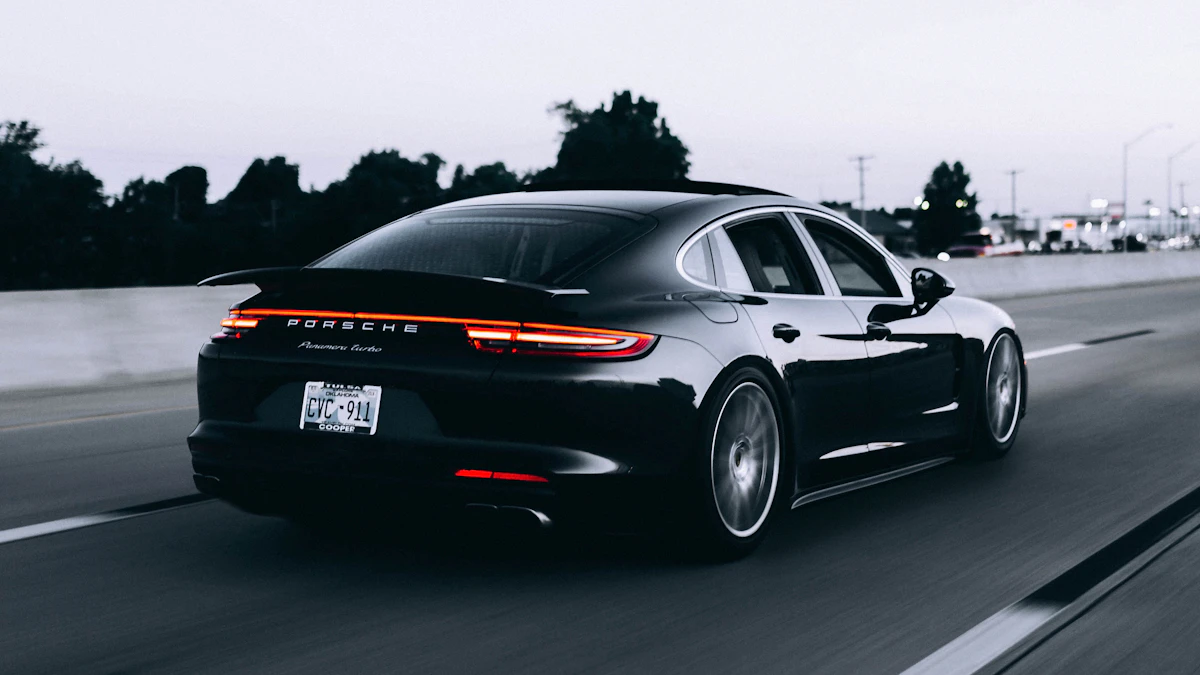
*High-speed driving mechanics rely heavily on stable frame-pacing to prevent micro-stuttering during intense cornering along coastal highways.*
---
## Frequently Asked Questions
### Will GTA 6 have a 60 FPS performance mode on base PS5?
It is extremely unlikely. The base PlayStation 5 relies on an AMD Zen 2 CPU that struggles to maintain the simulation throughput, complex AI pathfinding, dynamic lighting, and environmental physics of Vice City at 60 frames per second. Expect a locked 30 FPS target instead.
### Can the PS5 Pro run GTA 6 at 60 FPS?
While the PS5 Pro features a 45% faster GPU and advanced PSSR upscaling, its CPU clock speed receives only a modest 10% boost. Because GTA VI is bound by CPU simulation overhead rather than GPU rendering limits, the PS5 Pro will likely target a visually enhanced 30 FPS mode or a balanced 40 FPS / 120Hz mode rather than a native 60 FPS.
### Why doesn't lowering resolution from 4K to 1080p enable 60 FPS?
Lowering resolution reduces the workload on the GPU, but it does not reduce the load on the CPU. The CPU must still process complex pedestrian AI, vehicle physics, police logic, and physical asset streaming regardless of whether the output resolution is 1080p or 4K.
### Will Xbox Series S support GTA 6 at 30 FPS?
Yes, the Xbox Series S will run GTA 6, targeting a 30 FPS framerate at lower rendering resolutions (typically dynamic 1080p). It will feature scaled-down crowd density, reduced draw distances, and simplified lighting implementations to stay within its memory bandwidth constraints.
### How does a 40 FPS mode work on 120Hz displays?
A frame target of 30 FPS requires a frame time render window of 33.3 milliseconds, whereas 60 FPS requires 16.6 milliseconds. A 40 FPS mode lands right in the middle at 25 milliseconds per frame. Because 40 divides evenly into a 120Hz display refresh rate, it delivers a much smoother visual experience without requiring the heavy CPU budget needed for 60 FPS.
---