### Quick Answer
> Why is GTA 6 taking 13 years? The unprecedented gap stems from massive production scale, the exhaustive engineering of the proprietary RAGE 9 engine, shifting corporate workplace cultures, and the monumental task of rendering the sprawling, hyper-detailed state of Leonida.
| Development Milestone | GTA V (2013) | GTA 6 (Expected 2025/2026) |
| :--- | :--- | :--- |
| **Engine Architecture** | RAGE 5 (Optimized for Xbox 360 / PS3) | RAGE 9 (Advanced Physics & Global Illumination) |
| **Map Scale & Density** | Los Santos & Blaine County (~49 sq miles) | State of Leonida, Vice City, Everglades (~100+ sq miles) |
| **Interior Accessibility** | Roughly 15% to 20% scripted interiors | Over 70% enterable commercial and residential spaces |
| **Hardware Targets** | 7th-Gen Consoles (512MB RAM) | 9th-Gen Consoles (PS5 Pro, Xbox Series X/S) |
1. **Engine Rewriting:** Rockstar completely overhauled the Rockstar Advanced Game Engine (RAGE) to version 9, implementing state-of-the-art physics, vehicular suspension modeling, and real-time ray-traced global illumination.
2. **Scope Expansion:** The fictional state of Leonida grew exponentially past the borders of Vice City, incorporating dynamic ecosystems, rural marshlands, and dense urban sprawl requiring custom AI routines.
3. **Corporate Restructuring:** Rockstar Games transitioned away from the punishing crunch culture of the 2010s, altering studio workflows, streamlining management, and extending production lifecycles.
4. **Hardware Evolution:** Developers targeted bleeding-edge console specifications, demanding massive optimization passes to run high-res texture streaming and complex NPC pathfinding on modern hardware.
---
The staggering thirteen-year chasm between *Grand Theft Auto V* and *Grand Theft Auto VI* represents the longest hiatus in the history of Rockstar Games. When players first dropped into Los Santos on September 17, 2013, via the Xbox 360 and PlayStation 3, nobody anticipated that a full console generation—and half of another—would pass before another entry hit store shelves at local GameStop, Best Buy, or through PlayStation Direct US and UK GAME outlets.
Understanding why is GTA 6 taking 13 years requires looking past internet speculation and examining the hardcore engineering realities, engine overhauls, and shifting economic models that governed Take-Two Interactive over the past decade.
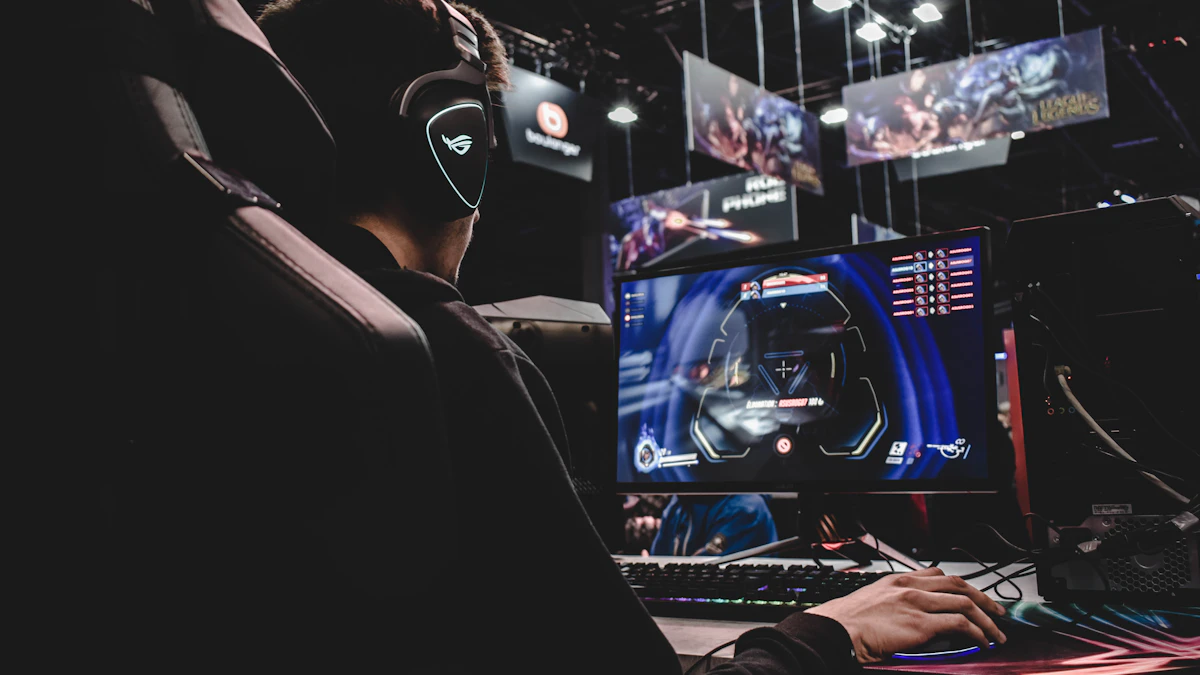
*Analyzing the massive hardware and software demands required to render Rockstar's next-generation open world.*
## The RAGE 9 Engine Overhaul: Building a New Reality
At the core of the extended timeline is the complete redevelopment of Rockstar’s proprietary middleware: the Rockstar Advanced Game Engine (RAGE). While *GTA V* and *Red Dead Redemption 2* utilized iterations of RAGE 7 and RAGE 8, the upcoming trip to Leonida demands an entirely new technical foundation. RAGE 9 introduces unprecedented physics simulations, revolutionary water displacement algorithms, and real-time ray-traced global illumination that renders pre-baked lighting obsolete.
In past titles, vehicle physics, pedestrian AI, and world scripting operated on isolated threads. RAGE 9 unifies these systems. Suspension systems now calculate individual tire contact patches based on micro-surface textures of asphalt, gravel, or swamp mud.
Vehicle handling models feature dynamic weight transfer, low-RPM turbo lag, and realistic drivetrain resistance. Rewriting a massive engine from the ground up to support these complex mathematical calculations naturally added years to the production schedule.
For PC players eagerly tracking hardware requirements, understanding these engine changes clarifies why rumors point toward heavy system demands. Many enthusiasts wonder if current setups will suffice, or if upgrades will be mandatory. For a detailed breakdown of performance expectations, examine our analysis on
Will GTA 6 Run on RTX 4060? PC Performance, DLSS & Frame Generation Benchmarks Explained.
## The Economic Juggeraut: Why *GTA Online* Shifted Priorities
Another undeniable driver behind the 13-year gap is the unprecedented commercial longevity of *GTA Online*. Released shortly after the 2013 base game, the online multiplayer sandbox evolved into a self-sustaining financial titan. Regular content drops—such as *The Diamond Casino & Resort*, *Cayo Perico Heist*, and *San Andreas Mercenaries*—continually injected billions of dollars into Take-Two Interactive’s quarterly earnings reports.
From a corporate governance perspective, rushing a sequel while an existing product generates astronomical revenues with lower operational overhead makes little business sense. The immense profitability of Shark Cards and steady player retention allowed Rockstar Games to take its time, expanding studio headcount across Rockstar North, Rockstar San Diego, and Rockstar Leeds to refine the next project without financial panic.
Gamers tracking the financial ecosystem often wonder how pricing structures and production budgets have ballooned during this period. For deeper context on production valuations, review our deep-dive on
Did It Really Cost $2 Billion to Make GTA 6? Development Costs, Marketing Budget & Revenue Projections Explained.
## Leonida's Scale: Vice City, The Everglades, and Dynamic Sub-Factions
The geographical ambition of Leonida dwarfs any previous Rockstar map. While *GTA V* focused on a single major metropolitan hub surrounded by arid county land, *GTA 6* recreates a fictionalized Florida complete with dense urban sectors, expansive rural bayous, coastal keys, and interstate highways.
>
[PRO-GAMER TACTICAL HACK]: When exploring dense urban sectors like Vice Beach or the rural marshes of the Grassrivers in Leonida, pay close attention to CCTV coverage radiuses. RAGE 9 implements dynamic law enforcement response vectors based on local security camera density, meaning evasion requires breaking line-of-sight *before* police dispatch registers your facial recognition profile.
Developers populated this massive territory with intricate, localized sub-factions and hyper-realistic NPC routines. Unlike earlier games where pedestrians walked along predetermined loops, Leonida's inhabitants exhibit advanced daily schedules.
Citizens gather at Ocean Drive hotel lobbies, shop in Vice Dale pawn shops, and congregate at rural Thrillbilly Mud Club meetups in the Everglades. Crafting this level of behavioral depth across thousands of simultaneous actors requires immense artificial intelligence scripting and QA testing passes.
```
[Leonida World Simulation Flow]
├── RAGE 9 Physics Engine (Suspension, Water, Ballistics)
├── Dynamic NPC Routines (Schedules, Ambient AI)
├── Sub-Faction Territories (Cartels, Mud Clubs, Syndicates)
└── Law Enforcement AI (CCTV Tracking & Cellular Triangulation)
```
The sheer quantity of interior spaces also escalated development time. Players will not just view storefronts from the outside; numerous commercial centers, shipping warehouses, and residential properties feature fully enterable layouts. To understand the architectural scope of these locations, consult our guide on
GTA 6 Enterable Buildings: Every Confirmed and Rumored Interior Location in Leonida.

*The neon-drenched streets of Vice City redesigned under RAGE 9's real-time ray-traced global illumination.*
## Shifting Workplace Culture and Studio Restructuring
The video game industry experienced a profound cultural reckoning in the late 2010s. Rockstar Games faced severe criticism regarding its notorious "crunch culture" during the development of *Red Dead Redemption 2*, where developers logged grueling 80-hour workweeks to meet internal deadlines.
In response to employee unionization efforts, public pressure, and internal feedback, Take-Two Interactive and Rockstar underwent massive structural overhauls. Management introduced flexible working hours, improved mental health support systems, reduced mandatory overtime, and adopted hybrid remote-work models following the global disruptions of 2020.
While these humane workplace reforms drastically improved employee retention and quality of life, they inherently lengthened production pipelines. Writing, motion-capture sessions, audio design, and level building required more calendar months to complete when studios prioritized sustainable work hours over brutal crunch cycles.
## Hardware Constraints and Console Generation Transitions
The timing of console releases also influenced the 13-year timeline. When *GTA V* launched, it targeted the tail end of the seventh-generation consoles (PS3/Xbox 360) before receiving upgraded ports for PS4, Xbox One, and eventually PC. For *GTA 6*, Rockstar chose to bypass the previous generation entirely to focus on current-gen hardware capabilities.
Developing exclusively for PlayStation 5, Xbox Series X, and the mid-cycle PS5 Pro hardware meant wrestling with strict thermal, memory, and CPU limits. High-resolution texture streaming requires massive bandwidth, pushing developers to optimize asset streaming protocols so players can traverse high-speed sports cars across highways without encountering pop-in or level-of-detail (LOD) degradation.
>
[ROOKIE MISTAKE TO AVOID]: Do not attempt to run high-end graphical modifications or heavy background applications on marginal hardware configurations when the PC port eventually drops. RAGE 9's real-time asset streaming demands rapid read/write speeds from NVMe solid-state drives; installing the game on legacy mechanical hard drives will trigger severe stuttering and asset streaming failures.
Players investing in hardware setups need to account for these technical realities. Those planning their rig specifications should review our detailed analysis on
Will GTA 6 Need 32GB RAM? Minimum PC Specs, High-Res Texture Streaming & System Requirements Explained.

*Advanced hardware optimization ensures consistent frame rates across complex urban environments.*
## Financial Projections and Retail Expectations
As release windows draw closer, retail pricing discussions across the US and UK markets have dominated gaming forums. With standard AAA game prices shifting from $59.99 / £59.99 to $69.99 / £69.99—and rumblings of higher tiers—consumers at retailers like GameStop, Walmart, and Amazon US/UK are preparing for a record-breaking economic launch.
The budget behind *GTA 6* exceeds any entertainment product in history, justifying the lengthy gestation period. Every dollar spent on motion capture, licensed soundtracks, and cutting-edge software engineering feeds into an experience engineered to dominate cultural relevance for another decade.
To evaluate how retail pricing models affect international markets and collector editions, read our breakdown on
Will GTA 6 Cost $200? Take-Two Pricing Rumors, $2 Billion Budget & Industry Price Hikes Explained.
## Frequently Asked Questions
### Why did GTA 6 take longer to make than GTA 5?
*GTA 6* required a total rewrite of the RAGE game engine, a massive expansion in map scale and interior density, a transition away from crunch culture in the workplace, and the logistical challenge of building a title exclusively for ninth-generation hardware.
### Will GTA 6 release on PS4 and Xbox One?
No. Rockstar Games is focusing entirely on current-generation hardware (PlayStation 5, Xbox Series X/S, and PC), as the hardware limitations and slow storage speeds of eighth-generation consoles cannot handle the RAGE 9 engine's advanced physics and asset streaming demands.
### How big is the map in GTA 6 compared to GTA 5?
The fictional state of Leonida is significantly larger and denser than Los Santos and Blaine County. It features a modern recreation of Vice City, sprawling rural Everglades swamplands, and multiple distinct regional sub-factions.
### Is GTA Online shutting down when GTA 6 launches?
Take-Two Interactive has not announced any plans to shut down the original *GTA Online* servers immediately upon release, though player migration and future content support will naturally shift toward the new multiplayer ecosystem accompanying *GTA 6*.
***