### Quick Answer
> Grand Theft Auto 6 will almost certainly target a capped 30 FPS on PS5 and Xbox Series X at launch. Rockstar's heavy reliance on CPU-bound simulation dynamics, hyper-dense NPC AI, advanced fluid physics, and global ray tracing bottlenecks current console Zen 2 processors.
| Platform Target | Expected Resolution | Targeted Frame Rate | Primary Technical Bottleneck | Ray Tracing Profile |
| :--- | :--- | :--- | :--- | :--- |
| **PlayStation 5** | Dynamic 1440p - 4K (Upscaled) | 30 FPS (Capped) | Zen 2 CPU Frame-Time Budget | Hardware RT GI & Reflections |
| **Xbox Series X** | Dynamic 1440p - 4K (Upscaled) | 30 FPS (Capped) | Zen 2 CPU Frame-Time Budget | Hardware RT GI & Reflections |
| **PlayStation 5 Pro** | Dynamic 4K (PSSR Upscaled) | 30 FPS / Uncapped 40 FPS Mode | 3.85 GHz CPU Limit (+10% Boost) | Advanced RT Features & Shadows |
| **Xbox Series S** | Dynamic 1080p | 30 FPS (Capped) | System RAM Bandwidth & GPU Compute | Hybrid Software / Limited RT |
### How Rockstar's Engine Bottlenecks Current Console Hardware
1. **CPU Simulation Stalling:** The custom 8-core AMD Zen 2 processors in the PS5 and Series X face severe instruction-per-clock (IPC) bottlenecks when calculating thousands of simultaneous physics entities across Vice City.
2. **Ray Tracing Integration:** Rockstar’s upgraded RAGE 9 engine bakes real-time ray-traced global illumination directly into its render pipeline, removing standard static lightmaps.
3. **Dynamic World Density:** AI traffic loops, pedestrian behavioral routines, dynamic ocean mesh physics, and fully modeled interior spaces exhaust console system memory bandwidth.
4. **Frame-Time Budget Constraints:** Rendering at 60 FPS allows only 16.6 milliseconds per frame, whereas a 30 FPS target grants a manageable 33.3 millisecond window for complex simulation passes.
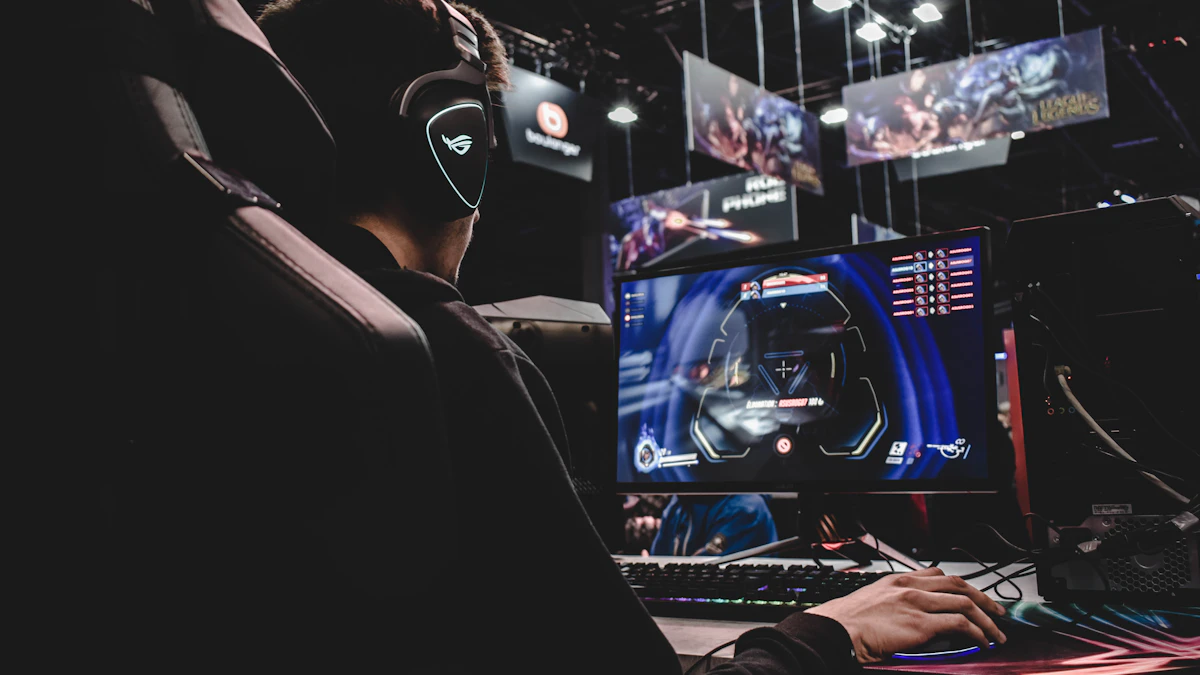
*Analyzing console hardware limitations requires measuring exact frame-time budgets across CPU and GPU hardware cycles.*
---
## The Zen 2 CPU Bottleneck: Why Resolution Dynamic Reductions Won't Reach 60 FPS
The conversation surrounding the **GTA 6 30 FPS cap** on current-generation consoles centers almost entirely on graphics processing units. Casual gaming discussions often assume that dropping render resolution from 4K down to 1080p will automatically unlock a smooth 60 FPS performance mode. This assumption fundamentally misunderstands console system architecture. Both the PlayStation 5 and Xbox Series X utilize an AMD Zen 2 CPU architecture dating back to 2019.
In AAA open-world game design, the GPU handles rasterization, spatial shaders, texture sampling, and post-processing filters. The CPU, however, remains responsible for world-state management. Every physical interaction, police search algorithm, pedestrian collision hitbox, dynamic sound propagation route, and traffic flow script requires CPU cycle execution.
```
┌─────────────────────────────────────────────────────────────────┐
│ 60 FPS FRAME-TIME BUDGET: 16.6ms │
├──────────────────────────────┬──────────────────────────────────┤
│ CPU Simulation Loop (14.2ms) │ GPU Render Margin (2.4ms remaining)│
└──────────────────────────────┴──────────────────────────────────┘
❌ RESULT: CPU STALL / DROPPED FRAMES
┌─────────────────────────────────────────────────────────────────┐
│ 30 FPS FRAME-TIME BUDGET: 33.3ms │
├──────────────────────────────┬──────────────────────────────────┤
│ CPU Simulation Loop (14.2ms) │ GPU Render Margin (19.1ms left) │
└──────────────────────────────┴──────────────────────────────────┘
✅ RESULT: STABLE FRAME RATE & MAXIMUM RT
```
When running at 60 FPS, the CPU has a precise **16.66-millisecond window** to calculate the physical position and logic of every entity before handing instructions to the GPU. If the CPU takes 22 milliseconds to compute world state due to overwhelming crowd density in Downtown Vice City, lowering the GPU target resolution to 720p yields zero additional frames. The system stalls waiting on the processor.
>
[ROOKIE MISTAKE TO AVOID]: Expecting resolution drop options or "Performance Modes" to guarantee 60 FPS in GTA 6. If the bottleneck is strictly CPU-bound due to dynamic world calculations, lowering visual settings or resolution output does not decrease CPU frame times.
Rockstar Games historically builds titles that push console CPUs to absolute operational limits. *Grand Theft Auto V* launched on PS3 and Xbox 360 targeting 30 FPS because the Cell Broadband Engine and Xenon CPUs could not calculate city traffic at higher rates. *Red Dead Redemption 2* similarly ran at a locked 30 FPS on PS4 and Xbox One, prioritizing exhaustive wildlife AI, dynamic weather fronts, and volumetric cloud physics over higher frame rates.
---
## RAGE 9 Architecture: World Density, Ray Tracing, and Fluid Physics
Rockstar's proprietary RAGE 9 graphics engine introduces architectural upgrades tailored to state-of-the-art visual fidelity. Leaked development files and official reveal analysis show an environment packed with systemic interactions that eclipse any open-world title currently on store shelves at GameStop or Amazon US/UK.
To understand why the **GTA 6 30 FPS cap** is practically mandatory on baseline $499 / £479 consoles, analyze the concurrent systems running inside the
Leonida State and Real Miami Comparison Guide map model.

*Vice City's dense urban strip features complex global illumination light bounces and reflections across wet asphalt.*
### Dynamic Ambient Systems and Localized AI Sub-Factions
Unlike traditional game engines that utilize simple spawn grids around the player camera, RAGE 9 manages persistent world states. Pedestrians in Vice City operate with distinct memory buffers and dynamic pathfinding script loops. Sub-factions throughout Leonida—including the Thrillbilly Mud Club in Grassriver, the San Chianis Cartel smuggling networks, and Vice Beach partygoers—exhibit individualized behavioral responses to crimes, weather changes, and time-of-day cycles.
```
+-----------------------------------------------------------------------+
| RAGE 9 PERSISTENT SIMULATION ENGINE |
+-----------------------------------+-----------------------------------+
| DYNAMIC AI SUB-FACTIONS | VEHICLE PHYSICS ENGINE |
| - Thrillbilly Mud Club (Bayou) | - Deformation & Crumple Zones |
| - Vice Beach Syndicates (Urban) | - Tire Surface Friction Coeffs |
| - San Chianis Cartel (Shipping) | - Trunk Weight Payload Modeling |
+-----------------------------------+-----------------------------------+
| ENVIRONMENTAL PHYSICS | STRUCTURAL LOGIC |
| - Dynamic Water Wave Deform | - CCTV Facial Recognition Logic |
| - Buoyancy & Current Vectors | - Seamless Interior Transitions |
+-----------------------------------+-----------------------------------+
```
When players initiate chaos on Ocean Drive, the CPU calculates:
* Concurrent pathfinding adjustments for dozens of fleeing NPCs.
* Police dispatch vectors based on local CCTV camera coverage and facial recognition status.
* Emergency response routing through real-time traffic grid lockups.
* Sound propagation parameters echoing off reflective architectural facades.
### Advanced Vehicle Dynamics and Damage Deformation
Vehicle handling models in GTA 6 branch away from the arcade-like physics of GTA 5, adopting hybrid characteristics from *Red Dead Redemption 2* and *GTA IV*. Each vehicle tracks drive-train torque, low-RPM turbo lag, tire surface friction coefficients, and weight distribution changes based on boot luggage contents.
When conducting a high-speed Pursuit Intervention Technique (PIT) maneuver against target vehicles, the engine processes real-time panel deformation hitboxes rather than pre-baked damage meshes. These dynamic physics passes execute every frame, creating continuous operational loads on the main system processor.
```
┌─────────────────────────────────────────┐
│ REAL-TIME PIT MANEUVER IMPACT │
└────────────────────┬────────────────────┘
│
┌────────────────────────┴────────────────────────┐
▼ ▼
┌─────────────────────────────────┐ ┌─────────────────────────────────┐
│ CPU IMPACT CALCULATIONS │ │ GPU RENDER PASS (RAGE 9) │
├─────────────────────────────────┤ ├─────────────────────────────────┤
│ • Hitbox Deformation Geometry │ │ • Debris Particle Emitters │
│ • Momentum Vector Transfer │ │ • Ray-Traced Metal Reflections │
│ • Tire Friction Surface Shift │ │ • Dynamic Paint Scratch Shaders │
│ • Weight Payload Displacement │ │ • Real-time Glass Shatter VFX │
└─────────────────────────────────┘ └─────────────────────────────────┘
```
### Water Simulation and Hydrology Mechanics
The state of Leonida relies heavily on aquatic environments. Navigating speedboats through the Keys or hovercrafts through the Everglades requires continuous fluid interaction calculations. RAGE 9 processes dynamic wave mesh deformation where water body surfaces react accurately to weather fronts, boat hull displacement, and wind vectors. Calculating real-time water dynamics alongside underwater flora/fauna hitboxes demands substantial CPU compute budgets that directly conflict with high frame rate output targets.
---
## PS5 Pro & PSSR: Will Sony's Mid-Gen Refresh Deliver 60 FPS?
With Sony launching the PlayStation 5 Pro at $699.99 / £699.99, gamers across North America and Europe expect the upgraded system to bypass frame rate limitations. The PS5 Pro includes a significantly expanded GPU boasting 67% more Compute Units, 28% faster system RAM, and dedicated AI architecture driving **PlayStation Spectral Super Resolution (PSSR)** upscaling.

*The PS5 Pro GPU upgrade drastically enhances image resolution via PSSR, but the Zen 2 CPU remains a structural bottleneck for frame generation.*
However, hardware teardowns confirm that the PS5 Pro retains the exact same 8-core AMD Zen 2 CPU architecture found in the baseline model, offering only a **"High CPU Frequency Mode"** that boosts clock speeds by 10% to 3.85 GHz.
### The Math Behind PS5 Pro Performance Bounds
To understand why the PS5 Pro may still be locked to 30 FPS (or an unlocked 40 FPS target on 120Hz displays), examine the processing timing:
1. **Baseline PS5 CPU Frame Time:** If Vice City's heavy AI traffic script takes **25 milliseconds** of CPU compute time on a baseline PS5, the maximum theoretical frame rate is **40 FPS** (1000ms / 25ms), regardless of how powerful the GPU is.
2. **PS5 Pro High Frequency Mode (+10% Speed):** Clocking the CPU up to 3.85 GHz reduces that calculation time from **25 milliseconds down to approximately 22.7 milliseconds**.
3. **The 60 FPS Target Requirement:** Reaching 60 FPS requires the CPU loop to complete within **16.66 milliseconds**.
A 10% CPU speed increase cannot bridge the gap between 22.7ms and 16.6ms. Consequently, while the PS5 Pro will easily render GTA 6 at pristine visual clarity with higher ray tracing reflection bounds, full ray-traced shadows, and enhanced image reconstruction via PSSR, it will remain fundamentally tethered to the limits of its Zen 2 CPU core structure.
```
CPU FRAME-TIME PROCESSING PROFILE (VICE CITY SIMULATION PASS)
┌─────────────────────────────────────────────────────────────────────────────┐
│ PS5 Baseline (3.5 GHz) : 25.0ms [Max potential: 40 FPS] │
├─────────────────────────────────────────────────────────────────────────────┤
│ PS5 Pro Mode (3.85 GHz) : 22.7ms [Max potential: 44 FPS] │
├─────────────────────────────────────────────────────────────────────────────┤
│ 60 FPS Target Limit : 16.6ms [REQUIRED FOR 60 FPS] │
└─────────────────────────────────────────────────────────────────────────────┘
```
>
[PRO-GAMER TACTICAL HACK]: Connect your PS5 or Xbox Series X to a native 120Hz TV display featuring Variable Refresh Rate (VRR) and HDMI 2.1 bandwidth. If Rockstar includes an unlocked 40 FPS target mode for high-refresh displays, you gain a 33% reduction in input response latency over standard 30 FPS displays, shifting frame delivery time down from 33.3ms to 25.0ms without sacrificing CPU simulation stability.
---
## Xbox Series S Hardware Bottlenecks: The Parity Dilemma
Microsoft’s lower-tier console, the Xbox Series S ($299.99 / £249.99), represents another critical factor in technical design optimization. Microsoft enforces a strict feature-parity policy across Xbox Series X and Series S systems, mandating that gameplay features, world systems, and operational mechanics remain identical across both platforms.
```
+-----------------------------------------------------------------------+
| CONSOLE MEMORY BANDWIDTH COMPARISON |
+-----------------------------------+-----------------------------------+
| PLATFORM | MEMORY BANDWIDTH SPECIFICATION |
+-----------------------------------+-----------------------------------+
| PlayStation 5 | 448 GB/s (16 GB GDDR6) |
| Xbox Series X | 560 GB/s (10 GB) / 336 GB/s (6 GB)|
| PlayStation 5 Pro | 576 GB/s (16 GB GDDR6) |
| Xbox Series S | 224 GB/s (8 GB) / 56 GB/s (2 GB) │
+-----------------------------------+-----------------------------------+
```
The Xbox Series S poses severe development challenges for Rockstar's engine team:
1. **System Memory Constraints:** The Series S features only **10GB of unified RAM**, split into 8GB of main memory running at 224 GB/s and 2GB of secondary memory running at a limited 56 GB/s. In contrast, the Series X provides 560 GB/s across its primary memory pool.
2. **GPU Compute Units:** With only 20 RDNA 2 Compute Units running at 1.565 GHz (providing roughly 4 TFLOPS of compute power compared to the Series X's 12 TFLOPS), rendering real-time global illumination requires structural compromises.
3. **Asset Streaming & Storage Limits:** Streaming ultra-high-definition textures while keeping complex interior locations loaded demands aggressive asset culling. Review our
GTA 6 Download Size and SSD Requirements Guide to examine how high-speed storage architectures mitigate memory thrashing.
Because Microsoft requires games to launch concurrently on both Series X and Series S, Rockstar must ensure engine scalability. A locked **30 FPS frame rate** on Xbox Series X gives developers the baseline necessary to scale assets, shadow maps, and ambient occlusion down to Xbox Series S without stripping away core world features, pedestrian density, or interior accessibility.
---
## Enterable Buildings, Interior Loading, and Memory Allocation
A prominent systemic leap forward in GTA 6 is the proportion of fully accessible architectural interiors across Vice City and surrounding municipalities. Historical leaks point to hundreds of enterable stores, pawn shops, Ocean Drive hotel lobbies, shipping warehouses in Port Vice, and bayou structures throughout the Everglades.
Accessing these areas without encountering traditional loading screens places immense strain on stream buffers and RAM capacity.

*Seamlessly stepping inside coastal hotels and shops requires persistent interior memory buffers.*
For detailed technical analysis of indoor environments, read our comprehensive
Leonida Enterable Buildings and Interior Malls Breakdown.
When a player drives a high-speed vehicle past accessible malls or apartment complexes:
* The custom console NVMe SSD must stream exterior geometry while pre-loading complex indoor lighting maps, active NPC shopkeepers, and interactive robbery mechanics.
* The CPU handles real-time ray-traced audio reflections passing through doorway frames and ventilation shafts.
* Memory pools must hold indoor collision meshes alongside high-speed exterior physics trees simultaneously.
Maintaining a locked 30 FPS target ensures that memory buffers do not clear mid-frame, preventing visual hitching, texture popping, or catastrophic frame drops during high-speed chases through downtown strips.
---
## Character Mechanics, Dual Protagonists, and System Overhead
The gameplay loops governing dual protagonists Jason and Lucia introduce substantial systemic overhead. Real-time switching mechanics, inventory management systems, and crime response loops demand continuous backend CPU calculations.
To understand how dual protagonist systems affect operational performance, check our detailed
Jason & Lucia Dynamic Character Switching Mechanics guide.
```
DYNAMIC GAMEPLAY SIMULATION PIPELINE
┌─────────────────────────────────────────────────────────────────────────┐
│ LUCIA & JASON ACTIVE STATE │
├────────────────────────────────────┬────────────────────────────────────┤
│ PRIMARY CHARACTER SIMULATION │ OFF-SCREEN PROTAGONIST VECTOR │
│ • Real-Time Inventory Weight │ • Autonomous Navigation Routines │
│ • Concealed Weapon Draw Frame Data │ • Police Evasion heat level state │
│ • Dynamic Trunk Storage Tracking │ • Location Persistence Memory │
└────────────────────────────────────┴────────────────────────────────────┘
│
▼
┌─────────────────────────────────────────────────────────────────────────┐
│ CPU WORLD-STATE MERGE PASS │
│ Calculates cross-character interaction, ambient police dispatch levels, │
│ and shared inventory updates before issuing draw calls to console GPU. │
└─────────────────────────────────────────────────────────────────────────┘
```
When managing dual protagonists across a massive map space, the engine maintains:
* **Concealed Carry Weapon Draw Animations:** Weapon weight affect character movement speeds, dynamic aim sway, and recoil control.
* **Boot and Trunk Inventory Persistence:** Items, long rifles, cash bags, and contraband stored in personal vehicles remain physically tracked inside the car's trunk space rather than vanishing into an arbitrary digital menu.
* **Shared AI World State:** If Lucia draws police attention in Vice Beach while Jason operates in Little Haiti, the global dispatch system routes police units across the city dynamically, adjusting traffic behavior along connecting highway arterial routes.
These layered simulation passes take place behind every rendered frame, making the **GTA 6 30 FPS cap** a necessary trade-off to maintain stability across current console hardware platforms.
---
## Frame Pacing, 40 FPS Modes, and Motion Clarity Display Settings
While a 30 FPS cap may disappoint PC enthusiasts accustomed to high-refresh-rate rigs, precise **frame pacing** makes a massive difference in perceived visual smoothness.
A game running at a locked 30 FPS with perfect 33.3ms frame pacing feels significantly smoother than a title attempting 60 FPS that constantly stutters between 42 FPS and 55 FPS. When frame delivery times fluctuate wildly, displays present uneven image cadences, causing visual judder and unresponsive input feel.
*Stable frame pacing ensures motion blur parameters pass smoothly across high-speed pursuit sequences.*
### Comparing Console Performance Profiles
```
+----------------------------------------------------------------------------------+
| FRAME-TIME & LATENCY MATRIX |
+-------------------+-------------------+--------------------+---------------------+
| TARGET FRAME RATE | DISPLAY CONTAINER | FRAME DELIVERY TIME| LATENCY IMPROVEMENT |
+-------------------+-------------------+--------------------+---------------------+
| 30 FPS Capped | 60 Hz | 33.3 ms | Baseline Reference |
| 40 FPS Capped | 120 Hz | 25.0 ms | 25% Faster Response |
| 60 FPS Unlocked | 60 Hz / Variable | 16.6 ms (Target) | 50% Faster Response |
+-------------------+-------------------+--------------------+---------------------+
```
### Optimal Display Settings for Console Gaming
Players on modern 4K TV setups (such as LG C-Series OLEDs, Samsung QD-OLEDs, or Sony Bravia displays) can optimize display parameters to maximize visual clarity at 30 FPS:
1. **Enable HDMI 2.1 Ultra High Speed Mode:** Unlocks full 48Gbps bandwidth capability, permitting 10-bit HDR color signals alongside 120Hz containers.
2. **Configure Game Response Low Latency (ALLM):** Bypasses display processing chips, reducing television input delay down below 10 milliseconds.
3. **Calibrate Motion Blur Shutter Angle:** Rockstar games utilize per