### Quick Answer
No, Grand Theft Auto 6 will not release on PlayStation 4 or Xbox One. Rockstar Games officially confirmed that GTA 6 is built exclusively for modern consoles (PS5, Xbox Series X|S) and PC, leaving eighth-generation systems behind due to severe hardware limitations.
| Hardware Component | Last-Gen (PS4 / Xbox One) | Current-Gen (PS5 / Xbox Series X|S) | Impact on GTA 6 Gameplay & Simulation |
| :--- | :--- | :--- | :--- |
| **CPU Architecture** | AMD Jaguar (8 Cores @ 1.6 GHz - 1.75 GHz) | AMD Zen 2 (8 Cores / 16 Threads @ 3.5 GHz - 3.8 GHz) | Controls NPC crowd AI, traffic density, and physics calculations. Last-gen CPUs cannot handle modern simulation logic. |
| **System Memory (RAM)** | 8GB GDDR5 / DDR3 (Shared system & video memory) | 16GB GDDR6 (High-bandwidth unified memory) | Dictates the variety of assets, vehicles, weapons, and textures loaded simultaneously in the game world. |
| **Storage Technology** | 5400 RPM Mechanical Hard Disk Drive (HDD) | Ultra-Fast NVMe Solid-State Drive (SSD) | Determines map streaming speed. HDDs cause severe texture pop-in, loading screens, and speed-capped vehicles. |
| **GPU Performance** | 1.31 - 1.84 Teraflops (GCN Architecture) | 4.0 - 10.28 Teraflops (RDNA 2 Architecture) | Dictates rendering resolution, ray-traced reflections, dynamic lighting, volumetric fog, and visual fidelity. |
### How Hardware Limitations Lock Out Last-Gen Consoles
1. **CPU Bottlenecks:** The antiquated AMD Jaguar processor in the PS4 and Xbox One cannot calculate the complex AI routines of the massive NPC crowds in Vice City.
2. **Slow Storage Speeds:** Mechanical hard drives read data at roughly 100 MB/s, which is too slow to stream the highly detailed environments of Leonida without constant freezing.
3. **Memory Starvation:** With only 8GB of total shared memory, last-gen consoles lack the capacity to hold high-resolution textures, complex character models, and audio files in active memory.
4. **Thermal and Power Constraints:** Running the advanced physics, real-time lighting, and dense foliage of the Everglades on decade-old hardware would cause thermal throttling and system crashes.
---
### The Technical Death Sentence of Last-Gen Consoles
To understand why Rockstar Games abandoned the PS4 and Xbox One for GTA 6, you must look at the hardware gulf separating console generations. The PlayStation 4 and Xbox One launched in late 2013. At their core, these machines rely on custom AMD Jaguar central processing units (CPUs). Even in 2013, the Jaguar architecture was a low-power, mobile-focused design built for netbooks and low-tier laptops.
Over a decade later, this CPU architecture is a major bottleneck for game developers. The Jaguar CPU runs at a meager clock speed of 1.6 GHz on the base PS4 and 1.75 GHz on the Xbox One. In contrast, the PlayStation 5 and Xbox Series X utilize customized AMD Zen 2 processors running at up to 3.8 GHz. More importantly, the Zen 2 architecture delivers vastly superior Instructions Per Clock (IPC) performance.
```
[CPU CLOCK SPEED COMPARISON]
PS4 (AMD Jaguar): ███ 1.6 GHz
Xbox One (Jaguar): ████ 1.75 GHz
PS5 (AMD Zen 2): ███████████████ 3.5 GHz
Xbox Series X (Zen): ████████████████ 3.8 GHz
```
In an open-world sandbox like GTA 6, the CPU acts as the brain of the game. It handles the AI paths of hundreds of pedestrians, calculates the complex physics of high-speed car crashes, manages the spawning of police units, and runs the background simulation scripts. If the CPU cannot process these instructions fast enough, the game engine stalls. The Jaguar CPU is simply incapable of executing the millions of instructions per second required to run the state of Leonida.
System memory is another critical bottleneck. Both the PS4 and Xbox One feature 8GB of unified system memory. However, developers only have access to roughly 5.0 to 5.5GB of this pool, as the console operating systems reserve the rest for background tasks. This memory pool must be shared between the game's logic (system RAM) and its visual assets (video RAM).
Because of this limited memory pool, developers must carefully manage their "RAM budget." When designing a game for last-gen systems, artists must use lower-resolution textures, limit the variety of vehicle models on the streets, and reduce the number of unique pedestrian models.
On current-gen platforms, developers have 16GB of high-speed GDDR6 memory at their disposal. This massive jump in memory capacity and bandwidth allows Rockstar to load vastly more complex environments into memory, ensuring that players do not see duplicate cars or identical NPCs on every street corner.
For PC players, this memory bottleneck is even more pronounced, leading to discussions about whether [Will GTA 6 Require 32GB of RAM? PC System Requirements and Memory Bottlenecks Explained](/news/gta-6-32gb-ram-pc-requirements-bottlenecks-explained) to run the game's high-end graphical presets smoothly.
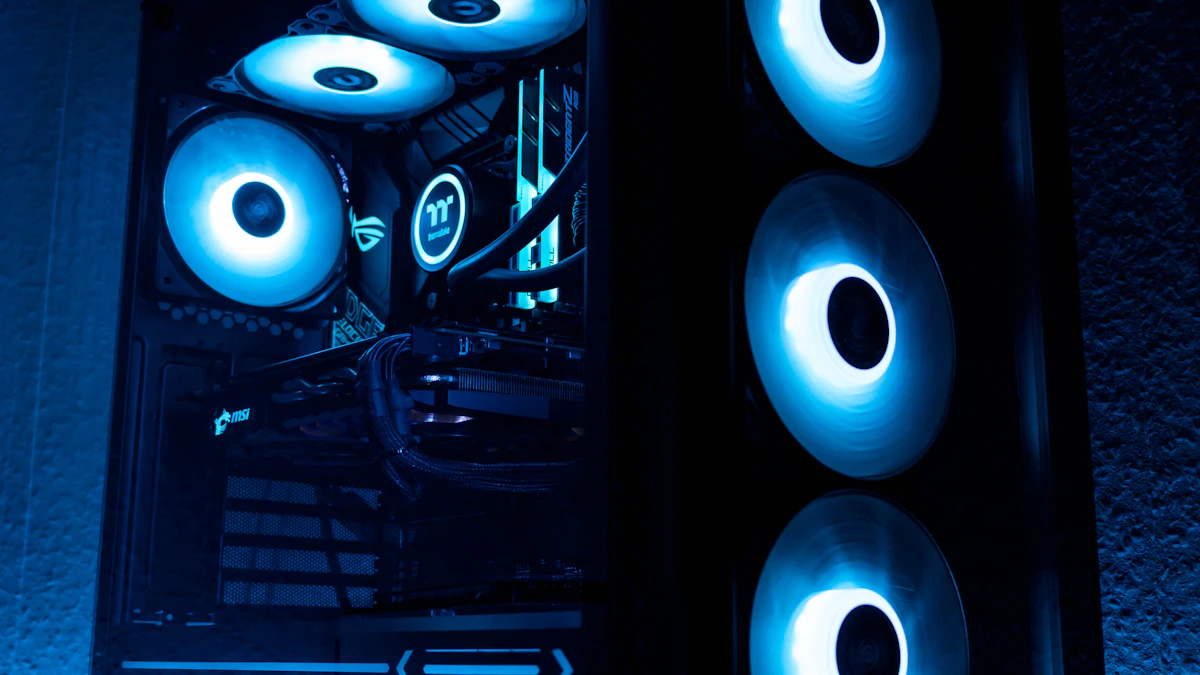
*Modern gaming hardware architectures like current-gen APUs and high-bandwidth SSDs are mandatory to run GTA 6.*
---
### The RAGE 9 Engine and Next-Gen Simulation Architecture
Rockstar Games has always pushed the boundaries of proprietary engine technology. GTA 6 runs on the latest iteration of the Rockstar Advanced Game Engine (RAGE 9). This engine is built from the ground up to leverage the hardware acceleration of current-generation consoles and modern PC graphics cards.
One of the standout features of the RAGE 9 engine is its physical rendering pipeline, which includes hardware-accelerated ray tracing. Ray tracing simulates the physical behavior of light, producing realistic reflections, shadows, and global illumination.
In a neon-drenched setting like Vice City, ray tracing is essential for capturing the reflections of bright pink and blue lights on rain-slicked asphalt, the metallic paint of sports cars, and the glass storefronts of Ocean Drive. Last-gen consoles lack the dedicated hardware cores (Ray Accelerators) required to compute these complex lighting calculations in real-time.
```
[CONSOLE GPU COMPUTE POWER COMPARISON]
Xbox One: █ 1.31 Teraflops (GCN)
PS4: ██ 1.84 Teraflops (GCN)
Xbox Series S: ████ 4.0 Teraflops (RDNA 2)
PS5: ████████████████████ 10.28 Teraflops (RDNA 2)
Xbox Series X: ████████████████████████ 12.0 Teraflops (RDNA 2)
```
Beyond graphics, the RAGE 9 engine introduces a highly sophisticated physics-based simulation system. This system governs everything from wind resistance on vehicles to the deformation of mud in the Everglades.
The Everglades, known in-game as the Grassrivers, features a highly complex water simulation. The engine calculates real-time fluid dynamics, including boat wake displacement, tidal currents, and the interaction of shallow water with underwater vegetation. Computing these physics vectors requires immense processing power that would instantly overwhelm the weak compute units of the PS4 and Xbox One GPUs.
The AI simulation layer in GTA 6 is equally demanding. Rockstar has designed the NPCs of Leonida to act as persistent entities with individual routines, reactions, and social behaviors. Instead of walking aimlessly down the sidewalk, NPCs in GTA 6 visit specific locations, interact with objects in the environment, and react dynamically to the player's presence.
For instance, members of the Thrillbilly Mud Club will gather in rural Kelly County to perform mud-bogging stunts, drink beer, and react to police intervention with coordinated resistance.
Similarly, the San Chianis Cartel and Vice Beach Syndicates operate with distinct tactical AI routines during combat. They will utilize flanking maneuvers, lay down suppressive fire, and communicate with each other using a dynamic dialog system. Running these complex behavioral trees for hundreds of active entities across a massive rendering distance is a task that only modern multi-threaded CPUs can handle.
> [PRO-GAMER TACTICAL HACK]: When planning escapes from high-security areas like the Port Vice shipping docks, target the CCTV power boxes located on the exterior walls. Severing these wires with a suppressed weapon disables the facial recognition tracking network instantly, preventing the local police department from broadcasting your description to patrolling units across Kelly County.
---
### Storage Speed and the Death of the Mechanical HDD
The single greatest bottleneck for open-world game design on eighth-generation consoles is the mechanical hard disk drive (HDD). The PS4 and Xbox One utilize standard 2.5-inch laptop hard drives spinning at 5400 RPM. These drives deliver read speeds of roughly 80 to 100 MB/s.
Furthermore, because they are mechanical, they suffer from high latency; the drive head must physically move across a spinning platter to locate files, resulting in seek times of several milliseconds.
In contrast, the PlayStation 5 features a custom NVMe SSD with a raw read bandwidth of 5.5 GB/s (5,500 MB/s), while the Xbox Series X|S uses an SSD that reads data at 2.4 GB/s. This represents a massive increase in storage speed compared to last-gen hardware.
```
[STORAGE READ SPEED COMPARISON]
Last-Gen HDD: █ 0.1 GB/s
Xbox Series S: ████████████ 2.4 GB/s
PS5 SSD: ████████████████████████████ 5.5 GB/s
```
For a game like GTA 6, storage speed dictates how fast the world can load around the player. When you travel through the streets of Vice City in a high-speed supercar at 150 mph, the game engine must constantly stream new assets—such as high-resolution textures, 3D models, audio files, and physics meshes—from the storage drive into the system memory.
If the storage drive cannot keep up, the game experiences severe issues:
* **Texture Pop-in:** High-resolution textures fail to load in time, leaving buildings and roads looking like blurry, low-polygon shapes.
* **Asset Spawning Delays:** Streetlights, traffic barriers, and even other vehicles suddenly materialize directly in front of the player.
* **Invisible Walls:** The player collides with objects that have physically loaded into the physics engine but have not yet rendered visually.
* **Hard Freezing:** The game pauses entirely, displaying a loading icon while the mechanical drive struggles to fetch the required data.
To prevent these issues on last-gen hardware, developers are forced to implement artificial speed limits on vehicles, reduce the density of the world, and use aggressive asset duplication.
By targeting current-gen SSDs, Rockstar can eliminate these design constraints entirely. Players can fly high-speed jets over the Leonida map, drive sports cars through tight city streets, and transition from outdoor environments to highly detailed interiors without a single loading screen.
This technological leap is central to discussions regarding frame rates and performance targets, which are analyzed in detail in our guide on [Will GTA 6 Run at 60 FPS on PS5 and Xbox Series X? The 30 FPS Cap Rumors Explained](/news/gta-6-60-fps-ps5-30-fps-cap-rumors-explained).

*The neon-drenched streets of Vice City require rapid asset streaming that only modern high-speed solid-state drives can handle.*
---
### The Leonida Map and Interactive Interiors
The scale and complexity of the Leonida map represent a major generational leap forward. Inspired by the state of Florida, the map features a diverse array of environments, including the dense urban sprawl of Vice City, the industrial port of Port Vice, the rural swamps of the Everglades, and the tropical archipelago of the Keys.
For a comprehensive breakdown of how these locations compare to their real-world counterparts, see our analysis of the [GTA 6 Map vs. Real-World Florida: Every Vice City Location Inspired by Miami, the Keys, and the Everglades](/news/gta-6-map-vs-real-world-florida-locations-comparison).
```
[LEONIDA STATE MAP REGIONS]
┌────────────────────────────────────────────────────────┐
│ KELLY COUNTY │
│ (Rural Towns, Mud Bogs, Swamps) │
│ │
│ ┌──────────────────┐ ┌──────────────────┐ │
│ │ EVERGLADES │ │ PORT VICE │ │
│ │ (Grassrivers, │ │ (Shipping Docks, │ │
│ │ Bayou Cabins) │ │ Warehouses) │ │
│ └────────┬─────────┘ └────────┬─────────┘ │
│ │ │ │
│ └──────────────┬───────────────┘ │
│ ▼ │
│ ┌──────────────────┐ │
│ │ VICE CITY │ │
│ │ (Ocean Drive, │ │
│ │ Neon Motels) │ │
│ └────────┬─────────┘ │
│ ▼ │
│ ┌──────────────────┐ │
│ │ LEONIDA KEYS │ │
│ │ (Tropical Islands) │
│ └──────────────────┘ │
└────────────────────────────────────────────────────────┘
```
What sets Leonida apart from previous Rockstar maps is not just its horizontal scale, but its vertical complexity and the sheer density of interactive interior spaces.
Unlike GTA 5, where the vast majority of buildings were static, non-interactive 3D models, GTA 6 features an unprecedented number of enterable structures. These include Ocean Drive hotel lobbies, Port Vice shipping warehouses, Vice Dale pawn shops, local diners, strip clubs, and Everglades bayou cabins.
Each of these interiors is fully rendered with high-fidelity physical objects, dynamic lighting