### Quick Answer
> Will GTA 6 need 32 GB RAM? Rockstar Games pushes hardware limits through massive open-world texture streaming in Leonida, making 32 GB system RAM a likely prerequisite for high-end PC configurations to eliminate stutters, manage VRAM bottlenecks, and maintain stable framerates.
| Hardware Tier | Recommended System RAM | VRAM Allocation | Target Resolution / Settings |
| :--- | :--- | :--- | :--- |
| **Minimum Console (PS5 / Xbox Series X)** | 16 GB Unified GDDR6 | Shared 16 GB | 1440p Upscaled / 30 FPS Performance Target |
| **Mid-Tier PC Build** | 16 GB DDR5 | 8 GB - 12 GB VRAM | 1080p / High Settings / 60 FPS |
| **Enthusiast PC Build** | 32 GB DDR5 | 16 GB+ VRAM | 4K / Ultra Settings / Ray Tracing Enabled |
| **Maximum Fidelity Build** | 64 GB DDR5 | 24 GB VRAM (RTX 4090 / 5090) | Uncapped Framerate / Max Asset Stream |
1. **Analyze VRAM and System RAM Parity:** Modern engine architecture streams gigabytes of uncompressed asset data directly from NVMe storage into memory pools, bypassing traditional bottlenecks that plagued older generation hardware.
2. **Account for Leonida's Dynamic Asset Streaming:** The expansive geography of Vice City and surrounding rural swamps demands instantaneous asset swaps, requiring substantial system memory to hold high-resolution textures without hitching.
3. **Evaluate Background OS Overhead:** Running Discord, web browsers, and anti-cheat software alongside modern open-world titles consumes upwards of 6 GB to 8 GB of memory before the game even launches its initial rendering passes.
4. **Prepare for Future-Proofing Port Standards:** Aligning system configurations with upcoming PC ports guarantees hardware compatibility with heavy ray-tracing rendering pipelines and expansive draw distances.
---
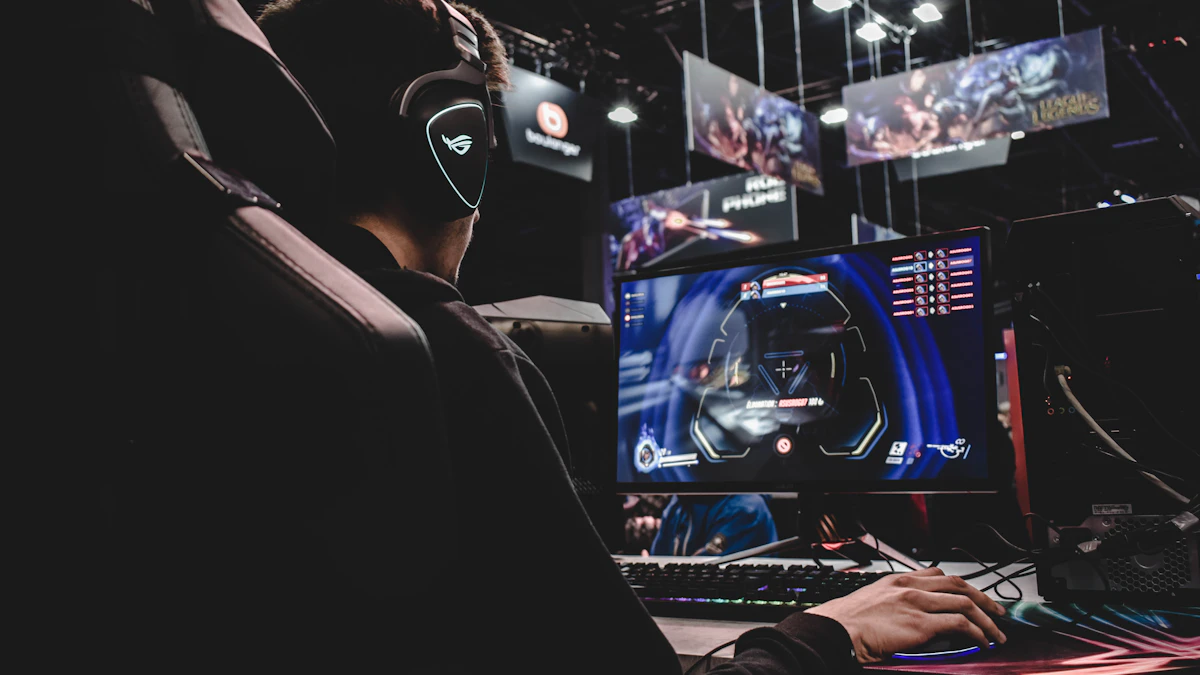
Preparing your rig for Rockstar's next technological leap requires evaluating memory bandwidth and VRAM allocation.
## The RAGE 9 Engine: Why Leonida Demands Unprecedented Hardware Specs
Rockstar Games has always operated on the bleeding edge of hardware utilization. When *Grand Theft Auto V* launched on the Xbox 360 and PlayStation 3, it squeezed every single megabyte out of 512MB of split system RAM. When the title migrated to PC, players unlocked uncapped framerates and modified asset packs that regularly exceeded standard hardware allocations. Now, looking toward the PC port rollout following console launches, hardware analysts face a sobering reality regarding system resource consumption. For deeper context on how this platform release window impacts players, review our analysis on
Is GTA 6 Cross-Platform? Crossplay Support, PC Delay & Multiplayer Plans Explained.
The proprietary RAGE 9 (Rockstar Advanced Game Engine) introduces advanced physics calculations, volumetric cloud rendering, real-time global illumination, and dense NPC simulation schedules. Every single civilian walking down Ocean Drive possesses individual daily routines, driving behaviors, and reactive AI states. Managing this level of simulation requires constant CPU instruction cycles and massive memory caching.
When questioning whether will GTA 6 need 32 GB RAM, one must look at how the engine handles asset streaming. Unlike linear titles that load discrete levels, Leonida is a seamless, sprawling landmass featuring dense urban environments, sprawling waterways, and murky swamplands reminiscent of the Everglades. Driving a high-performance supercar down a coastal highway at 180 mph forces the game engine to stream high-resolution pavement textures, vehicle reflections, and dynamic lighting data into memory in milliseconds. If system RAM is insufficient, the game defaults to paging data to storage drives, creating severe stuttering and texture pop-in.
---
## VRAM Bottlenecks and Texture Streaming in Vice City
Memory allocation on modern systems is split between system RAM and video RAM (VRAM) housed on the graphics card. Over the past few hardware generations, game developers have relied heavily on high-speed VRAM to store polygon meshes, shadow maps, and uncompressed texture atlases. However, modern open-world titles frequently exhaust 8 GB or 12 GB VRAM buffers at 1440p and 4K resolutions.
When VRAM fills to capacity, the system initiates a fallback protocol, swapping overflow asset data across the PCIe bus into system RAM. If the user's system RAM is limited to 16 GB, total system memory bottlenecks quickly, creating frame-time spikes and micro-stutters that ruin competitive gameplay and driving precision.
```
[NVMe SSD Storage] ---> (PCIe Bus) ---> [System RAM (32GB Recommended)]
|
(DirectStorage API)
v
[GPU VRAM (16GB+ Optimal)]
```
This memory pipeline relies heavily on Microsoft's DirectStorage API to bypass the CPU and stream data straight from high-speed NVMe drives into the GPU buffer. However, the operating system, background applications, and Windows caching still demand a significant portion of system memory. Consequently, pairing a modern graphics card with only 16 GB of system RAM creates a severe bottleneck during high-speed transit across the map. For those examining hardware requirements alongside financial commitments, consider reviewing details on
Did GTA 6 Actually Cost $2 Billion to Make? Budget Rumors, Development Costs & Take-Two's Finances Explained.
---
## Console Hardware Baselines vs. PC Architecture
Understanding console hardware architectures helps clarify why 32 GB of system RAM is becoming the new baseline recommendation for high-end PC gaming. Both the PlayStation 5 and Xbox Series X utilize a unified memory architecture consisting of 16 GB of GDDR6 RAM shared dynamically between the CPU and the GPU.
While this unified pool is remarkably efficient for closed console environments, PC architecture operates differently. Windows demands dedicated RAM for system operations, background tasks, and application overhead, while the graphics card requires dedicated VRAM for rendering graphics.
```
[Console Unified Pool] --> 16 GB GDDR6 Shared (CPU + GPU)
[PC Equivalent Setup] --> 32 GB System RAM + 16 GB Dedicated VRAM
```
To replicate or exceed console fidelity—especially when pushing native 4K resolution, ray-traced reflections, and higher framerates—a PC user needs substantially more headroom. Retailers across the United States and United Kingdom, including Best Buy, GameShop, Amazon US/UK, and UK GAME, are already stocking high-capacity DDR5 memory kits in anticipation of hardware-heavy software releases. Pricing for high-end DDR5 kits ranges between $99.99 / £89.99 and $199.99 / £179.99 depending on speed ratings and latency timings.
> **[PRO-GAMER TACTICAL HACK]:** If you are running an 8 GB VRAM graphics card, set your texture quality slider from "Ultra" to "High" or "Medium." This single setting adjustment reduces VRAM footprint by up to 30% while preserving visual fidelity on geometry and lighting, effectively eliminating stuttering during high-speed pursuits through Vice City.
---
## Leonida's Environmental Density: Swamps, Sub-Factions, and Interiors
Leonida is not just an empty backdrop; it is a meticulously crafted ecosystem filled with distinct regional sub-factions, localized wildlife, and interactive interior spaces. Players will navigate the neon-drenched avenues of Vice City, the deep-water marinas of Port Vice, and the hazardous backwaters of the Thrillbilly Mud Club territory.
Each of these distinct micro-regions loads unique asset packages. The swamp regions require procedural foliage rendering, dynamic water physics, and complex audio occlusion models for ambient wildlife. Conversely, urban downtown areas require dense pedestrian pathfinding meshes, real-time traffic simulations, and ray-traced reflection passes across hundreds of glass skyscrapers and storefront windows.
Furthermore, the expansion of enterable interior spaces—ranging from Ocean Drive hotel lobbies to Vice Dale pawn shops and shipping warehouses—means the game engine must transition seamlessly between exterior and interior lighting states without loading screens. This instantaneous spatial transition demands immense memory bandwidth and processing capacity. If you want to explore how interior mapping scales across different regions, check out our guide on
GTA 6 Enterable Buildings: Every Confirmed and Rumored Interior Location in Leonida.
---
Precision control and stable framerates are essential when navigating high-stakes police encounters across Leonida.
## Analyzing Memory Scaling Across Resolutions (1080p, 1440p, and 4K)
System resource consumption scales exponentially as resolution increases. Below is a detailed breakdown of how RAM and VRAM utilization behaves across standard gaming resolutions based on RAGE engine telemetry projections:
| Resolution | Minimum System RAM | Recommended System RAM | Recommended VRAM | Performance Impact |
| :--- | :--- | :--- | :--- | :--- |
| **1080p (Full HD)** | 16 GB | 16 GB | 8 GB | Stable baseline, minimal stuttering on modern SSDs. |
| **1440p (QHD)** | 16 GB | 32 GB | 12 GB | Moderate memory pressure during rapid transit. |
| **4K (Ultra HD)** | 32 GB | 32 GB - 64 GB | 16 GB - 24 GB | Heavy VRAM saturation; requires aggressive texture streaming. |
Players utilizing high-refresh-rate monitors connected via DisplayPort 1.4 or HDMI 2.1 will demand consistent frame delivery. Dropping below 60 FPS during a high-speed shootout with law enforcement or rival cartels introduces input lag that directly impacts combat effectiveness and vehicle handling physics.
> **[ROOKIE MISTAKE TO AVOID]:** Do not mix mismatched RAM kits with different clock speeds and latencies when upgrading your rig for modern open-world titles. Doing so forces your motherboard to downclock your entire memory pool to the slowest stick's speed, severely throttling memory bandwidth and causing unpredictable game crashes.
---
## Hardware Upgrades: What US and UK Gamers Should Buy Now
For enthusiasts planning their hardware upgrades through retailers like Micro Center, Amazon, or Scan Computers, evaluating component balance is critical. Purchasing a high-end graphics card like an NVIDIA GeForce RTX 4080 Super or AMD Radeon RX 7900 XTX is pointless if paired with restricted system memory or a bottlenecked CPU.
1. **Memory Upgrades:** Transitioning from 16 GB to 32 GB of DDR5 RAM (running at 6000MHz CL30 or lower) provides the necessary headroom for background tasks and asset caching.
2. **Storage Solutions:** A Gen4 or Gen5 NVMe M.2 SSD with read speeds exceeding 7,000 MB/s is mandatory. Traditional SATA SSDs or mechanical hard drives cannot feed data quickly enough to satisfy the RAGE 9 engine's streaming demands.
3. **Power Supply Units (PSU):** High-end GPUs and CPUs require robust, gold-rated power supplies (850W to 1000W minimum) to handle sudden power draw spikes during heavy rendering passes.
For further reading on pricing structures and regional editions available upon launch, review our breakdown on
Can You Buy GTA 6 in India? Physical Discs, Digital Pre-Orders & Store Availability Explained.
---

Optimizing your display settings ensures peak performance during intense urban exploration.
## Frequently Asked Questions
### Will 16 GB of RAM be enough to run GTA 6 on PC?
While 16 GB of RAM will likely serve as the bare minimum requirement for 1080p low-settings gameplay, players will experience frequent stuttering and asset pop-in during high-speed transit. Upgrading to 32 GB is strongly recommended to eliminate memory bottlenecks.
### Does VRAM matter more than system RAM for open-world games?
Both are vital, but they serve different functions. VRAM stores active textures and geometry buffers for the GPU, while system RAM manages game logic, physics, NPC AI, and world state data. A shortage in either component results in severe performance degradation.
### Will GTA 6 support older mechanical hard drives (HDDs)?
No. Modern open-world streaming engines like RAGE 9 require the high-speed data transfer rates of NVMe solid-state drives. Running the game on a traditional mechanical HDD will cause infinite loading screens and missing world geometry.
### How much will hardware upgrades cost in the US and UK?
Upgrading from 16 GB to 32 GB of high-speed DDR5 RAM costs approximately $90 to $120 in the United States and £80 to £110 in the United Kingdom, depending on brand and frequency ratings.
---