### Quick Answer
> GTA 6 60 FPS performance mode availability remains unconfirmed by Rockstar Games for PS5 and Xbox Series X consoles. Due to heavy RAGE 9 physics, ray tracing, and CPU bottlenecks, standard current-gen hardware will likely target a locked 30 FPS.
| Console Hardware | Target Resolution | Frame Rate Target | Ray Tracing Features |
| :--- | :--- | :--- | :--- |
| **PlayStation 5** | 1440p (Upscaled via PSSR) | 30 FPS (Rumored Cap) | Global Illumination / Reflections |
| **Xbox Series X** | 1440p / Native 4K (Checkers) | 30 FPS (Rumored Cap) | Standard Ray Traced Shadows |
| **Xbox Series S** | 1080p (FSR Upscaled) | 30 FPS (Strict Lock) | Disabled or Minimized |
| **PlayStation 5 Pro** | Native 4K (PSSR AI Upscale) | 60 FPS (Targeted Tier) | Full Dynamic RT Pipeline |
1. **Pre-Order Verification**: Purchase physical media or digital copies through authorized retailers like GameStop, Best Buy, or PlayStation Direct US to secure launch-day preload access on high-speed NVMe drives.
2. **Bandwidth Optimization**: Ensure your home network utilizes 1Gbps fiber broadband to handle the anticipated 250GB+ installation size without throttling connection speeds.
3. **Hardware Display Check**: Connect your console to an HDMI 2.1-compliant monitor or television capable of handling Variable Refresh Rate (VRR) to mitigate frame pacing judder if framerates fluctuate near the 30 FPS threshold.
4. **Firmware Updates**: Install the latest system software updates on your PS5 or Xbox Series X to maximize hardware thermal performance and memory allocation efficiency before booting into Vice City.
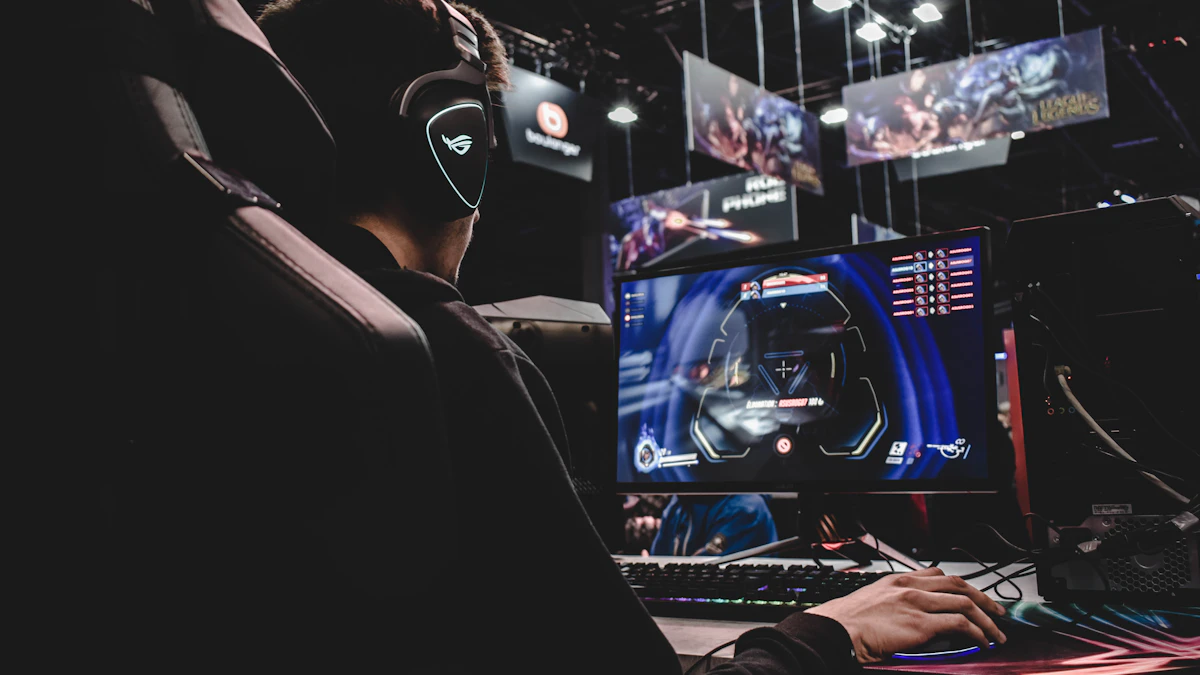
*Configuring your home gaming setup for the upcoming launch requires fast local storage and stable network throughput to handle massive open-world streaming.*
---
## The Technical Reality of RAGE 9: Why 60 FPS is a Monumental Hurdle
When Rockstar Games announced that Grand Theft Auto VI would launch exclusively on PlayStation 5, Xbox Series X, and Xbox Series S, performance-conscious players immediately locked onto a single burning question: will we get a butter-smooth 60 frames per second experience?
To understand why this question keeps hardware engineers awake at night, we must dissect the proprietary RAGE 9 (Rockstar Advanced Game Engine) rendering pipeline. Previous iterations like RAGE 8 (utilized in *Red Dead Redemption 2*) pushed console hardware to its absolute limit, resulting in a locked 30 FPS standard on base PS4 and Xbox One consoles. RAGE 9 takes this architectural philosophy and multiplies its complexity tenfold.
The simulation density in the fictional state of Leonida is unprecedented. Unlike *Grand Theft Auto V*, which relied on simpler scripted routines for civilian pedestrian AI and traffic generation, RAGE 9 runs concurrent physics simulations for thousands of individual NPCs. Every single pedestrian possesses distinct behavioral loops, wardrobe physics, dynamic facial animations, and localized damage hitboxes.
Furthermore, the game's fluid dynamics—ranging from torrential hurricane rain splashing across the windshields of custom tuner cars to dynamic water displacement along the beaches of Vice Beach—consume massive amounts of GPU compute time and memory bandwidth.
> **[PRO-GAMER TACTICAL HACK]:** If you purchase the game digitally via PlayStation Direct US or the Xbox Store, make sure your console's primary storage is a dedicated PCIe Gen4 NVMe M.2 SSD with read speeds exceeding 5,500 MB/s. RAGE 9 streams high-resolution textures and dense asset bundles on the fly; loading assets from an external USB enclosure will cause severe stuttering, asset pop-in, and micro-freezes during high-speed highway pursuits.
When developers build open-world sandboxes of this magnitude, the CPU is tasked with calculating game logic, vehicle telemetry, network synchronization, physics calculations, and asset streaming requests. The Zen 2 CPU cores found inside both the standard PS5 and Xbox Series X operate at a fixed clock speed of roughly 3.5 GHz to 3.8 GHz. Doubling the frame target from 30 FPS to 60 FPS cuts the available frame budget in half—dropping from 33.3 milliseconds per frame down to a punishing 16.6 milliseconds.
Achieving that turnaround requires gutting graphical fidelity, reducing NPC density, disabling advanced ray-traced global illumination, and lowering draw distances. Knowing Rockstar's history of prioritizing cinematic fidelity over high framerates, sacrificing their meticulously crafted visual atmosphere for a shaky 60 FPS mode runs counter to their design philosophy. For players wondering about financial commitments and potential price hikes for these massive engineering feats, exploring resources like
Will GTA 6 Cost $200? Take-Two's Pricing Strategy & Industry Hike Rumors Explained highlights just how much capital goes into building these bleeding-edge sandboxes.
*Fine-tuning your controller input curves and deadzones will be vital for managing vehicle handling and weapon recoil when playing at a locked 30 FPS frame rate.*
---
## Console Hardware Breakdown: PS5, Xbox Series X, and the Series S Bottleneck
The current console generation is split into distinct tiers, creating a fragmented landscape for optimization. Understanding how each piece of hardware handles compute workloads clarifies why a universal 60 FPS mode is unlikely on entry-level systems.
### PlayStation 5 (Standard Edition)
Sony’s base console features a custom AMD Zen 2 CPU paired with a GPU delivering roughly 10.28 TFLOPs of compute performance. While capable of pushing high framerates in linear titles or esports games, *Grand Theft Auto VI* pushes this silicon to its thermal and architectural limits. To maintain visual parity with promotional trailers, the base PS5 will likely employ dynamic resolution scaling (DRS) dropping as low as 1280p during heavy combat sequences, coupled with an aggressive 30 FPS cap. Players should also consider how character mechanics, such as those detailed in
How Will Character Switching Work in GTA 6? Jason & Lucia Dual Protagonist Mechanics Explained, instantly purge and load vast quantities of memory assets across the map.
### Xbox Series X
Microsoft’s flagship console sports a slightly more powerful GPU rated at 12.15 TFLOPs and a marginally faster CPU clock. While the hardware headroom on Series X allows for slightly higher average resolutions—often targeting native 1440p upscaled to 4K via proprietary reconstruction techniques—the CPU remains the exact same Zen 2 architecture found in its competitor. Because the CPU is the primary bottleneck for open-world simulation logic, the Series X will face the exact same wall when attempting to double frame rates to 60 FPS without drastically trimming physics calculations.
### Xbox Series S
The budget-friendly console presents a severe engineering hurdle. With only 10GB of shared GDDR6 RAM and a significantly cut-down memory bus bandwidth, squeezing RAGE 9 onto the Series S requires heroic optimization efforts from Rockstar's engineering teams. Resolution will plummet to 1080p (or lower using aggressive upscaling solutions like AMD FSR), and texture quality, shadow resolution, and traffic density will be scaled back significantly.
> **[ROOKIE MISTAKE TO AVOID]:** Do not expect to toggle a "Performance Mode" on the Xbox Series S that magically unlocks 60 FPS without sacrificing visual integrity to unacceptable levels. Many developers are already struggling to keep demanding open-world titles stable on the Series S architecture, making a locked 30 FPS the default and only viable option for this specific hardware tier.
If you are upgrading your setup ahead of launch, retail outlets like Walmart, Best Buy, and Target in the US, along with GAME in the UK, are stocking up on high-refresh-rate gaming monitors and official accessories. However, buying a 120Hz display will not force the base consoles to render *GTA 6* at 60 FPS if the software is fundamentally locked at 30 frames per second by design.

*High-end gaming monitors equipped with Variable Refresh Rate (VRR) technology help smooth out frame pacing issues when hardware struggles to maintain target frame rates.*
---
## The PlayStation 5 Pro Factor: PSSR and the 60 FPS Promise
Amidst the sea of 30 FPS speculation, the release of the mid-generation refresh hardware changes the conversation. The PlayStation 5 Pro introduces Sony's proprietary **PlayStation Spectral Super Resolution (PSSR)**, an artificial intelligence-driven upscaling technology powered by dedicated machine learning hardware accelerators inside the upgraded GPU.
For US and UK gamers who have pre-ordered or are eyeing the PS5 Pro via PlayStation Direct or Amazon, the hardware narrative shifts dramatically. The PS5 Pro boasts a substantially beefed-up GPU with roughly 67% more compute units and significantly faster memory throughput, aiming squarely at bridging the gap between high visual fidelity and high frame rates.
| Feature / Metric | Base PS5 / Xbox Series X | PlayStation 5 Pro (Target) |
| :--- | :--- | :--- |
| **Rendering Resolution** | 1440p Dynamic | Native 4K via PSSR AI Upscaling |
| **Ray Tracing Implementation** | Basic Reflections / Shadows | Accelerated Ray Traced Global Illumination |
| **Target Frame Rate** | Locked 30 FPS | Targeted 60 FPS Performance Mode |
| **Memory Bandwidth** | 448 GB/s to 560 GB/s | Up to 576 GB/s High-Speed Bus |
However, even with PSSR handling the heavy lifting of pixel reconstruction, the CPU upgrade on the PS5 Pro is modest compared to its massive GPU leap. The CPU remains rooted in the Zen 2 architecture, meaning heavy physics calculations in dense urban areas like Vice Dale or Port Vice could still cause occasional frame drops below the coveted 60 FPS mark. Rockstar Games will likely implement a dedicated "Quality vs. Performance" toggle exclusively for PS5 Pro users, letting players choose between a pristine ray-traced 30 FPS presentation and an AI-upscaled 60 FPS mode.
---
## Localized Sub-Factions and Simulation Density
Why is the CPU workload so extreme in *Grand Theft Auto VI*? The answer lies in the dynamic ecosystems governing the state of Leonida. Rockstar has engineered localized sub-factions that operate independently of the player's immediate actions, creating a living, breathing world that consumes massive processing cycles.
Throughout your travels in Vice City, the Everglades, and surrounding rural counties, you will encounter distinct criminal and civilian sub-cultures:
* **The Thrillbilly Mud Club**: Operating deep within the swampy bayous and mud-bogging tracks, these NPCs exhibit unique vehicle modification habits, AI driving behaviors, and hostile territorial triggers.
* **The San Chianis Cartel**: Controlling rural drug manufacturing operations, this faction utilizes coordinated tactical squads, advanced flanking maneuvers, and dedicated communication channels that tax the game's memory management systems.
* **Vice Beach Syndicates**: High-end criminal enterprises operating along Ocean Drive and the resort districts, specializing in high-speed maritime smuggling and exotic supercar theft rings.
Every single NPC belonging to these factions maintains a persistent state within the world simulation. When you commit a crime, the revamped Leonida Police Department utilizes advanced memory mechanics, facial recognition, and vehicle tracker frequencies to hunt you down across county lines. Managing these complex AI routines alongside realistic vehicle physics and dynamic weather systems—such as localized tropical storms and flood surges—requires immense CPU overhead. For a deeper look at how law enforcement reacts to these chaotic events, read
How Will Police AI Work in GTA 6? Leonida PD Tactics, Wanted System Overhaul & Memory Mechanics Explained.
---
## Mechanical Nuances: Input Lag, Weapon Sway, and Hitboxes
When games are locked to 30 FPS, players often notice an increase in input latency—the time delay between pressing a button on your controller and seeing the corresponding action rendered on screen. At 30 FPS, input lag hovers around 50 to 66 milliseconds, compared to roughly 16 to 33 milliseconds at 60 FPS.
To compensate for this inherent delay in *GTA 6*, Rockstar has meticulously tuned weapon sway, movement momentum, and camera inertia. Aiming down sights (ADS) incorporates realistic weapon weight balance, meaning heavy assault rifles and light machine guns exhibit sluggish crosshair acceleration. This design choice prevents fast-twitch aiming from feeling jarring or unresponsive at lower framerates.
Furthermore, RAGE 9 introduces granular hitboxes for both player characters and combatants. Bullet penetration calculations take into account material density (such as car doors, concrete barriers, and wooden fences), calculating bullet trajectory and velocity in real-time. Running these physics simulations alongside complex collision detection models means the game engine is constantly juggling heavy background tasks that cannot be easily offloaded without compromising core gameplay integrity.
---
## Financial Realities: Upgrading Your Gaming Ecosystem
Preparing for the launch of *Grand Theft Auto VI* requires more than just clearing disk space on your console. With Western retail prices for AAA blockbusters hovering around $69.99 / £69.99 for standard editions, and collector's or digital deluxe bundles stretching past $99.99 / £99.99, players are investing heavily in their gaming hobby.
If you are planning to experience the game at its absolute technical best, you may find yourself weighing the cost of a hardware upgrade. Purchasing a PlayStation 5 Pro or investing in a high-end display with HDMI 2.1 support and VRR capabilities represents a significant financial commitment. To put these production and hardware costs into perspective, examine the economic analysis in
Is GTA 6 More Expensive Than the Burj Khalifa? Production Budget vs Real-World Megastructures Explained, which breaks down the monumental financial scale behind Rockstar's latest masterpiece.
---
## High-Intent FAQ Section
### Will GTA 6 have a 60 FPS mode on base PS5 and Xbox Series X consoles?
Rockstar Games has not confirmed a 60 FPS performance mode for base-tier current-gen consoles. Due to heavy open-world physics, complex AI routines, and CPU bottlenecks inherent to the RAGE 9 engine, the game will likely target a locked 30 FPS to maintain its cinematic visual fidelity and dense simulation standards.
### Can the Xbox Series S run GTA 6 at 60 FPS?
No. The Xbox Series S features reduced memory bandwidth and a lower-spec GPU compared to the Series X. Squeezing the massive open-world simulation of Leonida onto the Series S requires strict optimization limits, restricting the game to a locked 30 FPS at lower rendering resolutions.
### Will the PS5 Pro offer a 60 FPS performance option?
Yes. The PlayStation 5 Pro features enhanced GPU architecture and proprietary PSSR (PlayStation Spectral Super Resolution) AI-driven upscaling. This hardware upgrade gives Rockstar Games the necessary compute headroom to target a 60 FPS performance mode alongside a high-fidelity ray-traced graphics mode.
### What is the install size for GTA 6 on PS5 and Xbox Series X?
While official final file sizes are subject to pre-load compression, industry analysts estimate the install footprint will exceed 200GB to 250GB due to high-resolution texture packs, uncompressed audio assets, and sprawling open-world data structures. Players should ensure their console SSDs have adequate free space before launch day.
### Do I need an HDMI 2.1 monitor or TV to play GTA 6?
An HDMI 2.1 display is not strictly required to boot and play the game, but it is highly recommended. Displays supporting HDMI 2.1 enable Variable Refresh Rate (VRR) and 4K resolution output, which helps smooth out frame pacing judder and visual artifacting during intense action sequences.
***