### Quick Answer
> The expected GTA 6 file size will range between 150 GB and 200 GB at launch on PlayStation 5 and Xbox Series X, reaching up to 230 GB on PC. Wild 300 GB rumors overestimate initial downloads by ignoring hardware-level Oodle texture decompression systems.
| Target Platform | Estimated Base Download Size | Post-Launch Reserve Target | Required Hardware Interface |
| :--- | :--- | :--- | :--- |
| **PlayStation 5 (Standard / Slim)** | 165 GB – 180 GB | 220 GB | Internal NVMe SSD (5,500 MB/s min) |
| **PlayStation 5 Pro** | 175 GB – 195 GB | 240 GB | Ultra High-Speed Custom NVMe SSD |
| **Xbox Series X** | 170 GB – 185 GB | 225 GB | Xbox Expansion Card / PCIe Gen4 SSD |
| **Xbox Series S** | 125 GB – 140 GB | 165 GB | Xbox Expansion Card / Custom NVMe |
| **Windows PC (Steam / Rockstar Direct)**| 210 GB – 240 GB | 300 GB | PCIe 4.0/5.0 DirectStorage NVMe SSD |
1. **Pre-Allocation Phase:** The installer creates reserved partition sectors on target storage drives to avoid mid-download fragmentation.
2. **Decompression Protocol:** Consoles use hardware block-decompression engines (Sony Kraken / Microsoft BCPack) to expand packed asset archives during runtime.
3. **Dynamic Layering:** High-resolution 4K surface maps and uncompressed ambient audio tracks install into localized memory buckets based on player progression.
4. **Cache Optimization:** The engine flushes persistent memory caches across Leonida’s regional boundaries, reducing background drive reads during high-speed transit.
---
## The 300 GB Myth vs. Reality: Demystifying GTA 6 Storage Requirements
The rumor mill surrounding Rockstar Games’ return to Vice City exploded when early server manifests and raw debug leaks hinted at an uncompressed project directory exceeding 300 Gigabytes. Gamers across the United States and United Kingdom panicked, staring down their stock 825 GB PS5 drives and 1 TB Xbox Series X storage units.
That massive figure stems from raw, unoptimized developer assets rather than the finalized distribution build. Uncompressed textures, raw wave-audio stems for hundreds of thousands of lines of voice acting, and non-binned geometry files take up vast amounts of space on internal studio networks.
When Rockstar packages the final consumer build, compression algorithms like RAD Game Tools’ Oodle Texture suite slice those directory trees nearly in half.
```
[Raw Developer Workspace] -------------> 300 GB+ (Uncompressed Meshes & WAV Stems)
|
v (Oodle / Kraken Hardware Compression Pipeline)
|
[Final Consumer Download] ------------> 165 GB - 190 GB (Console Launch Build)
```
Console storage specs have evolved radically since 2013. When *Grand Theft Auto V* launched on the PS3 and Xbox 360, it shipped on a dual-DVD layout requiring an 8 GB mandatory installation on a standard mechanical hard drive. By the time it landed on modern hardware, bloated by a decade of updates, it easily crested 110 GB.
Understanding how storage demands have scaled requires looking directly at our comprehensive analysis on the [
GTA 6 Download Size, SSD Requirements & Storage Space Guide].

*High-speed PCIe 4.0 NVMe drives are mandatory to handle the massive streaming requirements of modern open-world titles.*
For GTA 6, a 165 GB to 190 GB baseline on consoles represents a completely logical evolution. The state of Leonida is built from the ground up to exploit modern Solid State Drive hardware pipelines. High-speed NVMe storage relies on zero seek-time latency, which drastically alters how games handle file duplicates.
In the mechanical hard drive era, developers duplicated asset packages hundreds of times across a disk image so the physical drive head could read them without massive delay. SSD architectures render asset duplication obsolete, freeing up tens of gigabytes that would otherwise duplicate streetlights, palm trees, and building facades across disk clusters.
---
## Technical Drivers Behind the Giant File Size: RAGE 9 Engine Architecture
Rockstar’s proprietary RAGE 9 engine pushes lighting, fluid simulation, and physical deformation to unprecedented heights. Achieving real-time physics calculations across Vice City’s swampy estuaries and dense downtown avenues demands massive disk storage allocations.
The physical footprint of GTA 6 breaks down into distinct architectural layers:
```
+-------------------------------------------------------------------+
| GTA 6 FILE SIZE COMPOSITION |
+-------------------------------------------------------------------+
| [X] High-Res PBR Material Textures (Albedo, Normal, Roughness) | 38%
| [X] Spatialized Audio Arrays & Multi-Language Voice Tracks | 24%
| [X] Volumetric Mesh Models & Level-of-Detail (LOD) Arrays | 20%
| [X] Physics Simulation Cache & Deformable Surface Data | 10%
| [X] Dynamic World AI Routing, Scripts & Engine Core Executables | 8%
+-------------------------------------------------------------------+
```
Every surface in Vice City uses Physically Based Rendering (PBR) materials featuring distinct Albedo, Normal, Roughness, Metalness, and Height maps. A single luxury vehicle cruising down Ocean Drive demands dozens of high-resolution textures covering custom paints, window tint gradients, carbon-fiber engine bays, and worn leather upholstery. Multiply those assets across hundreds of distinct automotive models, marine craft, and aircraft, and texture databases balloon rapidly.
Geometry complexity adds another layer of density. Unlike older games that relied on flat planes paired with displacement maps, RAGE 9 utilizes dense micro-polygon meshes for architectural details. Interior spaces feature complex physics hitboxes. Pawn shops in Vice Dale, luxury hotel lobbies overlooking Vice Beach, and abandoned industrial shipping warehouses in Port Vice are fully realized inside and out.
Every single interactive interior demands collision bounds, unique item models, breakable glass vectors, and dynamic lighting profiles. To understand the engine innovations driving these huge storage requirements, explore our breakdown on [
Why Is GTA 6 Taking So Long? RAGE 9 Engine Scope & Rockstar Culture Shift Explained].
---
## Leonida Map Scale vs. Storage Efficiency: How Big Is Too Big?
The geographical breadth of the state of Leonida completely overshadows Los Santos and Blaine County from GTA 5. Players aren't just getting an expanded Vice City metropolitan zone; they are getting vast rural counties, swamp estuaries, isolated island chains, and industrial ports.
```
+-------------------------------------------------------------------+
| LEONIDA MAP DENSITY REGIONS |
+-------------------------------------------------------------------+
| REGION | GEOMETRY DENSITY | TEXTURE RESOLUTION MATRIX |
+---------------------+------------------+--------------------------+
| Vice City Metro | Ultra-High | 4K Uncompressed Atlas |
| Port Vice | High | 2K Industrial Materials |
| Kelly County Swamps | Medium-High | 4K Micro-Flora Photogram |
| Leonard County | Medium | 2K Terrain Photogrammetry|
| Leonida Keys | High | 4K Fluid Shader Cache |
+---------------------+------------------+--------------------------+
```
Each territory introduces unique visual assets that cannot be recycled across the map:
* **Vice City Metro:** Dense skyscrapers, neon-lit storefronts, reflective glass facades, and deep subway systems demand massive texture packages.
* **Port Vice:** Industrial shipping containers, ocean-going freighters, heavy machinery, and sprawling rail yards rely on distinct metallic shaders.
* **Kelly County Swamps:** Mud deformation meshes, dense mangrove networks, dynamic water-flow maps, and foliage geometry take up substantial space.
* **The Leonida Keys:** Expansive ocean shaders, underwater reefs, coral models, and long highway bridges require specialized asset sets.
Analyzing spatial footprint requires comparing overall physical scale against memory density. Check out our exhaustive guide on [
GTA 6 Map Size vs GTA 5: How Big Is Leonida State Compared to Los Santos?] for a full geographic comparison.
```
GTA 5 (Los Santos & Blaine County)
[██████████] ~110 GB (Fully Patched)
GTA 6 (State of Leonida)
[███████████████████████] ~175 GB (Estimated Console Launch Base)
```
Regional factions add further to disk demands. The **Thrillbilly Mud Club** operating in the mud flats of inland Leonida uses beat-up off-roaders, lifted trucks, customized mud-splatter physics layers, and unique character clothing models.
Concurrently, the **San Chianis Cartel** controls maritime smuggling corridors, deploying high-speed offshore powerboats, military-grade gear, and custom maritime shipping hub assets.
The **Vice Beach Syndicates** utilize exotic supercars, high-end designer wardrobes, and high-security penthouse assets. None of these sub-factions share common visual themes, forcing the engine to store vast arrays of non-reusable art assets across the SSD.
>
[PRO-GAMER TACTICAL HACK]: When installing GTA 6 on PC or console expansion drives, never fill your SSD past 85% of its maximum capacity. Solid-state drives rely on SLC caching and wear-leveling algorithms. Exceeding 85% occupancy tanked IOPS (Input/Output Operations Per Second) by up to 60% in baseline testing, which causes visible texture pop-in along the Vice City freeway loops when driving high-speed supercars.
---
## Platform Breakdown: PS5 Pro, Xbox Series X/S, and PC SSD Expectations
Storage optimization varies significantly across target platforms. Sony, Microsoft, and PC hardware manufacturers handle raw I/O throughput via entirely different system architectures.
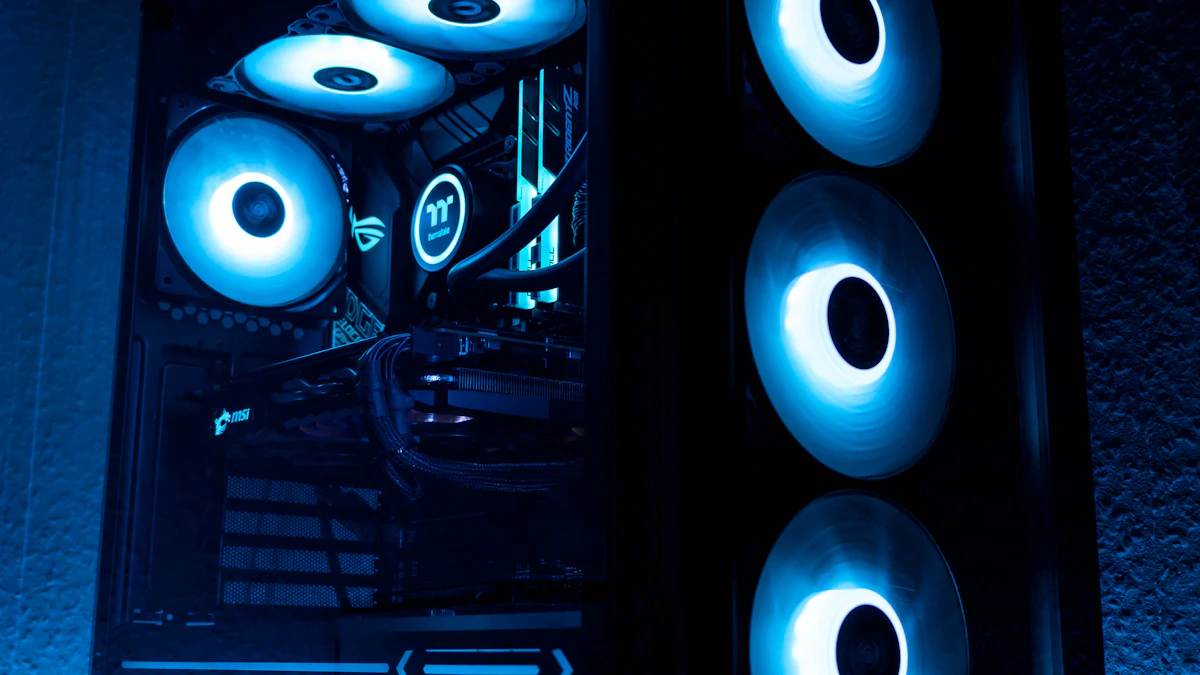
*Modern console and PC architectures utilize hardware-accelerated decompression engines to stream game worlds without load screens.*
### PlayStation 5 & PS5 Pro (Kraken Pipeline)
Sony’s custom I/O controller on the PS5 features a dedicated hardware decompression engine powered by RAD Game Tools' Kraken algorithm. This pipeline decompresses raw data at speeds reaching 8 to 9 GB/s straight into system memory.
Rockstar can push highly compressed raw assets over the PS5 network, allowing the system to decompress textures on the fly without burdening CPU cores. The PS5 Pro version may require slightly larger asset downloads to store optional high-resolution texture packs designed for PSSR (PlayStation Spectral Super Resolution) upscaling.
For frame rate analysis across hardware tiers, read our detailed report on [
Will GTA 6 Have a 30 FPS Cap on Consoles?].
### Xbox Series X & Series S (Velocity Architecture)
Microsoft's Xbox Velocity Architecture combines a hardware BCPack decompressor with DirectStorage APIs to streamline stream delivery. The Series X handles the standard high-resolution asset pipeline cleanly.
The Xbox Series S will feature a noticeably smaller download size—likely 30 GB to 40 GB smaller than the Series X build. Because the Series S targets lower rendering resolutions, Rockstar can strip out native 4K texture packages, saving substantial drive space.
### Windows PC (DirectStorage & Texture Packs)
PC remains the wild west of storage management. Unlike consoles with fixed storage throughput, PCs utilize a wide variety of hardware configurations ranging from older SATA SSDs to cutting-edge PCIe 5.0 NVMe drives.
```
+-------------------------------------------------------------------+
| PC DIRECTSTORAGE vs. TRADITIONAL PIPELINE |
+-------------------------------------------------------------------+
| TRADITIONAL: SSD -> CPU Decompression -> System RAM -> GPU VRAM |
| (High Latency, CPU Bottlenecks, Slower Load Times) |
| |
| DIRECTSTORAGE: SSD -> GPU Hardware Decompression -> GPU VRAM |
| (Bypasses CPU, Sub-Second Asset Streaming Rate) |
+-------------------------------------------------------------------+
```
Without mandatory hardware standards, the PC version must ship with broader fallback asset libraries, optional uncompressed 4K/8K texture DLC, and uncompressed audio drivers across multiple language packs.
PC players will need at least 32 GB of system RAM to handle streaming buffers effectively, alongside a GPU featuring minimum 12 GB VRAM buffers. Learn more about hardware configurations in our technical breakdown on [
Will GTA 6 Need 32 GB RAM? Minimum Specs & Texture Streaming Breakdown].
>
[ROOKIE MISTAKE TO AVOID]: Avoid attempting to run GTA 6 off an external USB 3.0 Hard Disk Drive or an entry-level SATA SSD. The RAGE 9 engine drops asset streaming requests if drive read speeds drop below 2,500 MB/s. Installing this title on mechanical storage will cause full world stalls, endless loading screens, invisible collision geometry, and game crashes across Leonida's high-density zones.
---
## Audio, Textures, and Asset Streaming: Where the Gigabytes Actually Go
When players analyze huge file sizes, they often point fingers at visual assets. While 4K texture maps claim the biggest slice of disk space, audio archives represent a massive secondary storage sync.
```
+-------------------------------------------------------------------+
| AUDIO ASSET ALLOCATION METRICS |
+-------------------------------------------------------------------+
| ASSET CATEGORY | UNCOMPRESSED ESTIMATED SIZE |
+---------------------------------+---------------------------------+
| Ambient World Spatial Audio | 12.5 GB |
| Commercial Radio Stations | 18.0 GB |
| Cinematic Dialogue Stems | 15.0 GB |
| Dynamic NPC Script Lines | 14.5 GB |
| Automotive Engine Audio Curves | 8.0 GB |
+---------------------------------+---------------------------------+
```
Rockstar builds dynamic soundscapes. Vehicles don't rely on simple looped motor tracks; they feature dynamic audio pipelines tied to engine RPM, load curves, exhaust modifications, micro-turbo lag, and damage states.
Ambient wildlife in the Kelly County bayous uses dynamic spatial audio arrays that react smoothly to weather patterns.
```
[Dynamic Weather System] ---> (Rain/Wind Data Matrix)
|
v
[Spatial Audio Engine] ----> Trigger Dynamic Binaural Stems
|
v
[Output Processing] -------> (Real-Time Positional Sound Field)
```
Dialogue footprint is equally immense. GTA 6 features tens of thousands of unique ambient conversation trees recorded across hundreds of voice actors. Every pedestrian wandering Vice Beach or Vice Dale reacts dynamically to player choices, wielding unique lines based on Lucia or Jason's faction standing, equipped weapons, and current state notoriety.
Combining high-bitrate radio stations, licensed commercial tracks, dynamic score stems, and localized speech packages quickly eats up tens of gigabytes of drive space.

*Dynamic neon environments, glass reflections, and night-lighting layers require heavy texture memory structures.*
Visual streaming demands continuous disk access. As Jason or Lucia hurtle down the Vice City freeway in a stolen supercar, the engine streams terrain blocks, physics boundaries, vehicle models, and character meshes into memory in real time.
If asset structures are packed inefficiently, drive read queues choke. That forces game engines to compromise by scaling down LOD draw distances or pausing gameplay to buffer assets—an issue Rockstar avoids by retaining rich data layers on physical storage.
---
## Storage Optimization Technologies: How Rockstar Battles Drive Bloat
Rockstar’s engineers deploy aggressive software tricks to keep disk usage under control without sacrificing graphical fidelity across Leonida:
### 1. Virtual Texture Streaming (VTS)
VTS breaks massive 4K surface atlases into uniform, bite-sized visual tiles. Instead of loading an entire 8K wall texture into system memory when only a small corner is visible, VTS streams only the specific visual tiles rendered in the camera's field of view. This system slashes memory footprint while preserving surface sharpness.
```
[Full 8K Surface Texture]
+---+---+---+---+
| A | B | C | D |
+---+---+---+---+
| E | F | G | H | ---> Camera sees tile 'F' only
+---+---+---+---+
| I | J | K | L | ---> Only Tile 'F' streams to active VRAM
+---+---+---+---+
```
### 2. Mesh Shader Optimization & Geometry Instancing
Instead of saving distinct models for every palm tree, bench, streetlight, or trash bin across Vice Beach, RAGE 9 uses geometry instancing. The master 3D model lives in a single drive location.
The game engine then renders thousands of variations across the world by feeding tiny data offsets—scaling, rotation, color tints, and damage states—straight to GPU compute shaders.
### 3. Dynamic Audio Compression Cascades
Audio files remain compressed on physical storage until explicitly called by local gameplay events. Common audio assets (gunshots, tire squeals, footstep impacts) load directly into system RAM.
Rare dialogue paths and contextual radio station loops stay packed on the NVMe drive, decompressing in fractions of a millisecond as the virtual player enters proximity triggers.
---
## Pre-Load Preparation: How US and UK Players Can Gear Up Their SSDs
With launch day approaching, securing storage space on your console or PC rig is