### Quick Answer
> GTA 6 will likely target a capped 30 FPS on PS5 Pro at launch due to CPU bottlenecks. While the upgraded GPU and PSSR AI upscaling deliver 4K ray-traced visuals, the legacy Zen 2 processor limits 60 FPS performance in dense urban areas.
| Hardware Feature | Base PlayStation 5 | PlayStation 5 Pro | Impact on GTA 6 Target Performance |
| :--- | :--- | :--- | :--- |
| **CPU Architecture** | 8-core AMD Zen 2 (3.5 GHz) | 8-core AMD Zen 2 (3.85 GHz High CPU Frequency Mode) | 10% CPU speed bump limits high-density 60 FPS frame calculations |
| **GPU Compute Power** | 10.28 TFLOPs (RDNA 2) | 16.7 TFLOPs (RDNA 3/4 Hybrid Engine) | 45% faster rendering enables path-traced reflections and lighting |
| **AI Upscaling Engine** | None (FSR 2 / Checkerboard) | PlayStation Spectral Super Resolution (PSSR) | Replaces temporal upscaling to reconstruction crisp 4K from 1440p |
| **Memory Bandwidth** | 448 GB/s (16GB GDDR6) | 576 GB/s (16GB GDDR6 + 2GB DDR5 OS RAM) | Eliminates high-speed vehicle asset streaming hitches in Leonida |
| **Target Graphics Mode** | Dynamic 1440p @ 30 FPS | Native/PSSR 4K @ 30 FPS (or 40 FPS / 120Hz VRR Mode) | PS5 Pro delivers image fidelity gains, not guaranteed 60 FPS gameplay |
1. **CPU Frame Time Calculations:** The processor processes complex simulation loops including traffic AI, NPC pathfinding, vehicle deformation, state police logic, and RAGE 9 water physics within a strict 16.6ms window for 60 FPS.
2. **GPU Rasterization & BVH Processing:** The graphics processor renders lighting passes, detailed skin shaders, distance foliage, and ambient occlusion while building Bounding Volume Hierarchies for ray tracing.
3. **PSSR Machine Learning Reconstruction:** The custom AI engine analyzes current and historical frame data to upscale lower internal render resolutions up to 3840x2160 without raw GPU overhead.
4. **Frame Output Buffering:** The system synchronizes the finalized frame to display pipelines via HDMI 2.1, either locking to 30 FPS, targeting 40 FPS VRR windows, or unlocked variable framerates.
---
## The Hardware Reality: Why PS5 Pro Compute Units Do Not Guarantee 60 FPS
Sony engineered the PlayStation 5 Pro ($699.99 / £699.99 MSRP) as a graphical showcase device, packing 67% more Compute Units and 45% faster GPU rendering than the base console. However, raw graphics horsepower alone does not dictate frame rates in open-world titles built on Rockstar Games' proprietary engine. To understand why running Grand Theft Auto 6 at a silky-smooth 60 frames per second remains a massive technical hurdle, hardware analysts must examine the relationship between GPU pixel rendering and CPU world simulation.

*The internal architecture of the PS5 Pro features massive GPU compute upgrades paired with an incremental CPU frequency bump.*
Grand Theft Auto titles act as complex world simulators rather than simple linear corridors. Every frame rendered on screen requires two distinct stages:
1. **The CPU Stage (Simulation):** Before drawing a single pixel, the processor must compute state logic. In GTA 6, this involves processing hundreds of active NPCs inside Vice City, calculating structural damage physics during vehicle collisions, determining dynamic weather patterns over the Kelly County swamps, and managing localized sub-faction reactions—such as the Thrillbilly Mud Club or San Chianis Cartel syndicates.
2. **The GPU Stage (Rendering):** Once the CPU finishes calculating object positions and logic, the graphics card draws geometry, applies textures, computes lighting arrays, builds hardware ray-traced reflection trees, and passes the raw image to PSSR.
If the CPU takes 28 milliseconds to complete its simulation pass, the system can output a maximum of 35 frames per second, regardless of whether the GPU finishes its rendering pass in 5 milliseconds. This state is known as a **CPU Bottleneck**.
The PlayStation 5 Pro retains the original console's AMD Zen 2 CPU architecture, manufactured on a smaller process node with a "High CPU Frequency Mode" that boosts clock speeds from 3.5 GHz to 3.85 GHz—a modest 10% performance uplift. While this hardware refinement eliminates frame drops in titles like *Marvel's Spider-Man 2*, it does not provide the 100% CPU processing leap required to push a CPU-bound simulator from 30 FPS to 60 FPS.
Gamers comparing console performance against PC builds often point to dedicated desktop chips like the Ryzen 7 7800X3D. As detailed in our technical breakdown of
GTA 6 PC performance profiles and mid-range GPUs, PC architectures overcome these barriers through massive L3 cache sizes and high clock speeds that mid-generation console upgrades simply cannot match.
---
## Technical Deep-Dive: RAGE 9 Engine Physics vs. Zen 2 Processing Limits
Rockstar San Diego and Rockstar North have spent nearly a decade upgrading the Rockstar Advanced Game Engine (RAGE) to its ninth iteration. RAGE 9 represents an architectural shift in structural physics, material light interaction, and dynamic fluid dynamics.
>
[PRO-GAMER TACTICAL HACK]: If you purchase a PS5 Pro specifically for GTA 6, hook the system up to a display supporting HDMI 2.1 with Variable Refresh Rate (VRR) and 120Hz output. If Rockstar locks base consoles to 30 FPS, the PS5 Pro will likely leverage an un-capped 40 FPS target mode. A 40 FPS target at 120Hz cuts frame latency from 33.3ms down to 25ms, offering a noticeably smoother response time without triggering CPU system crashes.
The engine demands substantial CPU execution time for key systems:
### 1. Volumetric Fluid Dynamics & Tidal Simulation
The state of Leonida features an extensive hydrological ecosystem. Unlike GTA V's simplified wave planes, GTA 6 uses real-time fluid dynamic calculations for oceanic coastlines, Everglades swamps, and inland waterways. Water displaces realistically around boat hulls, jet skis, and character models. Calculating fluid resistance, buoyancy vectors, and surface wake dynamics for dozens of entities simultaneously consumes vital CPU cycles inside the frame time budget.

*Complex swamp hydrology and environmental physics in Leonida require substantial CPU execution time per frame.*
### 2. Micro-Traffic AI & Vehicle Deformation Matrices
Traffic density in Vice City isn't just cosmetic background noise. Vehicles utilize advanced pathfinding micro-nodes that evaluate emergency vehicle sirens, sudden pedestrian crossings, street racing maneuvers, and law enforcement PIT maneuvers. Furthermore, vehicle structural integrity no longer relies on pre-baked mesh swaps; RAGE 9 calculates real-time localized crumple zones, tire blowouts, drive-shaft failures, and engine component damage upon impact.
### 3. Pedestrian Memory and Sub-Faction Ecosystems
NPCs in Leonida possess contextual behavioral scripts. Citizens on Vice Beach remember player interactions, react to pulled weapons based on local crime threat levels, and interact dynamically with urban environments—sitting on benches, recording street altercations on smartphones, or calling authorities. Managing thousands of simultaneous AI state tables across the sprawling map stresses the 8-core Zen 2 architecture to its operational threshold.
For a full breakdown of console performance constraints, consult our guide evaluating whether
GTA 6 is locked to 30 FPS across base PS5 and Xbox Series X consoles.
---
## PSSR AI Upscaling Explained: Sony's Secret Weapon for Image Clarity
While the CPU limits raw frame generation, the PS5 Pro's proprietary **PlayStation Spectral Super Resolution (PSSR)** fundamentally alters how Rockstar manages graphical output rendering.
PSSR is a hardware-accelerated machine learning upscaler that operates similarly to NVIDIA's DLSS (Deep Learning Super Sampling). On the base PS5, developers must rely on traditional temporal upscaling methods like AMD FSR 2. FSR 2 frequently introduces visual artifacts, including motion smearing around high-speed vehicles, pixelated foliage edges across Vice City palm trees, and shimmer on specular metallic surfaces.
```
+-----------------------------------------------------------------------------------+
| PS5 PRO GRAPHICS PIPELINE (PSSR) |
+-----------------------------------------------------------------------------------+
| Internal Render: 1440p Base Resolution |
| │ |
| ▼ |
| RAGE 9 Ray-Tracing Pass (Path-Traced Global Illumination & Dynamic Reflections) |
| │ |
| ▼ |
| PSSR Machine Learning Engine (Hardware AI Neural Network Frame Analysis) |
| │ |
| ▼ |
| Final Output: Pristine 3840x2160 (4K) @ 30 FPS / 40 FPS VRR Target |
+-----------------------------------------------------------------------------------+
```
By offloading the image upscaling task to dedicated AI hardware built into the PS5 Pro SoC, Rockstar Games can target a lower internal rendering resolution (such as 1440p) while outputting a pristine 4K image to your TV.
### What PSSR Accomplishes for GTA 6:
* **Elimination of Ray Tracing Noise:** Real-time ray-traced reflections on chrome muscle cars and rain-slicked neon streets usually introduce grainy visual noise. PSSR reconstructs missing ray data via neural networks.
* **Foliage & Geometry Integrity:** Leonida’s dense vegetation, ocean palm trees, and fence meshes retain sharp edges without the ghosting artifacts typical of standard temporal upscalers.
* **Higher Render Budget for Features:** Because the GPU doesn't need to render native 3840x2160 pixels via brute force, developers can redirect spare GPU cycles toward distance detail drawing (draw distance), complex shadow cascades, and volumetric fog density.
---
## Predictable PS5 Pro Graphics Modes for GTA 6
Based on Rockstar's historical optimization strategies for *Red Dead Redemption 2* and *GTA V Enhanced*, alongside Sony’s technical requirements for the "PS5 Pro Enhanced" badge, GTA 6 will likely offer tailored graphics configurations:
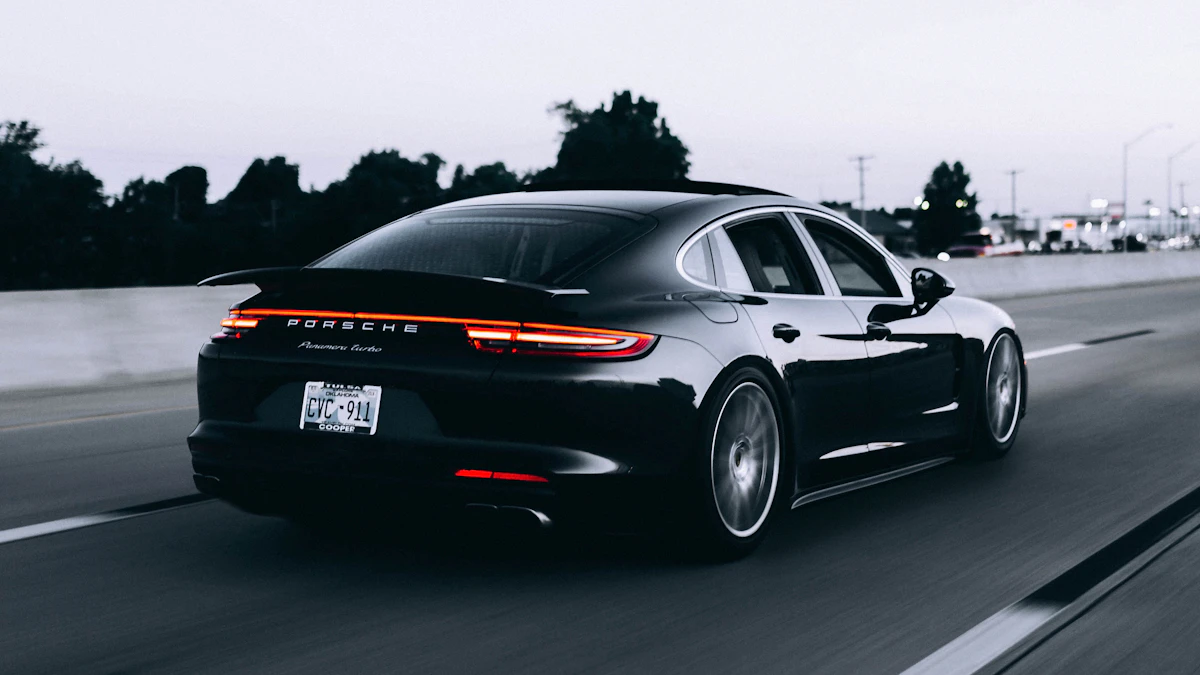
*Ray-traced street reflections along Ocean Drive will benefit heavily from PSSR upscaling on PS5 Pro.*
### Mode 1: PS5 Pro "Fidelity Pro" Mode (4K / 30 FPS Locked)
* **Target Resolution:** Dynamic 1800p upscaled to Native 4K via PSSR.
* **Framerate:** Capped 30 FPS with flat 33.3ms frame-pacing.
* **Features:** Full hardware Ray-Traced Global Illumination (RTGI), ray-traced reflections on glass and water, maxed pedestrian density, full dynamic vehicle deformation, maximum shadow draw distance across the
expansive map of Leonida.
### Mode 2: PS5 Pro "Performance Pro" Mode (Dynamic 1440p / Target 60 FPS)
* **Target Resolution:** Dynamic 1080p-1440p upscaled to 4K via aggressive PSSR.
* **Framerate:** Target 60 FPS (With unlocked variances scaling between 45 FPS and 60 FPS in heavy downtown traffic).
* **Features:** Disabled or simplified Ray-Traced Reflections (fallback to screen-space reflections), reduced NPC density in crowded urban spaces like Ocean Drive, lowered vehicle collision detail, reduced dynamic weather particle systems.
### Mode 3: PS5 Pro "VRR Balanced" Mode (120Hz Displays Only)
* **Target Resolution:** Dynamic 1440p upscaled to 4K via PSSR.
* **Framerate:** Capped 40 FPS within a 120Hz display container (25ms frame time).
* **Features:** Full Ray-Tracing enabled with maximum visual density preserved. This mode provides the ideal balance of high image quality and lower latency for players owning premium HDMI 2.1 TVs bought at Best Buy, Target, or Amazon.
>
[ROOKIE MISTAKE TO AVOID]: Do not buy a high-end 4K 144Hz monitor expecting 60 FPS performance on the PS5 Pro based purely on retail hype. Console marketing often conflates "60 FPS Capability" with open-world optimization. If a title is CPU-bound by simulation scripts, output display capability won't bypass engine hardware limits.
---
## Urban Density & Interior Streaming: The Real Performance Test
The scale of Leonida extends far beyond the outdoor vistas seen in early trailers. A core factor in engine performance is the massive increase in real-time structural access points.

*Dense urban environments with accessible interiors strain both system RAM and CPU core thread processing.*
Rockstar has designed Vice City with unprecedented seamless interior transitions. Players can walk straight from a high-speed vehicle chase into pawn shops, shopping centers, night clubs, and hotel lobbies without encountering loading screens. Per our comprehensive log of
enterable locations throughout Leonida, thousands of buildings house active NPC shopkeepers, micro-economy points, security cameras, and destructible physical assets.
Streamed interior data places continuous stress on the console's memory bus:
* **Base PS5 Memory Bandwidth:** 448 GB/s shared unified GDDR6 RAM.
* **PS5 Pro Memory Bandwidth:** 576 GB/s shared unified GDDR6 RAM + 2GB DDR5 dedicated system RAM allocated purely to the custom PlayStation OS.
The additional 28% memory bandwidth speed inside the PS5 Pro allows the system to stream high-resolution interior textures, high-polygon ambient assets, and complex interior lighting maps into the active framebuffer without causing micro-stutter while driving at high speeds through Vice City.
---
## RAGE 9 Technical Architectural Breakdown: Base PS5 vs. PS5 Pro
To understand how the RAGE 9 engine handles execution pipelines across both console variants, inspect the architectural workflow breakdown below:
```
====================================================================================
Base PS5 Hardware Target Profile
====================================================================================
[CPU: 8-Core Zen 2 @ 3.5GHz] ---> Processing AI, Traffic, Physics, Hydrology
│ (Frame Time: 30ms - 33ms limit)
▼
[GPU: 10.28 TFLOPs RDNA 2] ---> Standard Rasterization @ Dynamic 1440p
│ (Limited Hardware BVH Ray-Tracing)
▼
[FSR 2 Engine Upscaler] ---> Upscales 1440p -> Dynamic 4K Output
│ (Introduces ghosting & edge shimmer)
▼
[Target Output] ---> Capped 30 FPS @ Dynamic 4K
====================================================================================
PS5 Pro Hardware Target Profile
====================================================================================
[CPU: 8-Core Zen 2 @ 3.85GHz] ---> High-Frequency Mode grants 10% faster AI/Physics
│ (Frame Time: 22ms - 28ms limit)
▼
[GPU: 16.7 TFLOPs Hybrid] ---> Advanced RAGE 9 Ray-Traced Reflections & Lighting
│ (45% Faster Render Pipeline Execution)
▼
[PSSR Neural AI Upscaler] ---> Machine-Learning Reconstruction (1440p -> Crisp 4K)
│ (Clean edges, no ghosting, pristine fidelity)
▼
[Target Output Options] ---> Standard: locked 4K @ 30 FPS (Max Visuals)
---> VRR Mode: 40 FPS @ 120Hz (Low Latency)
---> Performance: Dynamic 4K Target 60 FPS (Visual Cutbacks)
```
---
## Retail Context: PS5 Pro Pricing, Storage & Ecosystem Integration
For gamers in North America and Europe preparing their setups for launch day, console availability and network requirements are crucial considerations:
* **Retail Pricing:** The PS5 Pro carries an MSRP of **$699.99 USD in the United States** and **£699.99 GBP in the United Kingdom**. It is available through direct channels like PlayStation Direct, as well as major retail partners including GameStop, Best Buy, Target, Walmart, and UK GAME.
* **Storage Requirements:** The PS5 Pro features an upgraded 2TB internal NVMe SSD out of the box. Given the immense scale of Leonida, players will benefit from this added storage capacity. Read our full analysis of
GTA 6 storage footprints and installation requirements to plan your drive space accordingly.
* **Network Infrastructure:** US and UK players utilizing high-speed gigabit fiber connections (1Gbps) should expect a initial day-one digital download buffer time of approximately 20 to 30 minutes, ensuring quick access when Rockstar unlocks regional servers on launch day at 12:00 AM Eastern Time (ET) / 5:00 AM British Summer Time (BST).
---
## Final Verdict: Should You Upgrade to PS5 Pro for GTA 6?
If your goal is to experience Grand Theft Auto 6 with the absolute highest graphical fidelity, path-traced ray tracing, superior draw distances, and ultra-sharp 4K image reconstruction via PSSR, the PlayStation 5 Pro represents the premier hardware choice at launch.
However, if you are purchasing a PS5 Pro strictly under the assumption that it will guarantee an locked, uncompromised 60 FPS mode in high-density downtown Vice City, you may need to adjust your expectations. The legacy 8-core AMD Zen 2 CPU architecture remains a fundamental limit for high-frame-rate simulations. Players seeking smooth responsiveness should target a display setup that supports **120Hz VRR 40 FPS modes**, which offer an optimal balance of low input latency and maximum world density.
---
## Frequently Asked Questions (PAA)
### Will GTA 6 run at 60 FPS on the base PS5?
It is unlikely that the base PlayStation 5 will run GTA 6 at 60 FPS. Due to the demands of RAGE 9 physics, complex crowd AI, and dynamic lighting, the base console is expected to target a locked 30 FPS at dynamic 1440p upscaled to 4K.
### What is the difference between PSSR and FSR 2 in GTA 6?
PSSR (PlayStation Spectral Super Resolution) uses custom machine-learning hardware on the PS5 Pro to reconstruct images to crisp 4K without temporal artifacts like ghosting or edge blurring. AMD FSR 2 relies on software-level temporal upscaling, which often introduces visual shimmer on fine geometry like palm trees and fencing.
### Can the PS5 Pro CPU handle 60 FPS in open-world games?
The PS5 Pro utilizes an upgraded AMD Zen 2 CPU with a 3.85 GHz high-frequency mode—a 10% speed increase over the base console. While this eliminates frame drops in GPU-bound titles, heavily CPU-bound open-world simulators with dense traffic and complex AI may still be constrained to 30 FPS or 40 FPS target modes.
### Does GTA 6 require a 120Hz TV for the best PS5 Pro experience?
While not strictly required, a 120Hz TV supporting HDMI 2.1 and Variable Refresh Rate (VRR) allows you to use 40 FPS balanced graphics modes. This reduces frame latency from 33.3ms (at 30 FPS) down to 25ms without stressing the CPU like a full 60 FPS target does.
### How much storage space will GTA 6 take up on the PS5 Pro SSD?
Current industry estimates and engine asset leaks indicate GTA 6 will require between 150 GB and 200 GB of free storage space at launch due to high-resolution texture packs, uncompressed localized audio files, and seamless enterable interior data.
---