### Quick Answer
> Yes, GTA 6 will run on the NVIDIA GeForce RTX 4060 at 1080p resolution targeting 60 FPS using Medium-High settings paired with DLSS 3 Frame Generation. However, its 8GB VRAM buffer and 128-bit memory bus will limit native 1440p and maximum ray tracing settings.
| Graphics Card / Hardware Metric | Target Resolution | Presets & DLSS State | Estimated Framerate | VRAM Headroom |
| :--- | :--- | :--- | :--- | :--- |
| **NVIDIA RTX 4060 8GB** | 1080p (1920x1080) | High / DLSS Quality + Frame Gen | 60 - 75 FPS | Tight (7.2 GB / 8 GB) |
| **NVIDIA RTX 4060 8GB** | 1440p (2560x1440) | Medium / DLSS Balanced + Frame Gen | 45 - 55 FPS | Critical (7.9 GB / 8 GB) |
| **NVIDIA RTX 4060 8GB** | 4K (3840x2160) | Low / DLSS Ultra Performance | 28 - 35 FPS | VRAM Overflow (Stuttering) |
| **PS5 / Xbox Series X Baseline** | Dynamic 1440p | Custom Console Mix / PSSR/FSR | 30 - 45 FPS | Shared 16GB GDDR6 |
| **PS5 Pro Comparison** | Dynamic 4K | Custom High / PSSR Upscaling | 60 FPS Target | Shared 16GB GDDR6 |
1. **Hardware Interception:** The RAGE 9 engine initializes hardware acceleration, offloading geometry pass computations directly to the Ada Lovelace Tensor Cores.
2. **DLSS Frame Generation Activation:** Optical Flow Accelerators calculate pixel vectors between native frames to interpolate missing frames without loading the primary CUDA cores.
3. **VRAM Buffer Allocation:** Dynamic memory paging prioritizes character meshes and high-resolution textures in dense zones like Ocean Drive, compressing inactive background asset buffers.
4. **Ray-Tracing BVH Traversal:** Dedicated RT cores handle ray-traced global illumination queries, dropping fallback reflection resolutions when VRAM usage exceeds 90%.
---
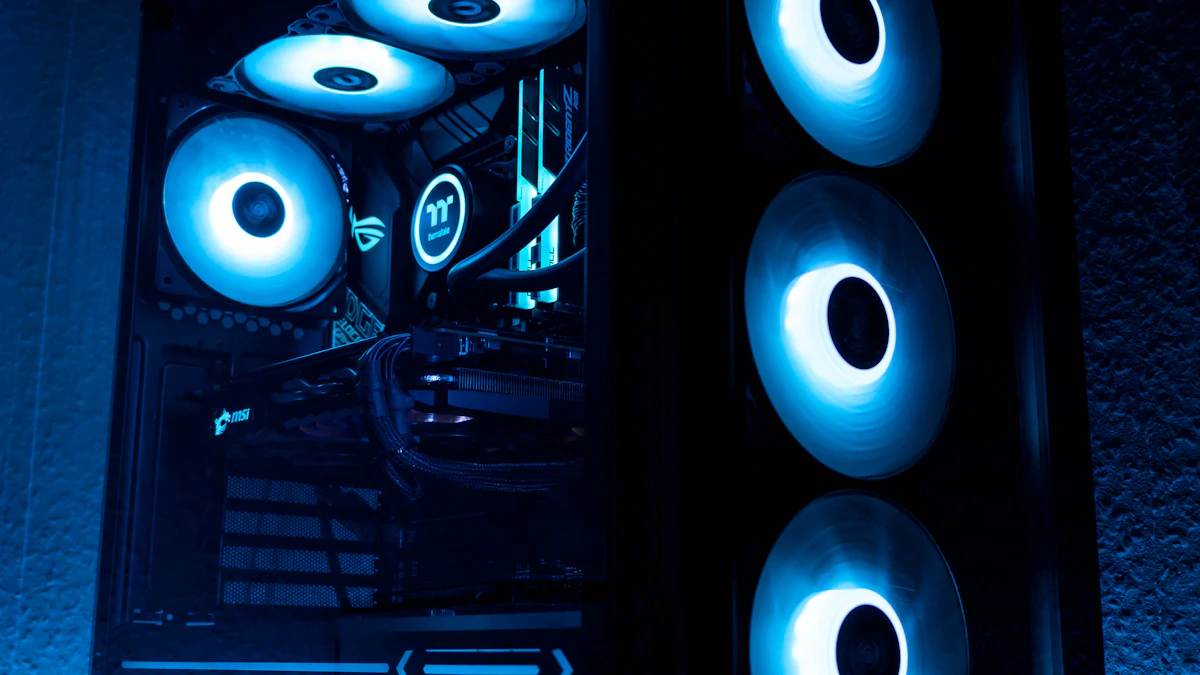
*The RTX 4060 relies heavily on Ada Lovelace Tensor Cores and DLSS 3 Frame Generation to overcome its 8GB VRAM and 128-bit memory bandwidth limitations in heavy modern titles.*
---
## The Silicon Reality: Ada Lovelace Architecture vs. RAGE 9 Engine
The NVIDIA GeForce RTX 4060 remains the single most popular desktop graphics card on the Steam Hardware Survey, commanding a massive slice of the gaming market across the United States, the UK, and Europe. Priced competitively at $299 / £289 retail, PC builders consistently flock to this GPU for mainstream 1080p gaming setups. However, as Rockstar Games readies its next-generation proprietary RAGE 9 engine, PC gamers running mid-tier hardware face critical performance questions.
Will the RTX 4060 run *Grand Theft Auto VI*? Absolutely. But achieving smooth, high-refresh gameplay demands a granular understanding of modern graphics pipelines, architectural bottlenecks, and deep hardware optimization.
The AD107 graphics processor powering the RTX 4060 packs 3,072 CUDA cores, 24 3rd-Generation Ray Tracing cores, and 96 4th-Generation Tensor Cores, yielding a baseline FP32 compute performance of roughly 15 TFLOPS. On paper, this raw compute theoretical output crushes the base PlayStation 5’s 10.28 TFLOPS AMD RDNA 2 architecture. Yet raw floating-point operations tell only half the story when analyzing PC system compatibility for modern open-world gaming.
```
RTX 4060 Hardware Pipeline Specs:
├── CUDA Cores: 3,072
├── L2 Cache: 24MB (Mitigates 128-bit bus latency)
├── VRAM Pool: 8GB GDDR6 (272 GB/s Bandwidth)
├── PCIe Interface: PCIe 4.0 x8 Lanes
└── Native AI Engines: Optical Flow Accelerator (DLSS 3)
```
Rockstar’s RAGE 9 engine leverages sophisticated rendering mechanics: dynamic water physics, complex volumetric cloud simulation, real-time wave displacement, and hybrid ray-traced global illumination (RTGI). The complex physics engines powering the state of Leonida mandate high memory bandwidth and heavy geometry processing. The RTX 4060’s biggest bottleneck isn't its compute math performance; it's the physical 128-bit memory bus bandwidth, capped at a restrictive 272 GB/s.
While NVIDIA compensates for this narrow memory highway using a large 24MB L2 cache, massive texture streaming across Vice City’s expansive urban sprawl will strain this cache structure to its limits.
---
## The 8GB VRAM Threat Vector: Texture Allocation in Vice City
The single biggest hardware anxiety surrounding *GTA 6* PC system requirements revolves around Video RAM. Base console target specs for PS5 and Xbox Series X utilize a unified memory architecture consisting of 16GB GDDR6 shared between system state and rendering tasks. Developers typically carve out 11.5GB to 12.5GB strictly for graphics memory allocation on current-gen consoles.
The RTX 4060 ships with an 8GB GDDR6 VRAM frame buffer. In current-era titles like *Cyberpunk 2077: Phantom Liberty*, *Alan Wake 2*, and *Hogwarts Legacy*, 8GB of VRAM forces severe texture degradation, sudden frame drops, and asset pop-in when running at maximum texture quality or enabling ray tracing.
>
[ROOKIE MISTAKE TO AVOID]: Do not crank Texture Quality to "Ultra" or "Very High" on an 8GB graphics card in GTA 6. Doing so will breach the RTX 4060's VRAM frame buffer, causing system RAM page swapping that induces severe, immersion-breaking frame stuttering during high-speed vehicle pursuits down Vice Beach.
When cruising through dense urban corridors like Ocean Drive or Little Haiti, the RAGE 9 engine must dynamically stream high-polygon vehicle geometries, unique NPC attire, high-resolution neon signage shaders, and detailed interior geometry spaces. If your graphic card lacks sufficient dedicated VRAM, the engine drops frame rates drastically as it swaps rendering assets out to primary system RAM across the system's PCIe bus.
```
VRAM Allocation Allocation Profile (Estimated 1080p Engine Load):
┌─────────────────────────────────────────────────────────┐
│ Base Geometry & Shaders: 2.8 GB │
│ High-Res Texture Streaming Buffer: 2.5 GB │
│ RTGI & BVH Geometry Structures: 1.4 GB │
│ Frame Buffer & DLSS Frame Gen Reserve: 0.9 GB │
├─────────────────────────────────────────────────────────┤
│ TOTAL ESTIMATED VRAM LOAD: 7.6 GB / 8.0 GB (95% LOAD) │
└─────────────────────────────────────────────────────────┘
```
To maintain stable performance, gamers using an 8GB card must configure texture pools carefully. You should also check our deep dive into
system RAM requirements and VRAM allocation guide to ensure your desktop platform does not face system-wide memory bottlenecks.
---
## DLSS 3.5, Frame Generation, and Optical Flow Execution
Where the RTX 4060 lacks physical raw hardware compute power compared to high-end enthusiast cards, it gains a massive generational edge through NVIDIA’s Ada Lovelace feature suite: Deep Learning Super Sampling (DLSS 3) with Frame Generation.
DLSS Frame Generation utilizes an integrated Optical Flow Accelerator (OFA) embedded within the GPU die. The OFA analyzes two sequential rendered game frames, calculates motion vectors for pixels and geometry objects, and passes this data to an AI neural network. The neural network then constructs an intermediate frame between the native frames.
```
Standard Rendering Pipeline:
[CPU Logic & Render Calls] ──> [GPU Rasterization] ──> [1 Output Frame]
DLSS 3 Frame Generation Pipeline:
[CPU Logic] ──> [GPU Frame A] ──┬──> [Optical Flow Engine] ──> [Generated AI Frame]
└──> [GPU Frame B] ───────────> [Final Frame Sequence]
```
### Why DLSS 3 is mandatory for the RTX 4060 in GTA 6:
* **CPU Bottleneck Bypass:** Open-world games with heavy NPC crowds, dynamic vehicular traffic, and intricate police response systems heavily burden primary system processors. Frame Generation generates additional frames entirely on the GPU's Tensor cores, bypassing CPU rendering limits entirely.
* **Internal Resolution Downscaling:** Operating DLSS in "Quality Mode" renders the game internally at 720p (1280x720) for a 1080p display target, or 960p (1706x960) for a 1440p target. This drastically reduces the VRAM load imposed by native geometry buffers.
* **Ray Reconstruction AI Integration:** DLSS 3.5 introduces Ray Reconstruction, replacing traditional hand-tuned denoisers with an AI model trained on supercomputers. This feature improves ray-traced reflection clarity on wet asphalt and vehicle paint without performance drops.
```
DLSS Mode Upscaling & Render Resolution Breakdown:
├── Target: 1080p (1920x1080)
│ ├── DLSS Quality: Internal Render = 1280x720 (50% Pixel Count)
│ └── DLSS Balanced: Internal Render = 1114x626 (33% Pixel Count)
└── Target: 1440p (2560x1440)
├── DLSS Quality: Internal Render = 1706x960 (44% Pixel Count)
└── DLSS Performance: Internal Render = 1280x720 (25% Pixel Count)
```
However, Frame Generation introduces input latency because generated frames must sit in a frame buffer sequence before displaying on screen. Pairing DLSS 3 with NVIDIA Reflex low-latency technology is non-negotiable to maintain responsive gunplay and precise steering while evading law enforcement down Vice City expressways.
---

*Dynamic light interactions, neon illumination on moist pavement, and expansive sightlines across Vice City will heavily stress real-time lighting hardware.*
---
## Optimized Graphics Settings Matrix: 60+ FPS Profile
To achieve a locked 60+ FPS experience on an RTX 4060 without sacrificing graphic quality, balance graphics settings individually. Setting parameters blindly to "Ultra" will overwhelm memory bandwidth and exhaust VRAM pools.
The optimal graphical configuration balances processing performance with dynamic clarity across key Leonida environments—from Vice Beach hotel districts to humid Everglades marshlands.
| Graphical Setting | Recommended Value for RTX 4060 | Hardware Overhead Impact | Operational Details |
| :--- | :--- | :--- | :--- |
| **Resolution Target** | 1080p Native / 1440p DLSS | Extreme | Keeps VRAM utilization under 7.5GB ceiling. |
| **DLSS Mode** | Quality Mode + Frame Gen | Low (Saves Compute) | Renders base frames at 720p/960p, upscaled via AI. |
| **Ray-Traced Reflections** | Low / Off | High | High BVH structure builds exhaust 8GB VRAM. Use Screen-Space fallbacks. |
| **Ray-Traced Global Illumination**| Medium (or Hybrid RT) | Moderate-High | Provides rich light bounces across indoor/outdoor spaces. |
| **Shadow Map Resolution** | Medium (2048x2048) | Moderate | Prevents shadow buffer memory spikes in dense tree zones. |
| **Population Density** | 70% Scale Slider | High (CPU & VRAM) | Controls NPC and traffic density across Ocean Drive. |
| **Volumetric Clouds & Fog** | Medium | Moderate | Keeps volumetric ray-marching pass performance high. |
| **Texture Detail** | High (NOT Ultra) | Moderate (VRAM Dependent) | High textures fit inside 8GB VRAM without buffer overflows. |
| **Anisotropic Filtering** | 16x | Negligible | Low performance cost; sharpens textures at oblique viewing angles. |
| **Water Physics / Deformation** | Medium | Moderate | Limits real-time mesh deformation overhead in coastal bays. |
>
[PRO-GAMER TACTICAL HACK]: Cap your framerate externally in the NVIDIA Control Panel to 60 FPS or 72 FPS if utilizing a high-refresh monitor (144Hz/240Hz). Locking your refresh rate prevents sudden framerate swings when moving between complex city scenes and open rural highways, maintaining steady frame times and cooler GPU temperatures.
By deploying this tuned profile, RTX 4060 users can enjoy fluid gameplay that surpasses standard console baseline configurations without risking hardware thrashing or severe performance drops.
---
## PC Optimization Pipeline & Console Parity Dynamics
Rockstar Games designs games with a "console-first" mindset. Development teams write low-level code directly for the single hardware layouts of the PlayStation 5, Xbox Series X, and PlayStation 5 Pro. Modern consoles run customized AMD Zen 2 CPU cores and RDNA 2 GPU architectures, benefiting from deep system integration and unified memory pools.
PC hardware, conversely, features thousands of unique combinations across CPUs, GPUs, motherboard chipsets, memory setups, and operating system builds.
```
Hardware Compute Comparison Index:
┌─────────────────────────────────────────────────────────────┐
│ PS5 Base System: ~10.28 TFLOPS (AMD RDNA 2 Custom) │
│ Xbox Series X: ~12.15 TFLOPS (AMD RDNA 2 Custom) │
│ RTX 4060 Desktop: ~15.1 TFLOPS (NVIDIA Ada Lovelace) │
│ PS5 Pro System: ~16.7 TFLOPS (AMD RDNA 3 Custom + PSSR AI) │
└─────────────────────────────────────────────────────────────┘
```
While the RTX 4060 holds a compute advantage over base consoles in raw floating-point operations, developers must account for software overhead on PC. Windows background operations, API translation layers (DirectX 12 Ultimate / Vulkan), driver overhead, and dynamic resource streaming introduce performance costs absent on dedicated console hardware.
```
PC Software API Overhead Stack:
[Game Engine Logic] ──> [DX12 Ultimate API Driver] ──> [NVIDIA Display Driver] ──> [GPU Execution Core]
↑
(System Latency & Memory Buffering)
```
Furthermore, Rockstar’s decision to stagger the PC launch stems directly from engineering resource allocation. The development team prioritizes optimizing code for target console hardware before tailoring the RAGE 9 engine to the thousands of unique hardware configurations on PC.
For a complete breakdown of launch strategies and business motives behind platform delays, check our dedicated analysis on
why GTA 6 is delayed on PC. Understanding these development schedules helps explain why high-end hardware optimizations drop months after initial launch releases.
---
## Technical Sub-Factions and Complex Interior Physics Demands
The world of Leonida features intense environmental diversity and complex world systems that require significant compute power. The engine simulates detailed dynamic interactions across different zones:
* **Ocean Drive & Vice Beach Syndicates:** Densely populated beachfront strip requiring heavy real-time dynamic light bounce off colorful Art Deco architecture and glass storefronts.
* **The Everglades & Thrillbilly Mud Club Zones:** Dense vegetation rendering pass requiring heavy vertex shader computations for grass, dynamic mud deformation physics, water displacement, and complex wildlife pathfinding algorithms.
* **San Chianis Cartel Port Terminals:** High-density logistics complexes filled with dynamic physics props, shipping containers, luggage trunk loot systems, reflective metallic surfaces, and complex AI pathing routines.
```
Leonida Zone Computing Demands:
├── Urban Core (Ocean Drive): High VRAM + High Ray-Tracing Lighting Demands
├── Port Terminals (San Chianis): High Geometry Draw Calls + Heavy Physics
└── Grass Rivers (Everglades): High Vegetation Shader Passes + Fluid Mechanics
```
Interiors also represent a significant technological jump in *GTA 6*. The game features vast enterable interiors—malls, oceanfront hotel lobbies, pawn shops, and residential complexes.
Unlike previous games that used simple loading screens or static interior renders, *GTA 6* renders interior spaces dynamically alongside the outdoor world. Passing an interior space triggers CCTV facial recognition algorithms, local security responses, and dynamic interior lighting setups.
These complex systems place heavy demands on system processors and graphics hardware alike, making optimized game settings critical for maintaining consistent frame times.
---
*Modern PC builds require balanced CPU performance, high-speed PCIe NVMe storage, and proper RAM configurations to keep up with intense open-world asset streaming.*
---
## Hardware Bottleneck Diagnostics: PCIe Bandwidth and CPU Dependencies
Pairing an RTX 4060 with an aging processor or outdated system architecture can heavily bottleneck performance, regardless of how capable your graphics card is. Avoid these critical hardware bottlenecks:
### 1. PCIe 3.0 vs. PCIe 4.0 Interface Constraints
The RTX 4060 features a physical PCIe 4.0 x8 interface rather than a full x16 slot. When installed into an older PCIe 3.0 motherboard (such as an Intel B460 or AMD B450 setup), the GPU is restricted to PCIe 3.0 x8 speeds. This cuts theoretical bus bandwidth in half, dropping from 16 GB/s down to 8 GB/s.
```
PCIe Bus Transfer Bandwidth Comparison:
├── PCIe 4.0 x16 (Standard High-End Card): 32 GB/s
├── PCIe 4.0 x8 (RTX 4060 Native Limit): 16 GB/s
└── PCIe 3.0 x8 (RTX 4060 in Older Motherboard): 8 GB/s ⚠️ (Bandwidth Bottleneck)
```
In heavy streaming scenarios where VRAM spills over into system memory, running an RTX 4060 on a PCIe 3.0 platform causes severe framerate drops, texture rendering delays, and hitching.
### 2. Primary CPU Thread Processing
Open-world titles like *GTA 6* execute thousands of draw calls to manage crowd AI systems, vehicle traffic paths, police search routines, and background state calculations. An underpowered processor will cause GPU underutilization, dropping your frame rate well below 60 FPS regardless of your graphic settings.
```
Recommended Processor Pairings for RTX 4060:
├── Intel Core i5-13400F / i5-14400F (Optimal)
├── AMD Ryzen 5 5600X / Ryzen 7 5700X3D (Optimal)
└── Intel Core i7-10700K or older (Performance Bottleneck Warning)
```
To prevent processing bottlenecks during intense firefights or high-speed vehicle escapes, pair your GPU with at least a modern 6-core/12-thread processor, such as an AMD Ryzen 5 5600X or Intel Core i5-13400F.
To learn more about console dynamic resolutions and frame rates across target platforms, consult our full breakdowns covering
PS5 and Xbox Series X performance mode analysis.
### 3. NVMe DirectStorage Requirements
Mechanical hard drives (HDDs) are fully obsolete for next-generation open-world games. *GTA 6* mandates installation on a fast NVMe M.2 Solid State Drive utilizing DirectStorage technology. DirectStorage routes compressed asset files straight from your SSD to GPU VRAM, bypassing CPU decompression overhead and preventing major texture pop-in across the open world.
---
## Frequently Asked Questions
### Can the RTX 4060 run GTA 6 at 1440p resolution?
Yes, the RTX 4060 can run *GTA 6* at 1440p, provided you enable DLSS 3 in "Balanced" or "Performance" mode alongside Medium graphics settings. However, its 8GB VRAM buffer limits native, unassisted 1440p performance, so upscaling technology is mandatory to avoid frame drops.
### Will the RTX 4060 laptop GPU perform the same as the desktop version?
No, the RTX 4060 Mobile GPU operates under lower thermal limits (TGP ranging from 45W to 140W) and typically runs 10% to 15% slower than its desktop counterpart. You will likely need to adjust graphic presets down to Medium at 1080p using DLSS Quality mode to maintain a solid 60 FPS.
### Is 8GB VRAM enough for GTA 6 on PC?
8GB of VRAM meets the baseline operational requirements for 1080p gaming using tuned graphics settings. However, it lacks the memory headroom needed for maximum "Ultra" textures, native 4K resolutions, or heavy ray-traced lighting pipelines without inducing dynamic asset streaming stutter.
### Should I upgrade my RTX 4060 before GTA 6 launches on PC?
If your primary goal is 1080p target gaming at Medium-High settings with DLSS Frame Generation active, an upgrade is unnecessary. However, if you want native 1440p gameplay, maximum texture quality settings, and aggressive ray tracing, upgrading to a 12GB or 16GB graphics card (like the RTX 4070 Super or RX 7800 XT) is highly recommended.
### Will DLSS 3 Frame Generation cause severe input lag in GTA 6?
No, provided NVIDIA Reflex Low Latency is enabled within the game's graphics options. NVIDIA Reflex reduces processing system latency, balancing out the frame buffer delays introduced by generated frames to keep control inputs crisp and responsive.
---