### Quick Answer
> GTA 6 is taking 13 years due to Rockstar’s shift to unified studio pipelines, major workplace culture overhauls, the complex RAGE 9 engine, high-density enterable interiors across Leonida, and the multi-billion-dollar success of GTA Online providing unprecedented development time without financial pressure.
| Development Metric | Grand Theft Auto IV (2008) | Grand Theft Auto V (2013) | Red Dead Redemption 2 (2018) | Grand Theft Auto VI (2025/2026) |
| :--- | :--- | :--- | :--- | :--- |
| **Primary Engine** | RAGE 1.0 (Euphoria) | RAGE 7.0 / Upgraded | RAGE 8.0 (Custom Shaders) | RAGE 9.0 (Volumetric Fluid/RTGI) |
| **Lead Studio Structure** | Rockstar North (Isolated) | Multi-Studio Collaboration | Worldwide Studio Consolidation | Global Unified Pipeline |
| **Development Timeline** | 3.5 Years (2004–2008) | 5 Years (2008–2013) | 7 Years (2011–2018) | 7–8 Years Active (2018–2025+) |
| **Estimated Budget** | $100 Million USD | $265 Million USD | $540 Million USD | $1.2 Billion – $2 Billion USD |
| **Target Platforms** | PS3, Xbox 360, PC | PS3, Xbox 360 (Launch) | PS4, Xbox One, PC | PS5, PS5 Pro, Xbox Series X/S |
| **World Interior Density** | ~5% Enterable Space | ~10% Enterable Space | ~45% Enterable Space | Projected 70%+ Enterable Space |
### Rockstar's 4-Phase Development Pipeline
1. **Engine Foundation & Architecture Overhaul**: Upgrading the proprietary RAGE engine to support real-time global illumination, advanced fluid physics, dynamic aerodynamics, and high-frequency AI pathfinding before building world geometry.
2. **Global Studio Consolidation**: Unifying Rockstar North, San Diego, Toronto, Lincoln, and India into a single global development framework to eliminate isolated asset duplication across international time zones.
3. **World Geometry & Systemic Density Layering**: Constructing the State of Leonida, mapping thousands of interactive interiors, crafting realistic dynamic weather systems, and building responsive emergency service AI networks.
4. **Console-Specific Hardware Optimization**: Tuning frame times, memory allocation buffers, and ray tracing acceleration structures specifically for the PlayStation 5, PS5 Pro, and Xbox Series X/S hardware targets.
---

*Rockstar's upgraded lighting pipelines deliver real-time global illumination across Vice City's neon-drenched coastal strips.*
---
## The 13-Year Void: From Grand Theft Auto V to the Shores of Leonida
When *Grand Theft Auto V* launched on September 17, 2013, it shattered launch day sales figures by generating over $800 million USD within 24 hours. PlayStation 3 and Xbox 360 consoles were pushed to their absolute thermal processing limits to render Los Santos. Over a decade later, players remain eager for the next mainline entry in the franchise. The gap between *GTA V* and *GTA VI* marks the longest interval between flagship titles in Rockstar Games’ history.
Understanding this 13-year timeline requires analyzing the massive expansion in game production scale over the past decade. Between 2001 and 2008, Rockstar released *Grand Theft Auto III*, *Vice City*, *San Andreas*, and *Grand Theft Auto IV*. During that era, asset fidelity remained basic, physics engines relied on primitive hitboxes, and open-world maps featured low polygon counts with non-interactive background geometry.
Modern AAA game production operates under entirely different engineering constraints. Following the release of *GTA V*, Rockstar shifted its primary workforce to *Red Dead Redemption 2*, which entered full production to create a living simulation of America's frontier. *Red Dead Redemption 2* required seven years of grueling design, involving over 2,000 active developers, custom motion capture cycles, and massive voice-acting schedules. Full-scale production on *Grand Theft Auto VI* could only commence at scale after Arthur Morgan's story launched in October 2018.
Industry estimations regarding production costs indicate unprecedented capital allocation. Analyzing the financial scale reveals that Rockstar's investment eclipses standard gaming productions, as detailed in our analysis of the
GTA 6 $2 Billion budget analysis. Rockstar is not merely building a map; they are engineering an operating ecosystem designed to dominate interactive entertainment for the next fifteen years.
---
## Under the Hood: How the RAGE 9 Engine Redefines Physics and AI
At the core of the extended development timeline sits Rockstar Advanced Game Engine 9 (RAGE 9). While third-party studios routinely license off-the-shelf software like Unreal Engine 5, Rockstar maintains absolute technical sovereignty by building proprietary engine architecture internally. Developing proprietary engine tools requires years of core engineering before game designers can place a single building, vehicle, or NPC into the digital world.
---

*Architecting the RAGE 9 engine required complete overhauls of internal dev kits to support sub-surface scattering and volumetric fluid simulation.*
---
RAGE 9 integrates several rendering innovations that require intensive code refactoring:
### Physically Based Volumetric Fluid Dynamics
Vice City and the broader State of Leonida feature vast aquatic environments, including coastal beaches, winding rivers, and stagnant swamp waters in Kelly County. RAGE 9 replaces legacy static wave textures with real-time ocean physics. Water displacement, wave drag on boat hulls, dynamic tides, and underwater light refraction (caustics) are calculated dynamically on the GPU.
### Real-Time Vehicle Physics & Aerodynamics
Vehicle handling systems in *GTA V* relied on simplified torque and grip parameters. RAGE 9 introduces real-time tire deformation physics, low-RPM turbo lag simulation, dynamic downforce, per-wheel brake thermal degradation, and actual vehicle mass transfer during high-speed cornering. Hitting a kerb in Vice Beach generates realistic suspension compression calculated per-wheel frame data.
### Structural Physics & High-Velocity Debris
Collision models no longer rely on simple pre-baked dent maps. Vehicle impacts evaluate point-of-contact kinetic energy, deforming aluminum frames, shattering individual tempered glass panes into physics-enabled shards, and ripping body panels along authentic structural seam lines.
### Dynamic Global Illumination and Weather Systems
Leonida experiences tropical climate patterns. RAGE 9 uses hardware-accelerated ray tracing to calculate light bouncing off humid asphalt, neon signage, ocean spray, and dense storm clouds. Weather systems move across the map dynamically, transitioning from clear sunshine to tropical hurricanes that directly alter vehicle traction and NPC pathfinding behaviors.
>
[PRO-GAMER TACTICAL HACK]: Pay close attention to tire wear patterns and water depth when escaping police in the Everglades. Vehicles with rear-wheel drive setups suffer severe power loss and directional instability in deep mud. Steering heavy front-engine muscle cars through flooded bayou terrain will stall the intake if submerged past the front bumper geometry.
---
## Scope Explosion: Interior Density, the Leonida Map & Tactical AI Systems
The State of Leonida represents a geographic expansion far exceeding Los Santos or Liberty City. However, map square mileage alone does not explain the extended development schedule. The true engineering hurdle lies in environmental density and interactive depth.
In legacy open-world design, 90% of buildings were hollow geometric blocks dressed with exterior textures. *Grand Theft Auto VI* breaks this design paradigm by building thousands of fully rendered, enterable spaces. Leaked development footage and internal documentation confirm an target of high interior accessibility, including pawn shops, convenience stores, high-end oceanfront hotel lobbies, strip clubs, shipping warehouses, residential apartments, and gas stations.
```
+-----------------------------------------------------------------------+
| LEONIDA STATE MAP LAYOUT |
+-----------------------------------------------------------------------+
| |
| [ Kelly County Swamps ] ----------> [ Vice Dale Industrial Park ] |
| | | |
| v v |
| [ Port Vice Shipping Hub ] --------> [ Vice City Downtown Center ] |
| | | |
| v v |
| [ Ocean Drive Coastal Strip ] ----> [ Vice Keys Archipelago ] |
| |
+-----------------------------------------------------------------------+
```
Each enterable space requires unique dynamic lighting setups, loot spawn matrices, sound propagation nodes, and pathfinding logic for NPCs trying to flee or take cover during firefights. For a comprehensive list of interior locations identified through early leaks, explore our breakdown of
enterable interior building leaks.
### Advanced Police Tactical AI & Neural Pathfinding
The law enforcement system in *GTA VI* has undergone a total artificial intelligence overhaul. Legacy police AI spawned officers nearby and directed them straight toward the player's vector. The updated Leonida Metropolitan Police Department (LMPD) operates using complex tactical frameworks:
* **Visual Identification & Memory**: Officers do not magically know your identity upon crime execution. They rely on facial recognition CCTV nodes, vehicle color descriptors, license plate data, and witness statements. If you switch getaway cars inside an unmonitored parking garage, police lose your direct tracking line.
* **Tactical Containment Protocols**: Instead of rushing headfirst into gunfire, LMPD units set up outer perimeters, establish spike-strip roadblocks on exit highways, deploy tactical SWAT units using armored BearCats, and coordinate air support searchlights.
* **Bodycam & CCTV Integration**: Security cameras at pawn shops or banks feed live data to dispatch units, raising your wanted level severity if security feeds remain active during robberies.
---
## Rockstar’s Corporate Restructuring: Overhauling Crunch Culture & Leadership Shifts
Technical obstacles were not the sole factor shaping the 13-year gap. Major internal cultural shifts altered how Rockstar Games manages large-scale game production.
Following the release of *Red Dead Redemption 2* in 2018, investigative reports revealed intense studio crunch practices, with teams logging 80-to-100-hour workweeks to meet strict launch deadlines. In response, Take-Two Interactive and Rockstar management overhauled workplace policies to eliminate systemic overwork.
```
[ Historic Pipeline: 2008-2018 ]
Studio Isolation -> Forced Overtime -> Aggressive Launch Windows
[ Modernized Pipeline: 2019-2026 ]
Unified Global Studios -> Sustainable Workflows -> Quality-Driven Delays
```
This structural shift transformed studio workflows:
1. **Elimination of Mandatory Overtime**: Project schedules were expanded to support standard 40-hour workweeks, preventing developer burnout at the expense of absolute launch speed.
2. **Global Studio Unification**: Rather than assigning specific tasks to isolated studios (e.g., Rockstar North handling world building while Rockstar San Diego handled physics), all global branches were linked under a single unified development framework sharing unified asset repositories.
3. **Leadership Transitions**: Creative leads left the studio during this transformation. Co-founder Dan Houser departed in March 2020, followed by key writing figures like Lazlow Jones and Rockstar North President Leslie Benzies. Re-establishing creative direction and restructuring leadership hierarchies required time before production could accelerate.
4. **The September 2022 Data Breach**: A major cyber security incident resulted in 90 internal development videos leaking online. Rockstar confirmed the leak's authenticity while reassuring players that long-term production remained on track. However, internal security audits, network refactoring, and legal investigations created operational delays.
---
## Hardware Bottlenecks: Taming the PS5, Xbox Series S, and the 30 FPS Challenge
Building an open-world simulation of this scale introduces major computational challenges on current ninth-generation console hardware. Balancing frame times on fixed hardware architectures requires long optimization cycles.
---
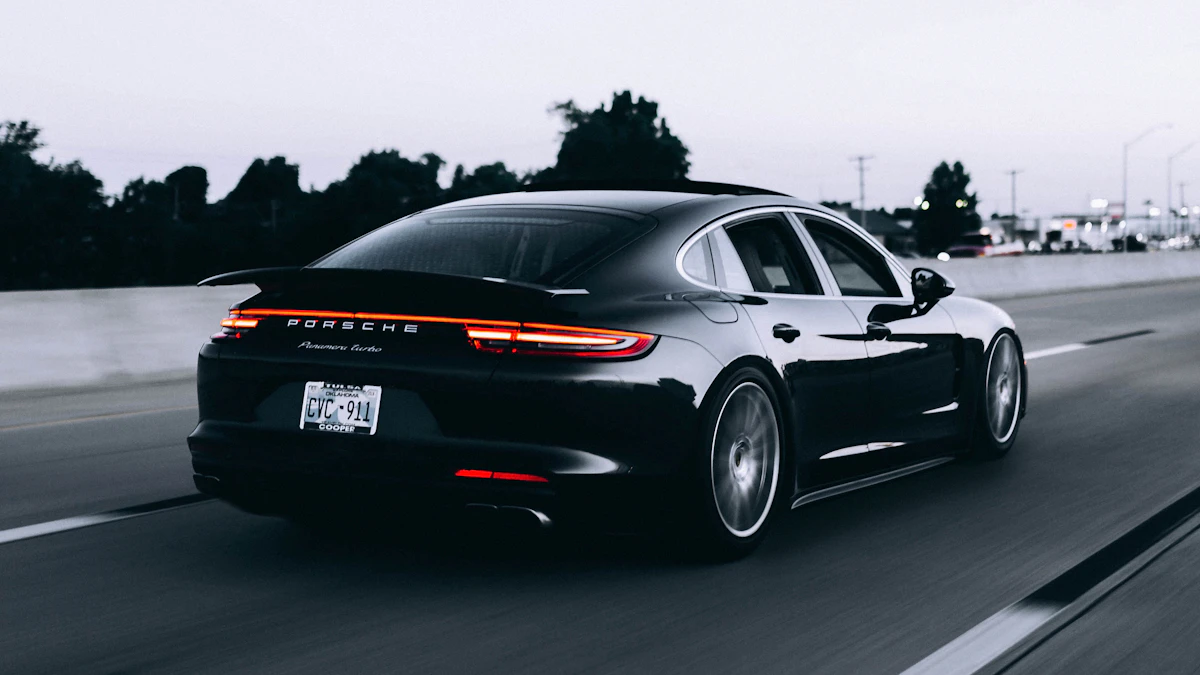
*Vehicle deformation, low-RPM turbo lag, and tire degradation mechanics in GTA 6 demand complex per-frame physics calculations.*
---
### The AMD Zen 2 CPU Constraint
Both the PlayStation 5 and Xbox Series X utilize custom 8-core AMD Zen 2 processors running at roughly 3.5 GHz. While these chips represented a massive upgrade over eighth-generation Jaguar CPUs, their clock speed and IPC (instructions per cycle) performance face limits when running heavy background AI simulations, complex vehicle physics, dynamic crowd density calculations, and audio spatialization simultaneously.
### The Xbox Series S RAM Bottleneck
The Xbox Series S operates with 10 GB of total GDDR6 memory, but only 8 GB is allocated for games, while the remaining 2 GB handles system OS tasks. Compressing Leonida's high-resolution texture packs, streaming world geometry, and managing memory buffers within an 8 GB pool without compromising visual integrity requires dedicated low-level hardware optimization.
### Ray Tracing and Resolution Targets
Achieving native 4K output while rendering hardware-accelerated global illumination, ambient occlusion, and dynamic reflections places immense load on console GPUs. Engine engineers must write tight low-level code to maintain spatial stability without causing system memory bandwidth to stall.
For a detailed technical dive into processing budgets and platform limitations, read our technical breakdown on
GTA 6 30 FPS console performance breakdown.
---
## The PC Exclusivity Gap: Simultaneous Launch Logistics & Anti-Piracy Architecture
PC gamers often question why *Grand Theft Auto VI* will launch exclusively on consoles first, repeating the pattern set by *GTA IV*, *GTA V*, and *Red Dead Redemption 2*. This decision is driven by release engineering logistics rather than simple marketing agreements.
Optimizing a massive open world for millions of unique hardware combinations—encompassing different GPU architectures (NVIDIA RTX, AMD Radeon, Intel Arc), dynamic VRAM capacities, varying system RAM speeds, and different CPU instruction sets—requires dedicated optimization pipelines. Consoles provide uniform target specs, allowing Rockstar to focus initial testing efforts on specific hardware baselines.
```
+-----------------------------------+
| DEVELOPMENT RESOURCE ALLOCATION |
+-----------------------------------+
|
+-----------------------+-----------------------+
| |
v v
[ Console Launch Window ] [ PC Release Window ]
- PS5 Base / PS5 Pro Optimization - Extended Driver Validation
- Xbox Series X/S Tuning - Dynamic Resolution Scaling
- Memory Pool Optimization - Kernel-Level Anti-Cheat
- Unified System Bandwidth - Multi-GPU Architecture Tuning
```
Furthermore, launching on PC simultaneously exposes titles to piracy vectors and reverse-engineering before live-service anti-cheat systems can be stabilized. Delaying the PC version allows Rockstar to deploy a fully optimized, secure platform alongside mature driver profiles from graphics card vendors.
To learn more about expected PC release timelines and technical hardware requirements, consult our guide on
Rockstar's PC release window strategy.
>
[ROOKIE MISTAKE TO AVOID]: Do not fall for third-party websites offering "Early Access Beta Downloads" or "PC Port Emulators" for *GTA VI*. Rockstar Games has confirmed that initial launch windows are exclusive to console hardware. Downloading unauthorized executables exposes systems to credential harvesters, ransomware, and malicious software.
---
## The Cash Cow Factor: How GTA Online Extended the Development Runway
Financial realities shaped the development timeline for *Grand Theft Auto VI*. In previous console generations