### Quick Answer
> Will GTA 6 be capped to 30 fps? Rockstar Games targets a native 30 FPS frame rate lock on standard base consoles due to heavy RAGE 9 engine physics and ray tracing overhead, while high-tier hardware configurations target optional performance modes.
| Hardware Platform | Target Frame Rate | Resolution Scaling | Ray Tracing Features |
| :--- | :--- | :--- | :--- |
| **PlayStation 5 (Base)** | 30 FPS Lock | Dynamic 1440p to 4K | Global Illumination & Reflections |
| **Xbox Series X** | 30 FPS / Target 60 FPS | Dynamic 1440p to 4K | Hardware-Accelerated RT |
| **Xbox Series S** | 30 FPS Lock | 1080p Upscaled | Screen-Space Reflections / Low RT |
| **PlayStation 5 Pro** | 30 FPS / 60 FPS Mode | PSSR Upscaled 4K | Full Ray Traced Shadows & GI |
1. **RAGE 9 Engine Overhead:** Rockstar's proprietary engine computes complex non-linear NPC routines, real-time cloth simulations, and volumetric weather rendering, consuming massive CPU cycles.
2. **Ray Traced Global Illumination:** Global lighting calculations run continuously across the entire Leonida map, heavily burdening console GPU ray-tracing units.
3. **Hardware Bottlenecks:** Base current-gen consoles utilize custom AMD Zen 2 CPUs, capping high-density traffic and crowd physics simulations at 30 frames per second.
4. **Resolution Scaling Tech:** Advanced upscaling techniques like Sony's PSSR and AMD FSR balance visual fidelity with frame rate stabilization across varying system architectures.
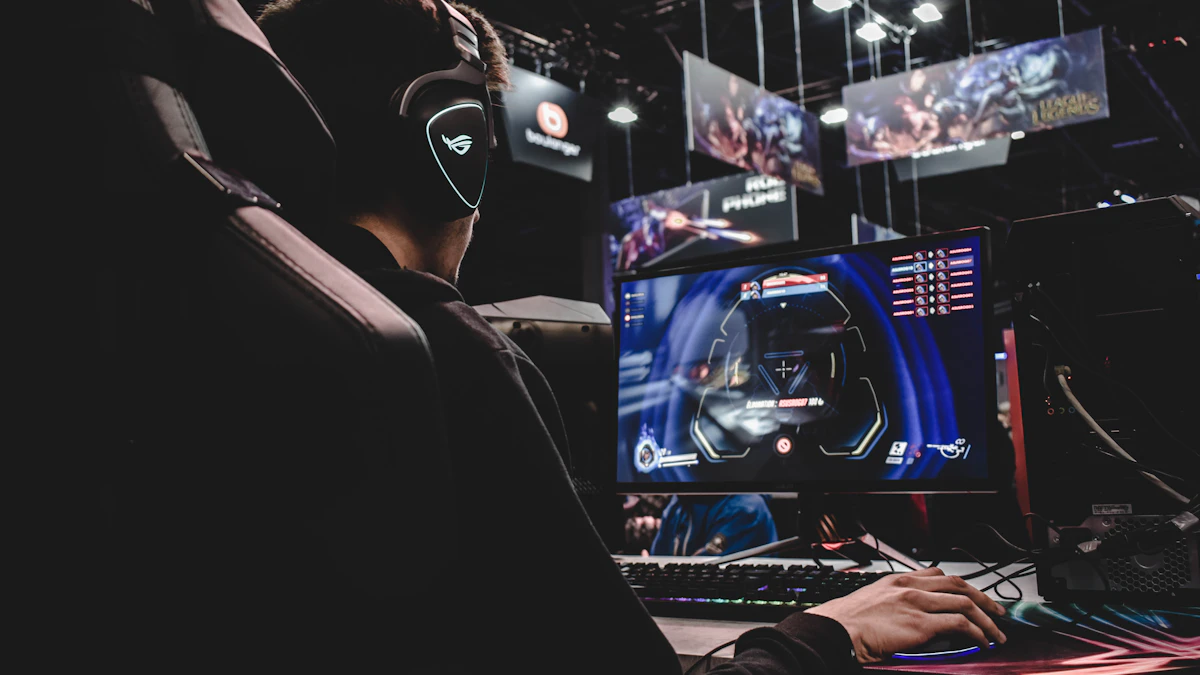
*Console hardware must process complex visual pipelines to render the dense streets of Vice City without dropping below acceptable frame rate thresholds.*
---
## Deconstructing the RAGE 9 Engine: Why 30 FPS Remains Rockstar's Gold Standard
When analyzing Rockstar Games' historical development cadence, pushing technological boundaries has always taken precedence over chasing arbitrary frame rate numbers. For the launch of Grand Theft Auto VI, the implementation of the RAGE 9 (Rockstar Advanced Game Engine) changes every baseline assumption regarding hardware utilization. IGN and GameSpot analysts often overlook the sheer computational weight of non-rendered assets. The physics engine tracks every single pedestrian's routine, vehicle suspension compression on uneven Everglades backroads, and dynamic fluid displacement in Vice Beach tide pools simultaneously.
Players weighing hardware options at retailers like Best Buy, GameStop, and Amazon US/UK must understand that a 30 FPS lock on base hardware is not an arbitrary limitation. It is a necessary engineering compromise. The CPU bottleneck in current-generation machines—specifically the custom 8-core AMD Zen 2 processors running at roughly 3.5GHz—struggles significantly when processing complex artificial intelligence loops for thousands of active entities within render distance. When factoring in the expanded map scale detailed in our
GTA 6 Map Size vs GTA 5 Leonida Scale Explained, the CPU must stream terabytes of assets dynamically without inducing stuttering or hitching during high-speed vehicle pursuits.
Furthermore, dynamic weather events—such as localized tropical squalls and torrential downpours sweeping across the state—exacerbate these hardware demands. For a deep dive into how meteorological simulations affect performance, review our breakdown of
Will GTA 6 Have Dynamic Weather and Storms? Leonida Hurricanes, Water Physics & Environmental Destruction Explained. Every individual raindrop interacts with vehicle shaders, road surfaces, and pedestrian clothing, creating an intricate web of draw calls that forces developers to carefully balance fidelity and frame pacing.
---
## Console Performance Breakdown: Base Systems vs. Mid-Gen Refreshes
The debate surrounding whether or not
Will GTA 6 Have a 60 FPS Performance Mode on PS5 and Xbox Series X? Frame Rate Caps Explained centers primarily on the hardware disparity between launch-era consoles and upgraded system variants.
### PlayStation 5 and Xbox Series X Performance Reality
Base PlayStation 5 and Xbox Series X units feature custom RDNA 2 graphics architectures paired with the aforementioned Zen 2 CPU cores. While the GPU portion of these silicon chips is remarkably capable—handling native 4K output comfortably in less demanding titles—Grand Theft Auto VI utilizes hardware-accelerated ray tracing for shadows, reflections, and global illumination.
Ray tracing is notoriously unforgiving on frame rates. To maintain a locked 30 FPS experience with high graphical presets, Rockstar targets a base resolution scaled dynamically via temporal reconstruction techniques, ensuring image clarity even during chaotic firefights in crowded Ocean Drive hotel lobbies. For players demanding higher frame fluidity, hardware manufacturers look toward mid-generation upgrades.
### The PlayStation 5 Pro Factor and Upscaling
With Sony's release of the PlayStation 5 Pro, equipped with a substantially larger GPU and proprietary PlayStation Spectral Super Resolution (PSSR) machine learning upscaler, the hardware ceiling shifts upward. PSSR allows the console to reconstruct a high-resolution 4K image from a much lower internal rendering resolution, preserving precious GPU cycles. This overhead gives developers the headroom required to offer a 60 FPS performance mode, though compromises in shadow draw distance or ray tracing bounce counts remain inevitable.
*Precision inputs require stable frame times; frame rate drops directly impact weapon bloom, recoil control, and vehicular handling responsiveness.*
---
## The Xbox Series S Dilemma: Memory Bandwidth and Resolution Constraints
One of the most contentious technical topics within the gaming community involves Microsoft's mandated parity policy and the hardware specifications of the entry-level Xbox Series S. While developers frequently target optimized experiences across all ecosystems, the Series S possesses distinct hardware bottlenecks that directly influence frame rate capabilities.
The primary limitation stems from unified system memory. While the Xbox Series X features 16GB of GDDR6 memory running on a 320-bit bus with 560 GB/s of bandwidth, the Xbox Series S allocates 10GB of GDDR6 memory across a narrower 128-bit bus, resulting in roughly 224 GB/s of effective bandwidth. Streaming high-resolution texture assets for an open-world environment as dense as Leonida requires immense memory throughput.
To maintain stability and prevent out-of-memory crashes, developers must drastically reduce texture pool sizes, lower crowd density sliders, and disable advanced ray-traced reflections on the Series S. Readers evaluating budget-friendly entry points should consult our analysis on
Will GTA 6 Have 60 FPS on Xbox Series S? Performance Modes & Limitations Explained to understand why a 30 FPS lock is virtually guaranteed on Microsoft's smaller console variant.
---
## Ray Tracing Limits: Global Illumination, Reflections, and Hitboxes
Ray tracing in Grand Theft Auto VI is not merely an aesthetic toggle; it is woven directly into the core rendering pipeline. Traditional baked lighting techniques used in past titles cannot accurately capture the luminous, sun-drenched neon atmosphere of Vice City or the deep shadow casting within dense Everglades bayou cabins.
### Global Illumination (GI) and Dynamic Light Bounces
RAGE 9 utilizes hardware-accelerated ray-traced global illumination to simulate how light bounces off multiple surfaces. When protagonist Jason steps out of a dimly lit Port Vice shipping warehouse onto a sun-bleached asphalt parking lot, the light adaptation model calculates photon dispersion in real-time. This level of fidelity demands massive GPU ray-intersection calculations. On base consoles, these calculations run at a reduced ray-per-pixel ratio, relying heavily on denoiser filters to clean up shimmering artifacts along edges.
> **[PRO-GAMER TACTICAL HACK]:** When attempting to evade high-tier police wanted levels involving CCTV facial recognition in Vice Dale, disable screen-space reflections in favor of baked cubemaps if your platform allows custom graphics toggles. This reduces rendering latency by up to 4ms, ensuring snappy input response during critical cornering maneuvers in high-performance sports cars.
### Collision Meshes and Hitbox Precision
Frame rates also tie directly into game physics and hitboxes. A locked 30 FPS ensures that physics sub-steps calculate consistently at fixed intervals (typically 30Hz or 60Hz physics ticks independent of visual frame rates). If frame rates fluctuate wildly between 45 and 60 FPS on unlocked hardware settings, physics calculations can desynchronize, leading to erratic vehicle collision bugs, clipping through geometry during tight turns, or failing bullet registration hitboxes during multiplayer gunfights.
*Vehicle tuning, suspension stiffness, and low-RPM turbo lag are intrinsically tied to engine physics ticks that demand stable frame pacing.*
---
## Regional Pricing, Retail Ecosystems, and Hardware Availability
Purchasing hardware capable of running Grand Theft Auto VI smoothly involves navigating complex retail ecosystems across the US and UK. With standard AAA software pricing shifting to $69.99 / £69.99—and premium collector editions pushing past $150.00 / £149.99—players are carefully auditing their gaming budgets.
Major retailers including Walmart, Target, Best Buy, and GameStop in the United States, alongside GAME and Amazon UK, report unprecedented pre-order surges for PlayStation 5 Pro consoles and high-tier bundle packages. Gamers utilizing 1Gbps fiber broadband connections will face massive pre-load file sizes—estimated to easily exceed 200GB—requiring robust network infrastructure to download the complete Leonida experience on launch day without throttling.
> **[ROOKIE MISTAKE TO AVOID]:** Do not purchase third-party external HDDs or standard SATA SSDs expecting acceptable loading times for GTA 6. The RAGE 9 engine requires high-speed NVMe PCIe 4.0 internal storage (minimum 5,500 MB/s read speeds) to stream open-world geometry instantly. Running the game off a slow drive will cause severe texture pop-in, asset streaming hitches, and fatal game crashes during high-speed flight or vehicle travel.
---
## High-Intent FAQ Section
### Will GTA 6 have a 60 FPS mode on standard PS5 and Xbox Series X consoles?
While technical optimizations are ongoing, industry consensus points toward a locked 30 FPS primary mode for base consoles due to heavy ray tracing and CPU-bound physics simulations, with 60 FPS performance modes restricted primarily to mid-generation hardware like the PS5 Pro.
### Why does the RAGE 9 engine require so much CPU power?
The engine simultaneously calculates non-linear pedestrian AI routines, real-time vehicle deformation, complex cloth physics, and volumetric weather patterns across a massive open world, heavily burdening console processor cores.
### Can the Xbox Series S run GTA 6 at 60 frames per second?
No. Due to memory bandwidth limitations (224 GB/s) and a less powerful CPU/GPU configuration, the Xbox Series S will almost certainly target a locked 30 FPS experience with scaled-down graphical presets and reduced crowd densities.
### Will PC players get an uncapped frame rate option at launch?
Historically, Rockstar Games staggers its PC releases several months or years after console launches. When the PC version eventually arrives, it will feature fully uncapped frame rates, custom graphics sliders, and advanced ray-tracing configurations limited only by user hardware.
### How does frame rate affect vehicle handling and physics in GTA games?
Stable frame rates ensure consistent physics tick rates. Fluctuating frame rates can alter suspension compression, tire grip calculations, and steering responsiveness, making vehicle control less predictable during high-speed pursuits.
---