### Quick Answer
> GTA 6 requires 13 years due to structural shifts at Rockstar Games, full-studio mobilization for *Red Dead Redemption 2*, massive engineering overhauls in the RAGE 9 engine, studio culture reforms eliminating severe crunch, and an unprecedented scope across the simulated state of Leonida.
| Development Factor | GTA V (2013) | GTA VI (2025/2026) | Technical Impact |
| :--- | :--- | :--- | :--- |
| **Engine Architecture** | RAGE 7 (PS3/Xbox 360 base) | RAGE 9 (Native Gen-9 build) | Real-time wave physics, BVH ray tracing, memory pools |
| **Studio Workflow** | Studio-siloed development | Global unified pipeline (8+ studios) | Cross-continental code merging, asset sync |
| **Production Culture** | Mandatory 100-hour crunch | "Flex-time" regularized hours | Extended development timelines, reduced attrition |
| **World Scale** | Los Santos + Blaine County | State of Leonida (Vice City + Outskirts) | 3x playable area, 60%+ fully enterable interiors |
| **Live Service Priority** | Post-launch addition | Integrated design architecture | Built-in seamless online server infrastructure |
### How Rockstar's 13-Year Development Cycle Unfolded
1. **All-Hands Pivot to RDR2 (2014–2018):** Rockstar Games merged all global studios to complete *Red Dead Redemption 2*, postponing full-scale active production on the next Grand Theft Auto.
2. **RAGE 9 Engine Rebuild (2018–2021):** Engine developers rebuilt the proprietary Rockstar Advanced Game Engine to native Gen-9 hardware standards, writing entirely new physics pipelines for fluid mechanics, foliage, and vehicle handling.
3. **Workplace Reform & Management Shift (2018–2020):** Following executive departures including co-founder Dan Houser, Rockstar overhauled operational pipelines, abandoning unsustainable crunch practices in favor of progressive milestone scheduling.
4. **Content Asset Scaling & Leak Resiliency (2020–2024):** Engineering teams scaled up simulation density across the State of Leonida while hardening network security following the September 2022 Vice City leaks.
---

*The neon-drenched streets of Vice City demand native ray-tracing architectures that pushed RAGE 9 development schedules.*
---
## The 13-Year Gap: Dissecting the Grand Theft Auto Development Timeline
The gap between *Grand Theft Auto V* (September 2013) and the anticipated arrival of *Grand Theft Auto VI* represents the longest hiatus in Rockstar Games' history. To understand why a sequel required over a decade, analyze the structural mechanics of triple-A game development across three console generations.
When *GTA V* launched on PlayStation 3 and Xbox 360, Rockstar operated under a decentralized studio model. Rockstar North, Rockstar San Diego, Rockstar Toronto, and Rockstar Lincoln functioned with distinct pipelines. The immense technical burden of *Red Dead Redemption 2* (2018) shattered this framework.
To deliver *RDR2*’s procedural mud deformation, realistic horse physics, and interconnected dynamic AI routines, Take-Two Interactive consolidated its internal workforce into a single global entity: "Rockstar Studios."
For four consecutive years (2014 through late 2018), virtually every graphics programmer, technical artist, and systems engineer across all international branches concentrated exclusively on *Red Dead Redemption 2*. Pre-production on *GTA 6* existed during this phase primarily as narrative outlines, concept art, and high-level architectural whitepapers. Full-scale production only commenced once Arthur Morgan’s story shipped to store shelves.
```
+-----------------------------------------------------------------------------------+
| ROCKSTAR DEVELOPMENT TIMELINE |
+-----------------------------------------------------------------------------------+
| 2013 2014 - 2018 2018 - 2020 2020 - 2026 |
| | | | | |
| GTA V Launch Full RDR2 Focus RAGE 9 Engine Rebuild GTA 6 Production|
| (All Studios Combined) & Workplace Overhaul (Leonida State) |
+-----------------------------------------------------------------------------------+
```
Simultaneously, *GTA Online* transformed from an experimental multiplayer mode into a multi-billion-dollar live-service ecosystem. Generating over $1 billion annually through Shark Cards and content updates like *The Cayo Perico Heist*, *GTA Online* removed the urgent financial pressure to rush a single-player sequel to market.
Take-Two Interactive secured an extended runway, allowing internal teams to target ambitious technical hardware benchmarks rather than annual publishing deadlines.
---
## Inside RAGE 9: Engine Overhauls That Delayed Production
At the root of *GTA 6*’s extended production lies the architectural evolution of the proprietary Rockstar Advanced Game Engine (RAGE 9). Previous iterations built for PS4 and Xbox One relied on static lighting setups, simplified vehicle physics, and aggressive asset-streaming pop-in mitigations. RAGE 9 discards these legacy frameworks, constructing a modern runtime environment from scratch.
> **[PRO-GAMER TACTICAL HACK]:** RAGE 9's real-time water physics pipeline calculates hydrodynamics in real time. When boat-chasing along the coastal channels of Port Vice or the marshy Grassriver bayous, use deep-draft ocean hulls to cut through chop rather than lightweight speedboats, which suffer severe low-RPM cavitation lag in churning water.
### 1. Real-Time Water Hydrodynamics & Ocean Simulation
RAGE 9 incorporates hardware-accelerated water physics. Instead of heightmaps and procedural surface textures, the engine computes real-time fluid dynamics using compute shaders.
Ocean waves, boat wakes, dynamic storm surges, and river currents calculate buoyancies individually for every object touching the water mesh. Setting *GTA 6* in Leonida—a state defined by coastal waters, swamps, and ocean channels—required developers to solve complex oceanographic math for jet skis, speedboats, and aquatic wildlife.
---

*Modern GPU microarchitectures require specialized engine pipelines to handle volumetric lighting and physical asset streaming.*
---
### 2. Hardware-Accelerated Ray Traced Global Illumination (RTGI)
RAGE 9 eliminates baked lightmaps. Every street light along Ocean Drive, every reflection bouncing off wet asphalt, and every beam filtering through motel blinds processes via BVH (Bounding Volume Hierarchy) spatial traversal.
Achieving stable frame rates while running full-stage ray-traced reflections and global illumination on console architectures proved a primary performance hurdle. Engineers spent years optimizing dynamic light bounces inside complex interior-exterior scenes, balancing the computational strain to determine if system configurations can maintain targeted framerates under heavy load or face severe
console performance limits and potential 30 FPS caps.
### 3. Procedural Deformation & Aerodynamics
Vehicle handling models in RAGE 9 incorporate real-time aerodynamic drag coefficients, tire temperature simulation, and structural frame deformability:
* High-speed crashes no longer trigger canned deformation meshes; structural damage computes based on impact angle, kinetic mass, and materials.
* Sub-factions like the Vice Beach Syndicates and the rural Thrillbilly Mud Club operate customized vehicles with distinct weight balances, suspension travel, and low-RPM turbo lag.
* Trunk spaces, glove boxes, and vehicle storage possess physical volume arrays that hold visible weapons, cash bundles, and contraband loot.
### 4. Advanced Crowd and Traffic Neural AI
Previous GTA titles used basic node-based pathfinding where NPCs followed invisible rail tracks until disturbed. RAGE 9 introduces precinct-based memory networks and neural pathfinding loops:
* Police response mechanics feature tactical field logic. Officers flank, set up roadblocks, communicate via encrypted radio frequencies, and register facial signatures.
* Pedestrians evaluate localized events. If gunfire erupts near Vice Dale pawn shops, crowd sub-routines evaluate escape routes based on line-of-sight geometry and environmental obstacles.
* Players managing wanted levels must outsmart these tactical routines, which adapt dynamically through the updated
Leonida PD wanted system and memory mechanics.
---
## Culture Overhaul: The End of 100-Hour Crunch Weeks
A key reason *GTA 6* did not release between 2020 and 2022 stems from fundamental changes in internal corporate culture.
During the final development stages of *Red Dead Redemption 2*, public reports surfaced detailing mandatory 100-hour workweeks, manager pressure, and severe staff burnout across Rockstar's global studios. The backlash prompted Take-Two Interactive and Rockstar management to restructure studio operations.
```
ROCKSTAR WORKFLOW EVOLUTION
[ RED DEAD REDEMPTION 2 ] [ GRAND THEFT AUTO VI ]
(2014 - 2018 Development) (2019 - 2025 Development)
+------------------------------+ +------------------------------+
| * Mandatory 100-Hour Weeks | | * Standardized 40-Hour Weeks|
| * Siloed Studio Communications| --> | * Unified Global Pipelines |
| * High Employee Attrition | | * Flex-Time & Remote Work |
| * Feature Creep Delays | | * Fixed Milestone Deadlines |
+------------------------------+ +------------------------------+
```
Under new management directives, Rockstar implemented a "flex-time" operational model:
* **Elimination of Mandatory Crunch:** Overtime switched to an optional, strictly compensated basis.
* **Proactive Scheduling:** Milestones expanded to accommodate unexpected engine bugs, physics anomalies, and localization updates without forcing emergency crunch cycles.
* **Leadership Transitions:** Executive personnel changes, including the departure of lead writer Dan Houser and producer Leslie Benzies, shifted narrative direction and production management toward sustainable, modular design structures.
* **Mitigated Attrition:** Lower burnout rates preserved senior engineering talent, preventing key project knowledge from leaving mid-cycle.
While this cultural shift added months to the development timeline, it produced a stable software build, higher morale, and lower staff turnover across overseas production teams.
---
## World Building: Simulating the State of Leonida
The geographic scale of *GTA 6* far outpaces Los Santos from *GTA V*. Building the fictional State of Leonida meant modeling dense metropolitan environments alongside rural, wild biomes.
---
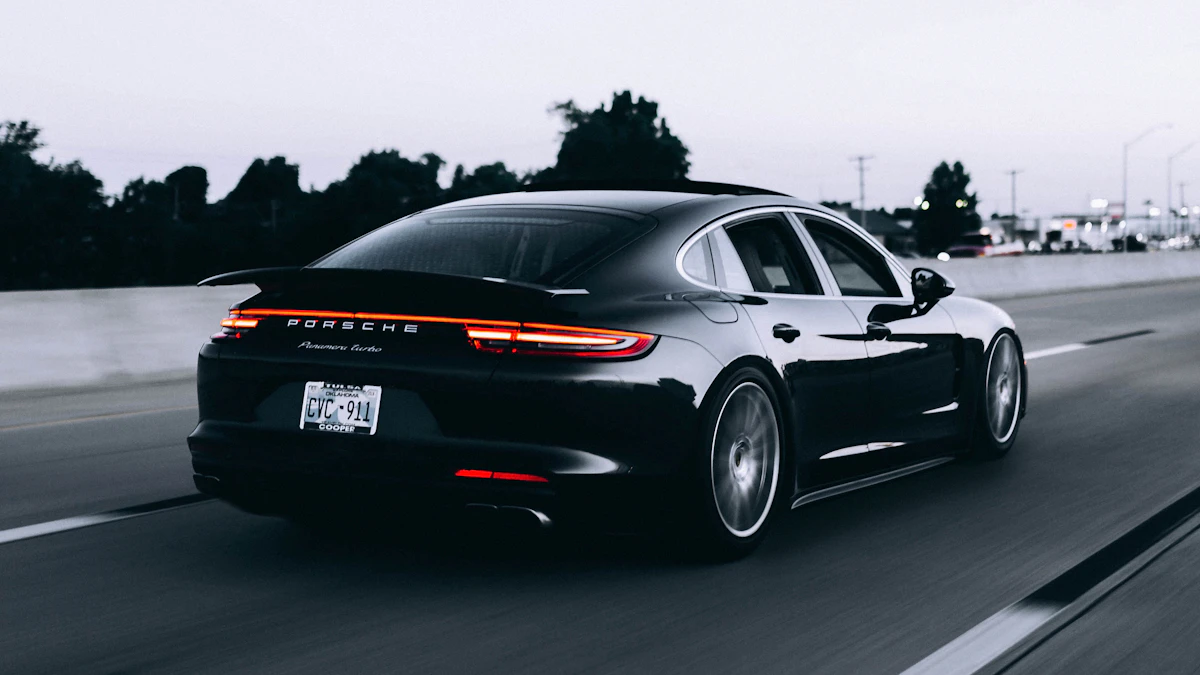
*Vehicle tuning, aerodynamic drag models, and tire wear simulations required years of physical testing within RAGE 9.*
---
### Metropolitan Vice City and Suburbs
Vice City is designed as a living urban core. Rather than storefront facades, over 60% of commercial and residential structures feature fully modeled, accessible interiors:
* **Ocean Drive & Vice Beach:** Complex lighting scenarios with reflective art-deco hotels, dynamic indoor-to-outdoor rendering transitions, and dense pedestrian zones.
* **Port Vice:** Industrial shipping hubs featuring physical cargo containers, dynamic crane operations, and maritime supply chains.
* **Vice Dale Pawn Shops & Local Businesses:** Functioning retail spaces, register mechanics, cash storage vaults, and interior security camera feeds (CCTV) that interface with law enforcement systems.
### The Wilderness: Grassriver and the Keys
Beyond the concrete, Leonida features expansive natural wetlands, bayous, and island chains:
* **Dynamic Weather & Ecosystems:** The Grassriver bayou environment processes active weather patterns. Tropical storms, wind drag on trees, seasonal ocean tides, and dynamic mud physics alter vehicle handling on dirt tracks.
* **Wildlife AI:** Alligators, predatory birds, aquatic life, and local fauna operate with territorial instincts, tracking mechanics, and biological food chains.
* **Sub-Faction Territories:** Rural regions host localized groups like the Thrillbilly Mud Club, complete with unique radio stations, illegal street races, and muddy mud-bogging events.
> **[ROOKIE MISTAKE TO AVOID]:** Do not enter Grassriver bayous during dynamic rainstorms in low-slung supercars. Engine bay flooding, mud trap physics, and rising water levels will hydro-lock high-end sports cars, stranding players in alligator-infested territory.
---
## The Dual-Protagonist Dynamics: Engineering Jason and Lucia
Managing two playable main characters in a modern open world introduced significant technical and structural hurdles.
Unlike *GTA V*’s three-character system—where switching often triggered mid-city cutscenes—*GTA 6* implements instantaneous character switching during active combat, stealth, and driving encounters.
```
+-------------------------------------------------------------------------+
| DUAL-PROTAGONIST SYSTEM ARCHITECTURE |
+-------------------------------------------------------------------------+
| |
| +-----------------------+ +----------------------+ |
| | JASON (Tactical) | | LUCIA (Stealth) | |
| +-----------------------+ +----------------------+ |
| | * Weapon Sway Control | <--- Dynamic ---> | * Inventory Trunk | |
| | * Tactical Flanking | Co-Op AI | * CCTV Hack Tools | |
| | * Vehicle Driving | Pipeline | * Close-Quarters | |
| +-----------------------+ +----------------------+ |
| \ / |
| \--> [ Shared Real-Time Inventory ] <--/ |
| [ Physical Weapon Weight ] |
| [ Dynamic Cover Co-Op Engine ] |
+-------------------------------------------------------------------------+
```
### Shared Real-Time Inventories
* Players can no longer pull a rocket launcher out of thin air. Weapons are carried physically via slings, concealed under clothing, or fetched from vehicle trunks.
* Engine systems manage duel-character spatial tracking: while controlling Lucia during a pawn shop heist, Jason acts as adaptive AI cover, monitoring police scanners, controlling crowds, or managing escape vehicles based on player instructions via expanded
Jason and Lucia dual protagonist mechanics.
### Narrative Mechanics & Co-Op Systems
* Relationship dynamics shift gameplay mechanics based on story choices, side encounters, and successful heist runs.
* Dual-stealth routines allow synchronized takedowns, simultaneous security camera hacks, and split-line pursuit evasions across Vice City’s back alleys.
---
## Production Budget: Is It the Most Expensive Game Ever Made?
Industry analyses estimate the combined production and marketing budget for *Grand Theft Auto VI* falls between **$1.0 Billion and $2.0 Billion USD** (£780 Million to £1.56 Billion GBP).
Comparing this capital investment against mega-engineering projects highlights how Take-Two Interactive treats *GTA 6* as a decade-long software asset rather than a standard video game release.
| Metric / Asset | Estimated Financial Value (USD) | Estimated Financial Value (GBP) |
| :--- | :--- | :--- |
| **GTA 6 Overall Budget (Est.)** | **$1,000,000,000 – $2,000,000,000** | **£780,000,000 – £1,560,000,000** |
| **Burj Khalifa (Construction Cost)** | $1,500,000,000 | £1,170,000,000 |
| **GTA 5 (Total Dev + Marketing)** | $265,000,000 | £206,000,000 |
| **Red Dead Redemption 2 (Total)** | $540,000,000 | £420,000,000 |
| **Standard AAA Game (Average)** | $100,000,000 – $200,000,000 | £78,000,000 – £156,000,000 |
This unprecedented capital allocation covers thousands of voice actors, motion-capture sessions, licensed soundtracks, localized marketing campaigns via global retailers like GameStop, Best Buy, Target, Walmart, and GAME UK, alongside multi-year cloud server provisioning.
For a complete breakdown of production metrics versus real-world feats, see our detailed analysis on the overall
production budget comparison with real-world megastructures.
---

*Rockstar's financial commitment exceeds a billion dollars, funding detailed physical systems like vault mechanics and real-time security breaches.*
---
## Hardware Bottlenecks: Optimizing for Modern Consoles
A significant factor behind extended development schedules is optimization across diverse hardware specifications.
Designing a game to stretch hardware performance on the PS5 Pro, PS5, Xbox Series X, and the constrained Xbox Series S required specialized memory management pipelines.
### The Xbox Series S Memory Constraint
* The Xbox Series S features **10 GB of total unified memory**, with only ~8 GB available to game developers, running across a narrower 128-bit bus bandwidth.
* RAGE 9’s high-resolution texture arrays, complex AI routines, and dynamic asset streaming hit immediate memory bottlenecks on this platform.
* Engineers spent extended development blocks building custom memory-defragmentation tools and reducing geometry LOD (Level of Detail) distance scaling specifically for Series S hardware.
### Hardware Comparison & Targeted Performance Metrics
```
+-------------------------------------------------------------------------+
| CONSOLE HARDWARE TARGET SPECIFICATIONS |
+-------------------------------------------------------------------------+
| PLATFORM SYSTEM RAM TARGET RESOLUTION TARGET FRAME RATE |
+-------------------------------------------------------------------------+
| PS5 Pro 16GB (GDDR6) Dynamic 4K (PSSR) 60 FPS (FSR/PSSR) |
| PS5 Base 16GB (GDDR6) Dynamic 1440p-4K 30-60 FPS |
| Xbox Series X 16GB (GDDR6) Dynamic 1440p-4K 30-60 FPS |
| Xbox Series S 10GB (Shared) Dynamic 1080p 30 FPS Lock |
+-------------------------------------------------------------------------+
```
### High-Speed SSD & Asset Streaming Requirements
* *GTA 6* abandons support for mechanical hard drives. Designed exclusively for high-speed NVMe PCIe Gen 4 SSDs, asset-streaming engines assume minimum transfer rates of **5.5 GB/s**.
* Digital downloads via PlayStation Store, Xbox Live, or PC launchers are projected to require **200 GB to 250 GB** of free storage space, necessitating rapid 1Gbps fiber connections for pre-loads.
---
## The 2022 Leaks & Network Security Rebuilds
On September 18, 2022, an unauthorized network breach resulted in 90 early-development video clips leaked across public forums.
The leaked footage confirmed Vice City settings, early RAGE 9 debug menus, dynamic inventory systems, and character names (Jason and Lucia).
```
+-------------------------------------------------------------------------+
| 2022 NETWORK BREACH IMPACT |
+-------------------------------------------------------------------------+
| INCIDENT: 90+ Early-Build Videos Leaked Online |
| |
| IMMEDIATE IMPACTS: |
| * Internal Code Base Audits & Re-signing Security Certificates |
| * Complete Remote Work Infrastructure Security Overhaul |
| * Codebase Segregation across International Studios |
| * Shift to Zero-Trust Internal Developer Networks |
| |
| RESULT: Added an estimated 3 to 6 months of administrative overhead. |
+-------------------------------------------------------------------------+
```
While Rockstar Games confirmed the breach would not impact long-term game schedules, internal operations faced disruptions:
* **Code Audits:** Software engineers conducted comprehensive code audits to verify that leaked source assets did not compromise internal security frameworks.
* **Infrastructure Security Overhauls:** Remote access protocols across international branches underwent strict restructuring, enforcing Zero-Trust access tokens for remote asset syncs.
* **Team Morale Rebound:** Production pipelines paused temporarily while developers adjusted to heightened internal access controls and re-secured development branches.
---
## Summary: Why Quality Requires Time
*Grand Theft Auto VI*’s 13-year development timeline is not the result of corporate negligence or development hell. It is the calculated consequence of shifting studio models, complete engine rewrites, humane workplace practices, and unprecedented simulation scale.
By transitioning from siloed regional teams to