### Quick Answer
> **Yes, GTA 6 will effectively require 32 GB of RAM for smooth performance at 1440p and 4K resolutions.** While 16 GB may launch the game at 1080p minimum settings, high-density vehicle physics, complex NPC AI memory states, and vast dynamic asset streaming across Leonida will cause severe micro-stuttering on 16 GB systems.
---
### GTA 6 PC Memory Configuration & Performance Matrix
| System RAM Capacity | Target Resolution & Preset | Expected Frametime Stability | Texture Streaming Buffer Health | Risk of Pagefile Thrashing |
| :--- | :--- | :--- | :--- | :--- |
| **16 GB (Dual-Channel)** | 1080p Low / Medium | Variable (Frequent 1% low drops) | Heavy compression / Asset pop-in | High (Requires active pagefile on NVMe) |
| **32 GB (DDR4 / DDR5)** | 1440p / 4K Ultra | Locked (High frame stability) | Zero streaming bottlenecks | Negligible (System overhead fully buffered) |
| **64 GB (High-Bandwidth)** | 4K Max + Modded Assets | Maximum (Zero frame pacing dips) | Unthrottled cache allocation | None (Extremely stable for background apps) |
---
### How RAGE 9 Memory Management Operates In-Game
1. **Background OS & API Buffer Allocation:** Windows 11 reserves 4.5 GB to 6 GB of RAM for system processes, leaving less than 11.5 GB usable for game assets on a 16 GB rig.
2. **Dynamic World Asset Prefetching:** As players travel across the map at high speeds, the engine buffers high-resolution geometries and audio caches directly into active memory.
3. **VRAM Spillover Protection:** When GPU VRAM overflows during dense ray tracing workloads, system RAM acts as a secondary buffer to prevent outright executable crashes.
4. **Complex State Tracking:** The engine maintains thousands of persistent entity arrays—including police search parameters and localized crowd behaviors—in active system RAM.
---
### The Hardware Reality: Why 32 GB System RAM is the New Baseline for Leonida
Modern open-world titles built on custom tech stacks have fundamentally outgrown 16 GB setups. Rockstar Games’ RAGE 9 engine executes spatial hashing grids, volumetric cloud calculations, and complex mesh streaming simultaneously. Running GTA 6 on a 16 GB PC configuration leaves zero headroom for background software like Discord, Chrome, or peripheral controls.
```
+-------------------------------------------------------------------+
| ESTIMATED SYSTEM RAM ALLOCATION (32 GB) |
+-------------------------------------------------------------------+
| [OS Overhead: ~5.5 GB] | [RAGE 9 Engine Core Data: ~14.0 GB] |
| [Entity AI & Physics Cache: ~6.0 GB] | [VRAM Overflow Buffer: ~6.5 GB] |
+-------------------------------------------------------------------+
```
When system RAM capacity hits 100% saturation, the operating system shifts inactive memory blocks to your storage drive via the Windows Paging File. Even on high-speed PCIe 4.0 NVMe drives offering 7,000 MB/s read speeds, memory transfers remain significantly slower than dual-channel DDR5 RAM, which exceeds 60,000 MB/s. This transfer delay manifests as harsh micro-stutters while high-speed street racing through dense urban areas like Vice Beach or Downtown Starfish Island.
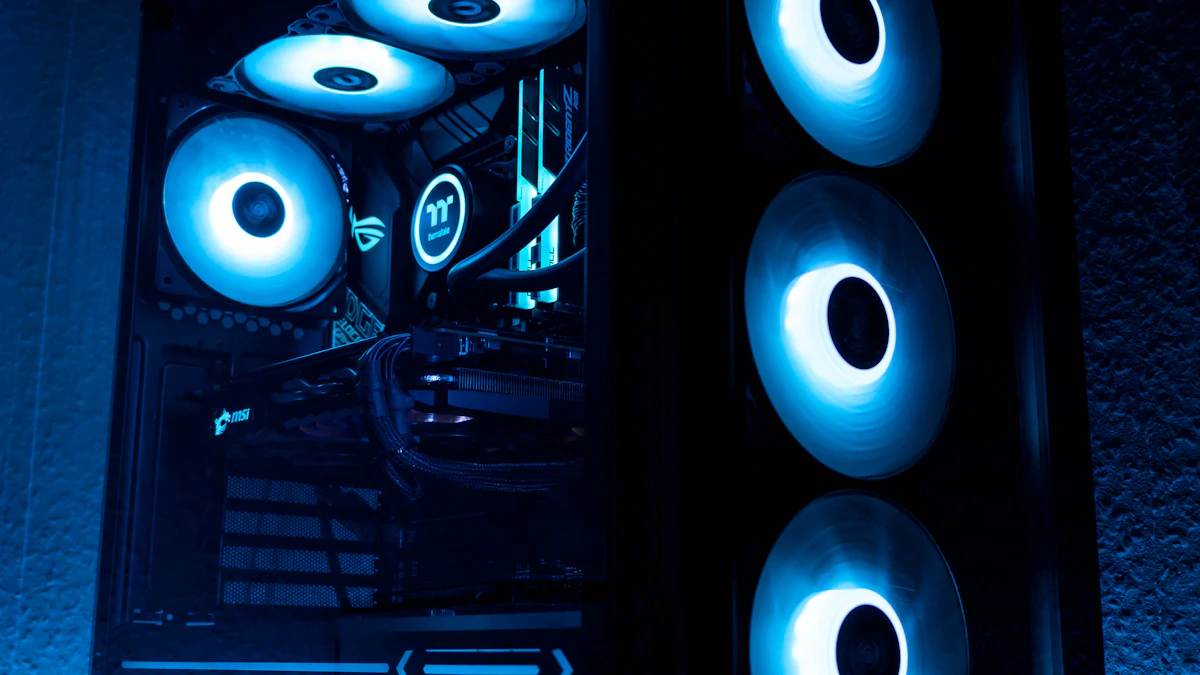
*High-density geometry rendering and complex physics simulation in modern open-world engines demand substantial memory bandwidth and capacity to prevent frame drops.*
Analyzing open-world design reveals that memory bottlenecks degrade frame pacing rather than simple average frame rates. A PC with 16 GB of RAM might achieve an average of 60 FPS in static countryside areas, but driving at top speed into high-density zones forces instant asset swapping. This causes severe frametime spikes where frames drop to 15 FPS for fraction-of-a-second intervals. Upgrading to a 32 GB kit eliminates these frame pacing spikes by keeping active geometry cells stored directly in physical memory.
---
### RAGE 9 Asset Streaming: VRAM Overflow and Physical RAM Interplay
To understand memory consumption in Vice City and the broader state of Leonida, players must examine how system RAM interacts directly with GPU video memory (VRAM). The game engine relies on aggressive texture streaming algorithms. Instead of loading an entire district into memory at once, the engine continuously streams mipmaps based on player position, camera orientation, and velocity.
If your graphics card features 8 GB or 10 GB of VRAM, running ultra-high-resolution textures alongside real-time ray-traced global illumination will quickly saturate your GPU's physical onboard memory. Once VRAM maxes out, DirectX 12 Ultimate automatically offloads active texture buffers and ray-tracing Bounding Volume Hierarchy (BVH) structures into your system RAM.
```
+-------------------------------------------------------------------------+
| VRAM SPILLOVER & MEMORY PIPELINE |
+-------------------------------------------------------------------------+
| [GPU VRAM (8GB-12GB)] <---> [PCIe Bus (PCIe 4.0 x16 / 31.5 GB/s)] |
| ^ |
| v |
| [SYSTEM RAM (32GB DDR4/DDR5)] |
| ^ |
| v (Pagefile Bottleneck) |
| [NVMe SSD (Storage Space)] |
+-------------------------------------------------------------------------+
```
If your PC only has 16 GB of total system RAM, this offloading process instantly triggers system instability. The operating system struggles to maintain both core engine operations and VRAM spillover caches simultaneously.
```
[SYSTEM VRAM FULL] ──> [OFFLOAD TO SYSTEM RAM] ──> [16GB SYSTEM RAM FULL] ──> [PAGEFILE ON SSD] ──> [MICRO-STUTTER / FRAME DROP]
```
This interaction is especially severe when traversing dense, varying terrain. Seamless transitions between detailed interior spaces—such as oceanfront hotel lobbies or pawn shops—and expansive outdoor environments rely heavily on fast memory access. To learn more about how storage read speeds and overall installation requirements impact asset delivery, check out our guide on
GTA 6 file size and SSD specs.
Furthermore, dynamic atmospheric features demand continuous memory access. Heavy rainfall, localized mist, dynamic wave displacement, and tropical storm physics process thousands of particle instances simultaneously. For a deep look into how Leonida's weather mechanics work, read our analysis on
GTA 6 dynamic weather and hurricane systems.
---
### Advanced AI State Tracking and Entity Buffers
Memory capacity does not purely serve graphics and high-resolution textures. Open-world physics engines allocate significant system memory toward managing artificial intelligence, entity tracking, and traffic systems.
```
+--------------------------------------------------------------------+
| ACTIVE SYSTEM RAM ALLOCATION |
+--------------------------------------------------------------------+
| [Dynamic Traffic Systems] --> Vehicle physics & pathfinding |
| [Crowd Density Simulation] --> NPC logic arrays & schedule loops |
| [Leonida PD Memory State] --> Tactical AI & perimeter tracking |
| [Sub-Faction Dynamic Data] --> Regional gang relations & behavior|
+--------------------------------------------------------------------+
```
In Leonida, local law enforcement does not simply spawn and despawn randomly. The tactical AI system tracks unit positions, vehicle health, perimeter sweeps, and tactical responses over extended distances. You can examine how these memory-heavy systems work in our
Leonida PD police AI mechanics guide.
Similarly, dynamic crowds feature localized sub-factions like the Thrillbilly Mud Club, Vice Beach Syndicates, and San Chianis Cartel. Each faction uses unique behavioral logic, custom movement scripts, and persistent hostility arrays across the massive game area. Comparing this world density to previous titles shows why memory demands have scaled dramatically; see our detailed breakdown on
Leonida map size vs GTA 5 Los Santos for full spatial context.
```
+-----------------------------------------------------------------------+
| MEMORY RESOURCE USAGE COMPARISON |
+-----------------------------------------------------------------------+
| Sub-System | GTA 5 (RAGE 7) | GTA 6 (RAGE 9) |
+----------------------+---------------------+--------------------------+
| Traffic Simulation | Simple grid paths | Vehicle weight & physics |
| Pedestrian Logic | Basic spatial paths | Persistent daily schedules|
| Law Enforcement AI | Line-of-sight spawn | Full tactical state memory|
| Water & Environment | 2D surface meshes | Volumetric 3D fluid flows|
+-----------------------------------------------------------------------+
```
---
### Dual-Channel DDR4 vs DDR5 Performance Impact
Capacity is only half the battle; system memory speed and channel configuration dictate overall processing throughput. Running GTA 6 on single-channel RAM (a single memory stick) halves your memory bus bandwidth, creating an immediate CPU bottleneck regardless of whether you have 16 GB or 32 GB installed.
```
+-----------------------------------------------------------------------+
| MEMORY BANDWIDTH COMPARISON |
+-----------------------------------------------------------------------+
| Memory Setup | Max Bandwidth | Frame Pacing Rating |
+-------------------------------+---------------+-----------------------+
| DDR4 3200 MHz (Single-Channel)| 25.6 GB/s | Poor (Stuttering) |
| DDR4 3200 MHz (Dual-Channel) | 51.2 GB/s | Moderate (Playable) |
| DDR5 6000 MHz (Dual-Channel) | 96.0 GB/s | Excellent (Ultra Smooth)|
+-----------------------------------------------------------------------+
```

*Optimizing system memory configuration ensures stable 1% low frame rates during memory-intensive gameplay scenes.*
DDR5 memory modules operate with two independent 32-bit sub-channels per stick, offering significant efficiency advantages over older DDR4 architectures. DDR5 kits running at 6000 MHz (CL30 or CL36) deliver nearly double the real-world throughput of standard DDR4-3200 kits.
For players building or upgrading a PC specifically for GTA 6, upgrading to 32 GB of dual-channel DDR5 RAM is one of the most cost-effective performance improvements available. Memory pricing in US and UK retail channels has stabilized, making a solid 32 GB DDR5 kit available for roughly $95–$120 / £80–£105 at retailers like Micro Center, Best Buy, Newegg, Amazon US/UK, and GAME.
---
### Console Unified Memory Architecture vs PC Overhead
A common point of confusion among PC builders is why current-gen consoles run demanding titles on 16 GB of memory while PCs require 32 GB for optimal results. The difference lies in physical hardware architecture and operating system overhead.
```
+-------------------------------------------------------------------------+
| CONSOLE UNIFIED MEMORY ARCHITECTURE |
+-------------------------------------------------------------------------+
| [PS5 / Xbox Series X Unified 16GB GDDR6 Memory Pool] |
| ├── Custom Lightweight OS Overhead (~2.5 GB - 3.5 GB) |
| └── Shared High-Bandwidth GPU/Engine Asset Allocation (~12.5 - 13.5 GB)|
+-------------------------------------------------------------------------+
+-------------------------------------------------------------------------+
| PC SPLIT MEMORY ARCHITECTURE |
+-------------------------------------------------------------------------+
| [System RAM: 16 GB DDR4/DDR5] | [Dedicated VRAM: 8 GB - 16 GB] |
| ├── Windows 11 OS (~5.0 GB) | └── GPU Render Targets |
| └── Game Engine Logic (~11.0 GB) | & Dynamic Shadow Maps |
+-------------------------------------------------------------------------+
```
Consoles like the PlayStation 5 and Xbox Series X utilize a **Unified Memory Architecture (UMA)** featuring 16 GB of high-speed GDDR6 RAM shared over a wide 256-bit memory bus. The PlayStation 5 custom operating system consumes less than 3 GB of memory. This leaves over 13 GB of unified memory available exclusively for game assets, which can be allocated to graphics or system logic as needed.
In contrast, desktop PCs split memory responsibilities into two separate pools: System RAM and Dedicated VRAM. Furthermore, Windows 11 runs dozens of background processes, service hosts, security suites, and telemetry tools.
```
Windows 11 Baseline Idle Footprint: ~4.5 GB to 5.5 GB System RAM
16 GB Total Installed - 5.5 GB OS Usage = ~10.5 GB Remaining for Game
```
Because 10.5 GB falls well below the 13.5 GB of usable memory available on consoles, a 16 GB PC configuration operates at a distinct disadvantage. Equipping your system with 32 GB of system memory resolves this gap, giving the RAGE 9 engine roughly 26 GB of usable RAM to manage game assets.
This extra memory bandwidth is critical if you want high frame rates. Performance expectations vary depending on hardware configuration; read our guides on
GTA 6 performance targets on Xbox Series X and our analysis on
console 30 FPS limits and ray tracing constraints.
---
### Hardware Setup Configurations: Minimum vs Recommended System Requirements
Based on engine architecture analysis, memory streaming bandwidth requirements, and modern target configurations, here are our projected PC system specifications:
```
+---------------------------------------------------------------------------+
| PREDICTED PC SYSTEM REQUIREMENTS |
+---------------------------------------------------------------------------+
| Hardware Component | Minimum (1080p / 30-40 FPS) | Recommended (1440p / 60 FPS)+
+----------------------+-----------------------------+----------------------+
| System Memory (RAM) | 16 GB Dual-Channel DDR4 | 32 GB Dual-Channel DDR5|
| Graphics Card (GPU) | Nvidia RTX 2060 Super (8GB) | Nvidia RTX 4070 (12GB)|
| | AMD Radeon RX 6600 XT (8GB) | AMD Radeon RX 7800 XT|
| Processor (CPU) | Intel Core i5-11400 | Intel Core i7-13700K |
| | AMD Ryzen 5 3600X | AMD Ryzen 7 7800X3D |
| Storage Space | 200 GB PCIe 3.0 NVMe SSD | 250 GB PCIe 4.0 NVMe |
| Operating System | Windows 10/11 (64-bit) | Windows 11 (23H2) |
+---------------------------------------------------------------------------+
```
>
[PRO-GAMER TACTICAL HACK]: If you are forced to run GTA 6 on a 16 GB RAM system at launch, set your Windows Virtual Memory (Paging File) manually to an explicit custom size on your fastest NVMe SSD. Set both the Initial Size and Maximum Size to 16384 MB (16 GB). This prevents Windows from dynamically resizing the swap file during gameplay, which eliminates major frametime stutters when system memory fills up.
>
[ROOKIE MISTAKE TO AVOID]: Never mix different RAM sticks with varying speeds, capacities, or CAS latencies to reach 32 GB. Buying a secondary 16 GB kit that does not match your original stick forces your motherboard to fall back to default JEDEC speeds (often 2133 MHz or 2400 MHz). This disables XMP/EXPO profiles and drastically reduces memory bandwidth, hurting game stability more than staying at 16 GB.
---
### Upgrading vs Optimizing: Preparing Your PC Setup
Upgrading your PC setup requires evaluating your current memory topology. If your motherboard has four DIMM slots and you currently use a 2x8 GB configuration, adding an identical 2x8 GB kit puts additional load on your CPU's integrated memory controller (IMC). This can lead to system instability if XMP or EXPO overclocking profiles are enabled.
```
PREFERRED UPGRADE PATH:
[2x8GB DDR4/DDR5 Kit] ──> SELL/REPLACE ──> [2x16GB Dual-Channel Kit (Slot 2 & 4)]
```
Replacing your current kit with a clean 2x16 GB matching pair guarantees maximum signal integrity and stability. Placing the modules into motherboards slots 2 and 4 ensures true dual-channel operation.

*Navigating memory requirements is essential to experience Leonida's high-density urban environments without performance bottlenecks.*
Beyond raw RAM upgrades, optimizing Windows OS background memory consumption helps free up critical system resources:
- **Disable Hardware-Accelerated GPU Scheduling (HAGS) background apps:** Close web browsers like Chrome or Edge while gaming, as hardware acceleration reserves dedicated system RAM buffers.
- **Purge Standby List Memory:** Use tools like Intelligent Standby List Cleaner (ISLC) to automatically clear Windows standby memory when available free RAM drops below 4 GB.
- **Clean Peripheral Software Overhead:** Background suites for RGB lighting and hardware tracking can consume over 1.5 GB of system memory when running simultaneously.
---
### Cross-Platform & Tech Ecosystem Context
While PC gamers optimize memory configs and hardware builds, console performance profiles provide valuable context for game stability. To understand cross-platform parity and frame rate targets, read our breakdown on
PS5 and Series X 60 FPS performance modes alongside our coverage of
Xbox Series S hardware constraints.
Players tracking launch timelines and potential multi-platform releases can explore our analysis on
GTA 6 cross-platform support and crossplay mechanics.
---
### Frequently Asked Questions
#### Can I run GTA 6 on 16 GB of RAM?
Yes, you can launch and play GTA 6 on 16 GB of RAM, but you will need to lower your graphics settings to 1080p minimum/medium presets. Expect occasional micro-stutters and frame pacing drops while driving at high speeds through crowded urban environments like Vice City, as the system will rely on pagefile swapping to manage assets.
#### Is DDR5 RAM strictly required for GTA 6 on PC?
No, high-speed DDR4 memory (such as 3200 MHz or 3600 MHz in dual-channel mode) will be functional for 1080p and 1440p gameplay. However, DDR5 running at 6000 MHz offers nearly double the memory bandwidth, helping prevent CPU bottlenecks during scene transitions and intense combat scenarios.
#### Does having 64 GB of RAM improve GTA 6 frame rates over 32 GB?
For baseline gameplay at standard settings, upgrading from 32 GB to 64 GB of RAM offers negligible gains in average frame rates. However, 64 GB is useful for power users running heavy background applications, streaming setups, or custom graphic modifications and high-resolution texture packs.
#### Why do modern open-world games use so much RAM compared to older titles?
Modern open-world games render complex geometric structures, stream high-resolution textures dynamically, and calculate complex AI behaviors in real time. Rather than relying on static loading screens, the engine buffers vast areas of the map continuously, which requires significantly more active memory capacity.
#### Will adding more VRAM on my graphics card eliminate the need for 32 GB of system RAM?
No. While a graphics card with 16 GB of VRAM stores high-resolution textures efficiently, system RAM handles engine logic, physical interactions, vehicle pathfinding arrays, and operating system processes. A high-VRAM graphics card cannot make up for a system RAM bottleneck.
#### Does storage drive speed impact system RAM consumption in GTA 6?
Yes. Slower storage drives (such as mechanical HDDs or older SATA SSDs) delay how fast data streams into your system memory. Fast PCIe 4.0 NVMe SSDs allow the RAGE 9 engine to quickly flush and replenish system memory caches, reducing the risk of asset pop-in during fast traversal.
---